Home Blog Page 1053

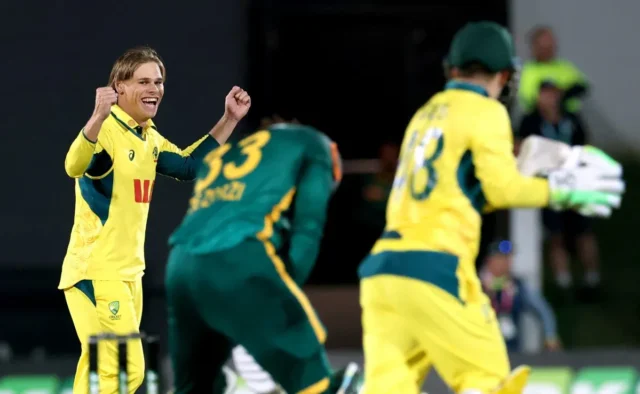
Australia crush South Africa by 276 runs, inflict biggest ODI defeat since 1991

0
Australia crush South Africa by 276 runs, inflict biggest ODI defeat since 1991

Srinagar, Aug 25: Australia’s top-order trio delivered a dominant performance against a depleted South African bowling attack, each scoring blistering centuries to seal a historic win in the third and final ODI on Sunday. The 3rd ODI saw South Africa suffer their heaviest defeat in ODI history, a record dating back to their debut in 1991.

Travis Head (142), captain Mitchell Marsh (100), and Cameron Green (118), who notched his maiden ODI century*, powered Australia to a mammoth total of 431/2 — their second-highest score ever in ODI cricket.

All-rounder Cooper Connolly, playing his first game of the series, took 5-22 to rattle South Africa as the tourists fell to 155 all out in 24.5 overs.

None of the South African batters could score more than Dewald Brevis’ knock of 49 as Connolly ran through the lower order with his left-arm spin and helped lead Australia to its 276-run win.

Fast bowler Shaun Abbott (2-27) had picked up the wickets of Aiden Markram (2) and captain Temba Bavuma (19) inside the batting powerplay before Connolly closed out the game quickly.

South Africa’s bowlers endured a tough day in the field as Kwena Maphaka, in just his third ODI, was taken for 73 runs in six overs, while Wiaan Mulder returned with bruising figures of 0/93 from seven overs. Spinner Senuran Muthusamy didn’t fare much better, conceding 75 runs in nine overs and managing a solitary wicket.

Travis Head and Mitchell Marsh kept the scoreboard ticking aggressively. Head reached his half-century off just 32 balls as Australia raced to 86/0 in the first 10 overs, laying a perfect foundation for a massive total.

Marsh played the anchor role, bringing up a run-a-ball fifty, while Head continued reaching his century off 80 balls with a single off Muthusamy. His knock featured 17 boundaries and five sixes, and he powered Australia to a 200-run opening stand by the 28th over. Head smashed 19 runs in a single over from Aiden Markram, accelerating the momentum.

Maharaj eventually broke the stand when Head holed out to long-off, and Marsh followed shortly after, top-edging a slog sweep off Muthusamy to be caught by Ryan Rickelton, who ran in from behind the stumps to complete the catch at square leg.

Australia plundered 126 runs without loss in the last 60 balls, as Green brought up his half-century off 28 balls, including a pulled six off Maphaka. The young pacer also had a forgettable moment in the field, dropping Alex Carey when the batter was on 29.

Green’s finish included three consecutive sixes off Muthusamy, and he surged into the 90s with two more sixes off Mulder before calmly running two to bring up his maiden ODI hundred.


Greater Kashmir

Rusted grenade recovered from garbage dump in Srinagar

0
Rusted grenade recovered from garbage dump in Srinagar

Srinagar, Aug 25: Police on Monday recovered an old, rusted hand grenade from a garbage dump at Iqbal Colony in Safakadal area of Central Kashmir’s Srinagar.

A top police officer said, “The grenade was spotted in a heap of garbage at Iqbal Colony.”

The officer further said that prima facie it appears to be an old, rusted grenade and has been taken into possession for further examination.

Cognizance of the matter has been taken and further investigation initiated. (KNC)

Greater Kashmir

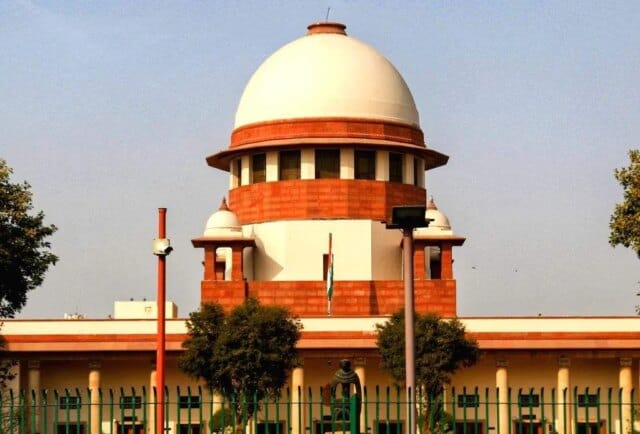
Supreme Court lists J&K statehood matter on Oct 10, refuses urgent hearing

0
SC to hear on July 24 Maharashtra govt’s plea against Bombay HC verdict SC-Train blast

New Delhi, Aug 25: The Supreme Court on Monday refused urgent hearing on Jammu and Kashmir statehood matter, stating that the matter will be heard on October 10 this year.

The counsel for petitioners today sought urgent hearing on the statehood matter.

“I am seeking early listing of a contempt petition relating to abrogation of article 370. Statehood was to be granted to Jammu and Kashmir,” the counsel told the top court bench headed by the Chief Justice.

Chief Justice BR Gavai, while refusing the urgent hearing, said the matter is listed already on October 10.

He told the counsel that the court would have to sit as a Constitutional Bench on a presidential reference and that the matter could not be listed before October 10.

Earlier, on August 14, the top sought Centre’s reply within 8 weeks on Jammu and Kashmir statehood petition. The top court also observed that the ground situation has to be taken into consideration for statehood restoration. “You cannot ignore what happened in Pahalgam,” the CJI had said, referencing the terror attack that claimed 26 innocent lives. (KNO)

Greater Kashmir

Drones sighted near LoC in J-K’s Poonch, search operation underway

0
Drones sighted near LoC in J-K’s Poonch, search operation underway

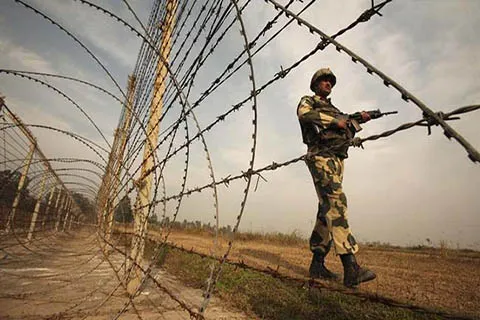
Mendhar, Aug 25: Security forces have launched a search operation after around half-a-dozen drones from Pakistan were sighted hovering over several forward areas along the Line of Control (LoC) in Poonch district of Jammu and Kashmir, officials said on Monday.

The movement of the drones from across the border was picked up over Balakote, Langote and Gursai nallah in Mendhar sector at 9.15 pm on Sunday, the officials said.

They said the drones, believed to be launched for surveillance, were seen flying very high and returned to the Pakistani side within five minutes.

However, the area was cordoned off and a search was launched with the first light of the day in several areas where the movement of the drones was picked up to ensure that there was no air dropping of weapons or narcotics, the officials said.

The use of drones by Pakistan to drop weapons and narcotics has emerged as a major challenge for the security agencies over the past couple of years and accordingly, police have announced a reward of Rs three lakh to anyone providing information about sighting of a drone leading to the recovery of the dropped material in February last year.

Greater Kashmir

Iran’s supreme leader says US seeks Iran’s ‘obedience,’ rejects direct talks with Washington

0
Iran's supreme leader says US seeks Iran's 'obedience,' rejects direct talks with Washington

Tehran, Aug 25: Iran’s Supreme Leader Ali Khamenei said that the United States confronts Iran because it wants the country to be “obedient,” a demand he called “offensive” and vowed the nation would resist.

Speaking in Tehran, on Sunday, Khamenei rejected calls for direct negotiations with Washington and said US hostility has been consistent since the 1979 Islamic Revolution, Xinhua news agency reported quoting the official news agency IRNA.

He referred to a June 13 attack on Iran, saying that US-linked groups met in a European capital the next day to discuss a “post-Islamic Republic” order, even proposing a monarch. Those efforts, he said, were thwarted by the resilience of the Iranian people and state institutions.

The rare Israeli and US attacks in June, which targeted key nuclear sites and prompted Iranian retaliation, were designed to destabilise the Islamic republic, Khamenei argued.

He said that a day after “Iran was attacked” by Israel at the start of the war, “American agents” met in Europe “to discuss what government should rule Iran after the Islamic republic”.

Khamenei urged domestic unity and support for President Masoud Pezeshkian, warning that Iran’s adversaries were now seeking to stir divisions at home.

He also condemned Israel’s campaign in Gaza, called on Western states to halt support for it, and praised actions by Yemen’s Houthi movement against Israel as justified.

Relations between Tehran and Washington were cut off after the 1979 Islamic Revolution and the resulting hostage crisis at the US embassy. Since then, Washington has imposed multiple waves of sanctions on Tehran, most recently due to its nuclear program.

Greater Kashmir

8 dead, 43 injured as truck hits tractor-trolley carrying pilgrims in UP’s Bulandshahr

0
8 dead, 43 injured as truck hits tractor-trolley carrying pilgrims in UP's Bulandshahr

UP, Aug 25: Eight people were killed and 43 injured when a truck rammed into a tractor-trolley carrying pilgrims in Uttar Pradesh’s Bulandshahr district in the early hours of Monday, police said.

Two of the deceased were minors, while 12 of those injured and hospitalised are below the age of 18.

Chief Minister Yogi Adityanath condoled the demise of the pilgrims and directed officials to ensure the best treatment for those injured. He also announced an ex gratia of Rs 2 lakh to the kin of those dead and Rs 50,000 each for the injured.

The accident took place around 2.10 am on the Bulandshahr-Aligarh border near the Arnia bypass, when the canter truck hit the tractor-trolley from behind, causing it to overturn, Senior Superintendent of Police (Rural) Dinesh Kumar Singh said.

“The tractor-trolley was carrying 61 people, who were travelling from the Rafatpur village in the Kasganj district to Jaharpeer in Rajasthan for a pilgrimage,” he said.

The police officer said the victims were rushed to hospitals. “Eight people died, while 43 of them are undergoing treatment. Three of the injured are on ventilator support,” Singh added.

Police said 10 passengers escaped with minor injuries.

The victims were taken to multiple hospitals for treatment — 10 to Aligarh Medical College, 10 to Bulandshahr district hospital and 23 to Kailash Hospital in Khurja. The bodies of the deceased have been sent for post-mortem, police said.

The deceased have been identified as tractor driver E U Babu (40), Rambeti (65), Chandni (12), Ghaniram (40), Mokshi (40), Shivansh (6), Yogesh (50) and Vinod (45), all residents of Kasganj district, according to the police.

District Magistrate Shruti, along with SSP Singh and other senior officials, visited the spot amid drizzle and later interacted with the injured patients in a hospital.

According to a post on X by the chief minister’s office, Adityanath has expressed condolences to the bereaved families of the deceased. “The Chief Minister has directed the district administration officials to immediately transport the injured to the hospital and ensure their proper treatment. Additionally, he has wished for the speedy recovery of the injured,” it added.

Police said the erring truck, which is registered in Haryana, has been impounded, and further legal proceedings have been initiated.

Greater Kashmir

Israeli airstrikes targeting Iran-backed Houthis rock Yemen’s capital

0
Israeli airstrikes targeting Iran-backed Houthis rock Yemen's capital

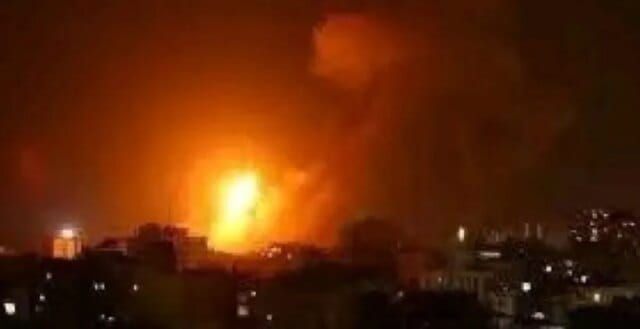
Cairo, Aug 24: Israeli airstrikes hit Yemen’s capital on Sunday, days after Houthi rebels fired a missile toward Israel that its military described as the first cluster bomb the rebels had launched at it since 2023.

The Iranian-backed Houthis said multiple areas across Sanaa were hit. The Houthi-run health ministry said at least two people were killed and 35 others were wounded.

The rebels’ Al-Masirah satellite television reported a strike on an oil company, and video on social media showed a fireball erupting there.

Israel’s military said it struck the Asar and Hizaz power plants, calling them “a significant electricity supply facility for military activities,” along with a military site where the presidential palace is located.

Sanaa residents told The Associated Press they heard explosions close to a closed military academy and the presidential palace. They saw plumes of smoke near Sabeen Square, a central gathering place in the capital.

“The sounds of explosions were very strong,” said Hussein Mohamed, who lives close to the presidential palace.

Ahmed al-Mekhlafy said he felt the sheer force of the strikes. “The house was rocked, and the windows were shattered,” he told the AP by phone.

The Houthis have launched missiles and drones toward Israel and targeted ships in the Red Sea for over 22 months, saying they are attacking in solidarity with Palestinians amid the war in Gaza.

Nasruddin Amer, deputy head of the Houthi media office, vowed to continue attacks on Israel, writing on social media that “our military operations supporting Gaza won’t stop, God willing, unless the aggression is stopped, and the siege is lifted.”

The Israeli strikes were the first to hit Yemen since a week ago, when Israel said it targeted energy infrastructure it believed was used by the rebels.

The latest strikes follow the Houthis’ claim of launching a newly equipped missile toward Israel on Friday, targeting the country’s largest airport, Ben Gurion. There was no reported damage or injuries. Israel’s military said it fragmented mid-air after several interception attempts.

An Israeli Air Force official, speaking on condition of anonymity in line with military regulations, called Friday’s projectile a new threat — a cluster munition, meant to detonate into multiple explosives on impact.

The use of cluster bombs makes interception more difficult and represents additional technology provided to the Houthis by Iran, the official asserted.

The official also said over 10 Israeli fighter jets carried out Sunday’s strikes.

Defense Minister Israel Katz in a statement said Israel continues to “impose an air and naval blockade,” without details.

Houthi attacks over the past two years have upended shipping in the Red Sea, through which about USD 1 trillion of global goods passes each year. From November 2023 to December 2024, the Houthis targeted more than 100 commercial and naval ships with missiles and drones.

The rebels stopped the attacks during this year’s brief ceasefire in Gaza and later became the target of a weekslong airstrike campaign ordered by US President Donald Trump.

In May, the United States announced a deal with the Houthis to end the airstrikes in return for an end to attacks on shipping, although the rebels said the agreement did not include halting attacks on targets it believed were aligned with Israel.

Last month, the Houthis said they would target merchant ships belonging to any company that does business with Israeli ports, regardless of nationality, as part of what they called a new phase of operations against Israel.

In May, Israeli airstrikes hit the Sanaa airport in a rare daytime attack that destroyed the terminal and left craters in its runway. At least six passenger planes were hit, including three belonging to Yemenia Airways, according to airport authorities.

Greater Kashmir

Massive landslide triggered by rainfall crushes petrol pump under its debris on Udhampur highway

0
J-K: Massive landslide triggered by rainfall crushes petrol pump under its debris on Udhampur highway

Udhampur, Aug 25: A massive landslide triggered by rainfall occurred near Balinallah on the Jammu-Srinagar National Highway in Udhampur on Sunday, crushing a petrol pump under its debris.

The owner of the petrol pump, Jai Pal Singh Jamwal, claimed that this incident happened around 6:30-7 pm. “This incident happened around 7 pm… There was a crack in the mountain nearby, which caused the load on the petrol pump to be very high. Due to which this whole collapse happened,” Jamwal said to ANI.

Jamwal further claimed that there were no casualties. He said, “There was no loss because we all could see that the mountain was cracking. So we had already taken out all the stuff. The shift boys had also moved aside. We had also shut down our sale and stopped the tankers. The fire brigade vehicle had also come here because we still have some stock lying with us…”

Moreover, Fire Officer Sunil said that the fire department reached the petrol pump as soon as they received the call. “It was raining continuously since morning… We saw a huge landslide here, which caused the hill to fall down. There was no loss of life here, but there was a lot of damage to the HP petrol pump. The landslide is still going on,” Sunil said to ANI.

Meanwhile, Defence Minister Rajnath Singh on Sunday held a meeting with officials at Raj Bhavan in Jammu to take stock of the flood situation in parts of Jammu and Kashmir. JK Lieutenant Governor Manoj Sinha and Union MoS Jitendra Singh were also present during the meeting.

This came after Singh visited a government hospital in Jammu to meet victims who sustained injuries in the Kishtwar cloudburst incident, and lauded the efforts of the doctors of the medical college for taking care of the injured with complete dedication.

While addressing the reporters in the presence of Jammu and Kashmir Lieutenant Governor Manoj Sinha, the Union Minister stated that all patients were out of danger and were recovering well.

“I also wanted to go to the spot, but due to bad weather, it is not possible to go there. And it has also been informed that there has been a landslide, so the vehicle could not move forward. All the patients have recovered and are recovering well. And I want to congratulate all the doctors of this medical college for taking care of all the injured people with full dedication, and all are in good condition,” Singh said.

A cloudburst occurred in Kishtwar during the Machail Mata Yatra on August 14, in which over 60 people were killed. The cloudburst led to sudden flash floods during the pilgrimage, resulting in widespread destruction and deaths. Teams from the National Disaster Response Force (NDRF), the State Disaster Response Force (SDRF), Jammu and Kashmir Police, CISF, Indian Army and the local administration were engaged in rescue efforts. (ANI)

Greater Kashmir

Actor Huma Qureshi in Kashmir

0
This is my nanihaal, always feels good to come here: Actor Huma Qureshi in Kashmir

Srinagar, Aug 24: Actor Huma Qureshi on Sunday said the Hindi film industry is a difficult one but anything is possible if one works hard and has God on his side.

The actor was here as part of the centenary celebrations of the Indian Chamber of Commerce (ICC).

“The truth is that it is a very difficult industry. But if you really (work hard) and if God’s blessings are with you, then anything is possible,” Qureshi said when asked what would she advise those aspiring to join the film industry.

She also released her book, titled “Zeba — An accidental superhero”, at the event. “The ICC centenary celebrations were held here and they invited me for launching my book, ‘Zeba — an accidental superhero’. I am so happy to be here.

“It always feels good to be in Srinagar. My mother is from here and it refreshes old memories, and I am so happy to be here talking about my book,” she said.

Qureshi said her book is about a female superhero who changes the world.

The actor said there are many stories in Kashmir.

“We should promote Kashmir’s culture, folklore, its songs and poetry. We should definitely have more stories out of Kashmir,” she said.

Asked if Bollywood should support Kashmir, she said it should rather be that Kashmir supports the film industry.

“InshaAllah, we are planning something,” she added.

Qureshi, whose relatives were present on the occasion, said it was nice to see them in the audience cheering when she was talking about her book.

“I got very emotional. My mother was not here and I was missing her. It is very nice to see that in whatever you do, your family supports you, cheers for you,” she said, adding, “This is my nanihaal (maternal home) and it always feels good to come here.”

Greater Kashmir

Did Pakistan’s 2018 constitutional moves accelerate Article 370’s repeal?

0
Did Pakistan’s 2018 constitutional moves accelerate Article 370’s repeal?

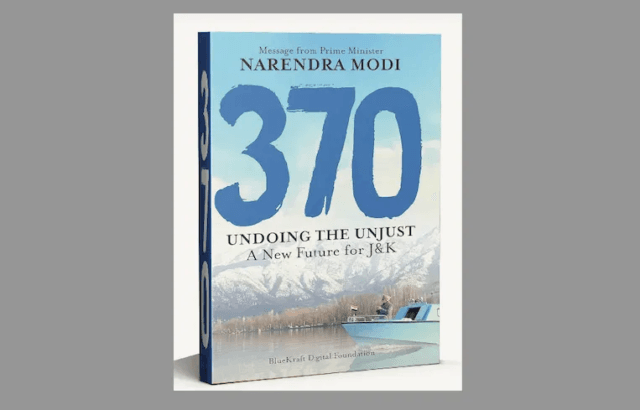
Srinagar, Aug 24: Pakistan’s 2018 summer experiments might have led to Kashmir’s 2019 autumn fallout, the book ‘370: Undoing the Unjust, A New Future for J&K’ published by BlueKraft Digital Foundation claims.

It suggests that the Pakistan’s May 2018 experiment of Gilgit-Baltistan Order and a similar experiment of June 2018 of the 13th Amendment to the ‘Azad Jammu and Kashmir Interim Constitution’ of 1974 that aimed at consolidating Pakistan’s control over the other side of Kashmir by transferring powers away from the elected assembly and government directly to the Pakistan government might have triggered the abrogation of Article 370.

In the chapter ‘Sacrificing Government, Enhancing Democracy’ on page 275, the book, whose foreword is written by Prime Minister Narendra Modi, mentions that for ‘Countering Pakistan’s Nefarious Actions in PoJK’, “India has consistently responded, in a resolute fashion, to Pakistan’s persistent efforts to disrupt the status quo in the illegally claimed and occupied PoJK region. A crucial episode in this ongoing saga unfolded in May 2018, when Pakistan, under the caretaker government of Prime Minister Shahid Khaqan Abbasi, made an attempt to tighten its grip on Gilgit-Baltistan and PoJK. The Gilgit-Baltistan Order was passed as an audacious move to alter the institutional arrangement created by Pakistan in the occupied territory and integrate ‘the territory in all but name with Pakistan’. The order granted some of the most important legislative functions for Gilgit-Baltistan directly to the prime minister of Pakistan.”

The ‘GB Order 2018’ is seen as a rollback of the autonomy of Gilgit-Baltistan, consolidating Pakistan’s direct control over the region. It replaced the GB Empowerment and Self-Governance Order 2009, taking away the limited autonomy that had been granted earlier. The GB Order also ensured that the powers earlier vested in the Gilgit-Baltistan Council with the local representation were shifted to the Prime Minister of Pakistan, who was given absolute powers to make laws for Gilgit-Baltistan on any subject, overriding the Gilgit-Baltistan Legislative Assembly. According to the GB Order, the courts of Gilgit-Baltistan were recognised as equivalent to provincial high courts but under federal jurisdiction, extended most fundamental rights of Pakistan’s Constitution to Gilgit-Baltistan, and the GB Assembly’s role was reduced to more of an advisory and administrative function since the PM’s orders had overriding power.

The book mentions that, alarmed at the development, India’s National Security Adviser, Ajit Doval, briefed Prime Minister Narendra Modi, expressing apprehension over the ‘GB Order 2018’, “which was a blatant violation of established provisions”.

“Modi, in unequivocal terms, directed the NSA to put a stop to this infringement. His direction to Doval ‘Mahol Banao’ (create favourable conditions) was a call for a comprehensive strategy to the Indians in Jammu and Kashmir, that Pakistan was attempting to erode the Kashmiri identity. Modi insisted that Pakistan’s acts potentially dilute anti-India sentiments in PoJK as well,” the book mentions. “However, Pakistan did not stop at the Gilgit-Baltistan Order. A few weeks later, it issued a similar order for PoJK. In June 2018, Pakistan passed the 13th Amendment to the ‘Azad Jammu and Kashmir Interim Constitution’ of 1974, which provided a governance framework for PoJK. This amendment aimed at consolidating Pakistan’s control over PoJK by transferring powers away from the elected assembly and the PoJK government directly to the Pakistan government. The amendment reduced PoJK to the status of any other province in Pakistan without representation in the National Assembly. It also created the Council of Islamic Ideology, which shrunk political space for the territory and religious freedom for its minorities.”

However in reality, while the ‘GB Order 2018’ took away autonomy of Gilgit Baltistan and strengthened Islamabad, the 13th Amendment to the ‘Azad Jammu and Kashmir Interim Constitution’ of 1974, gave back autonomy and weakened Islamabad’s direct control although according to this order, the ‘AJK Council’ was sidelined and its powers were shifted to the ‘AJK Assembly and Government’ while Pakistan’s role was reduced to defence, security, and external affairs, not day-to-day governance.

The book ‘370: Undoing the Unjust, A New Future for J&K’ mentions, “This shift in PoJK’s status could have provided an opportune moment for Modi to nullify Article 370, as Pakistan’s actions could have been presented as a justification for the decision. However, the prime minister adhered to a principled approach, emphasising that any changes were driven by the principles of good governance and development, rather than a mere reaction to Pakistan or any external provocations.”

On Page 276, the book suggests that the process for the abrogation of Article 370 and Article 35-A of the Indian Constitution in Jammu and Kashmir, which accorded a special semi-autonomous status to the region, was started in November 2018.

“Recognising the need for a multifaceted response, in November 2018, Modi instructed Doval to undertake measures aimed at fostering a favourable sentiment even in PoJK by creating awareness on the Indian side about Pakistan’s assault on the cultural identity of the people in PoJK. This narrative, strategically deployed, could also contribute to shaping a positive sentiment and a sense of cultural unity within the larger Kashmir region,” the book mentions.

On February 21, 2019, a file was initiated by Additional Secretary, Home, Gyanesh Kumar (now the Chief Election Commissioner), “recommending the issuance of a Constitutional Order which would nullify Article 35-A The file was signed by Home Secretary Rajiv Gauba and the Home Minister Rajnath Singh”.

The Bharatiya Janata Party (BJP) government led by PM Modi abrogated Article 370 and Article 35-A, besides downgrading and bifurcating the only Muslim-majority state in India into two federally-administered union territories – J&K and Ladakh.

The book also comes with a message by Prime Minister Narendra Modi saying, “There was complete clarity in my mind that taking the public in Jammu and Kashmir into confidence was absolutely essential for the execution of the decision… We wanted the decision, whenever it would be taken, to happen with the concurrence of the people rather than imposition.”

It reveals that PM Modi did not use the intelligence agencies, Army, Police, BJP leaders, or even political parties close to him or their leaders for gathering ground realities but instead trusted unofficial ambassadors like Hardeep Singh Puri, Moosa Raza, former Governors Jagmohan and Lt Gen S K Sinha, and even travel agents to gather ground realities, who confirmed corruption and governance failures to him.

The book also details PM Modi’s early interactions with Kashmiri youth who informed him how “abnormal militarisation” and “lack of development” had shaped their idea of “normal life”.

The book points out that PM Modi, during his meetings with various stakeholders, including youth, businesspersons, farmers, and civil society members, found out that there was a consistent demand for development, jobs, education, private investment, and relief from corruption-ridden governance.

It also claims that during these meetings, the PM found that there was widespread frustration among the people with J&K’s political families and corruption in the State government.

The book also claims that PM Modi’s symbolic gestures, like meeting flood victims and interacting with marginalised Kashmiri youth, built trust and showed Kashmiri people his willingness to personally engage with them.



Greater Kashmir

- Advertisement -
Google search engine

Recent Posts