Home Blog Page 1302

GoC White knight Corps reviews security situation in J&K’s Rajouri, Doda

0
GoC White knight Corps reviews security situation in J&K's Rajouri, Doda

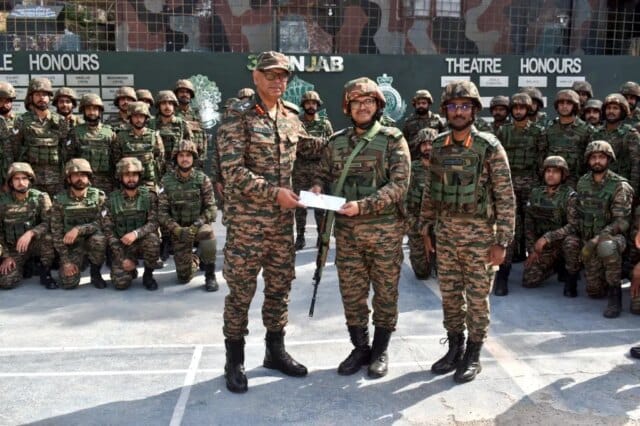
Jammu, June 12: General Officer Commanding White knight Corps Lieutenant General PK Mishra on Thursday visited forward posts and hinterland bases in Rajouri and Doda districts of Jammu and Kashmir to assess the security situation in the region.

He commended the troops for their professionalism and high standards in handling challenging conditions.

“GOC, Whiteknight along with GOC CIF(Delta) and GOC Ace of Spades Division, conducted a comprehensive review of operational preparedness during visits to forward posts in Naushera sector and hinterland bases in Bhaderwah”, PRO defence said.

They also visited the Corps Battle School, where the GOC commended troops for their professionalism, rigorous training, and high standards in counterterrorism operations.

Greater Kashmir

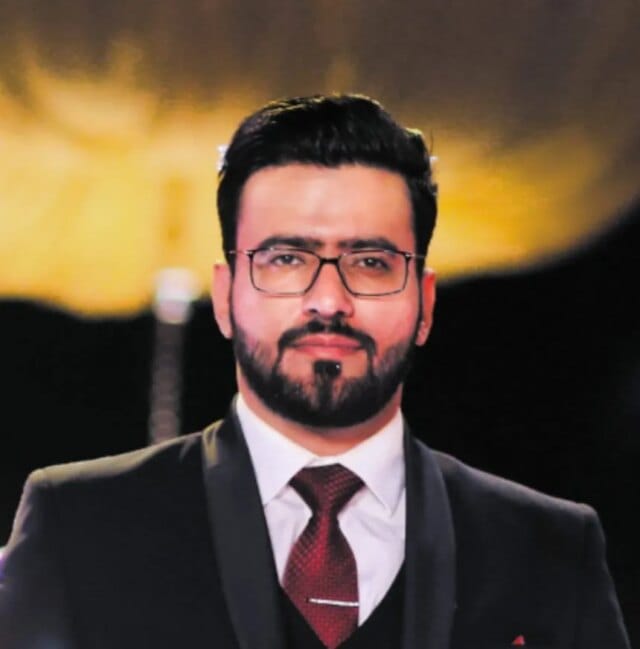
International journal recognizes breakthrough research by Kashmiri dermatologist Dr Mir Shahnawaz

0
International journal recognizes breakthrough research by Kashmiri dermatologist Dr Mir Shahnawaz

Srinagar, June 11: In a moment of pride for Indian and Kashmiri Dermatology, a breakthrough clinical study authored by Dr Mir Shahnawaz, a renowned Dermatologist and Founder & Director of DERMIS Skin & Hair Clinic, Bemina, has been recognized and published in the internationally acclaimed CUREUS Journal, indexed on PubMed and hosted by Springer.

The study, titled “Clinical Assessment of Abrocitinib, Tofacitinib, and Cyclosporine in Adult Patients With Moderate to Severe Atopic Dermatitis: A Retrospective Analysis”, is the first comparative real-world research from India to evaluate the clinical efficacy and safety of these systemic therapies—most notably Abrocitinib, a selective JAK-1 inhibitor representing a new class of targeted immunomodulatory drugs.

Dr Shahnawaz is among the very few Dermatologists in India to have personally used and strongly advocated Abrocitinib as an effective and well-tolerated treatment option for patients with moderate to severe Atopic Dermatitis.

The international publication of this study not only brings recognition to the growing academic contributions of Kashmiri clinicians but also fills a critical gap in Indian dermatology literature by providing region-specific data on emerging therapies.

Greater Kashmir

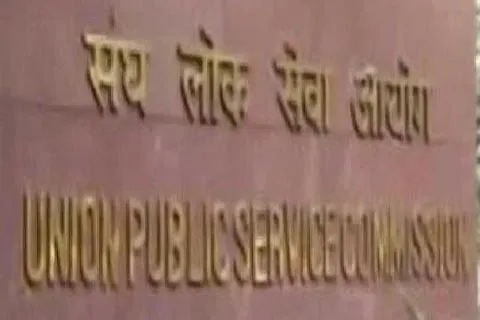
UPSC declares results of Civil Services Preliminary Exam 2025

0
UPSC declares results of Civil Services Preliminary Exam 2025

New Delhi, June 11: The Union Public Service Commission (UPSC) on Wednesday declared the results of Civil Services (Preliminary) Examination 2025.

The preliminary exam was held on May 25.

The UPSC has announced the results and shared a list of roll numbers of successful candidates who have qualified for the Civil Services (Main) Examination on its website, according to an official statement.

The Commission conducts the civil services examination annually in three stages — preliminary, main and interview — to select officers of Indian Administrative Service (IAS), Indian Foreign Service (IFS) and Indian Police Service (IPS), among others.

Candidates are also informed that marks, cut-off marks and answer keys of the preliminary exam will be uploaded on the Commission’s website i.e. only after the entire process of the civil services examination, 2025 and Indian Forest Service Examination, 2025 is over i.e. after the declaration of final result, the statement said.

The UPSC has also declared a list of candidates who have qualified for the Indian Forest Service (Main) Examination, 2025, on the basis of screening test held through the civil services preliminary examination.

The Commission has a facilitation counter near the examination hall building in its premises at Dholpur House, Shahjahan Road, New Delhi.

Candidates may obtain any information/clarification regarding their result on all working days between 10 am and 5 pm, in person or on telephone no. 011-23385271, 011-23098543 or 011-23381125 from the facilitation counter, said the statement issued by the UPSC.

The successful candidates have been asked to fill in certain details through a dedicated window to be opened on the Commission’s website from June 16 to 25.

Successful candidates are required to submit a fee of Rs 200 for admission into the Civil Services (Main) Examination, 2025, except in the case of fee exempt candidates, the UPSC said.

The details related scribe, assistive device and question paper in large font (for main examination) among others can also be submitted or updated online, it said in an identical statement for the candidates who have qualified for Indian Forest Service (main) examination.

Greater Kashmir

Covid-19 virus protein triggers immune attack on healthy cells: Study

0
Covid-19 virus protein triggers immune attack on healthy cells: Study

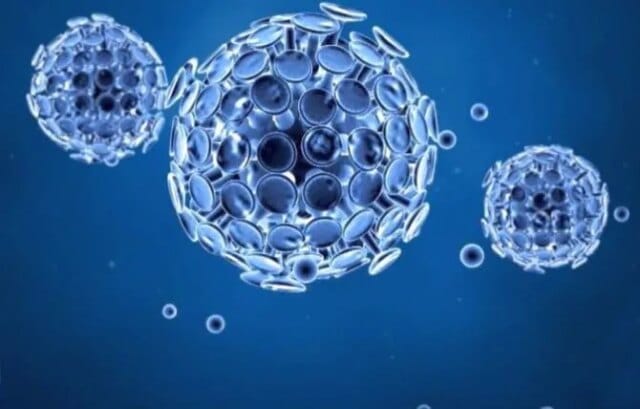
New Delhi, June 11: Amid a fresh wave of Covid-19, Israeli researchers have discovered that a protein from the SARS-CoV-2 virus can cause the immune system to attack healthy cells mistakenly.

The study, published in the journal Cell Reports, sheds light on how severe Covid complications may occur and suggests new ways to prevent immune-driven damage from the virus, Xinhua news agency reported.

Researchers from the Hebrew University of Jerusalem found that the virus’s nucleocapsid protein (NP), which normally helps package the virus’s genetic material inside infected cells, can spread to nearby uninfected epithelial cells.

Once on the surface of these healthy cells, NP would be mistakenly identified by the immune system as a threat. The immune system then deploys anti-NP antibodies, which mark these uninfected cells for destruction.

The process triggers the classical complement pathway, a part of the immune response that leads to inflammation and tissue damage, contributing to severe Covid symptoms and possibly long Covid.

Using lab-grown cells, advanced imaging, and samples from Covid-19 patients, the researchers found that NP binds to a type of molecule on cell surfaces. The binding causes the protein to cluster on healthy cells, further confusing the immune system.

The study also found that the drug enoxaparin — a common blood thinner and heparin analog — blocks NP from sticking to healthy cells.

In both lab tests and patient samples, enoxaparin helped prevent immune attacks by occupying the binding sites that NP uses.

According to the researchers, the discovery may offer new hope for reducing immune-related complications in Covid and potentially other viral infections.

Meanwhile, a newly identified Covid variant known as NB.1.8.1 has been recently spreading rapidly across multiple parts of the world, raising fresh concerns.

The variant, which belongs to the Omicron family, was first detected in January 2025 and has since reached countries including India, the US, the UK, Australia, China, Maldives, and Egypt.

The World Health Organization (WHO) has officially labelled it a “Variant Under Monitoring,” meaning it is spreading fast enough to warrant attention, but not enough to be classified as a major threat.

Greater Kashmir

Only Aadhaar authenticated users can book Tatkal tickets on IRCTC website from July 1

0
Massive public response, no seats available for next 10 days”: Katra Station Superintendent on Vande Bharat train

New Delhi, June 11: The Ministry of Railways announced on Wednesday that with effect from July 1, Tatkal tickets booked through IRCTC’s official website and mobile app will be available only to users authenticated with Aadhaar.

Further, Aadhaar-based OTP authentication will become mandatory for Tatkal bookings made online starting July 15.

Tatkal tickets booked at computerised Passenger Reservation System (PRS) counters and through authorised agents will require OTP authentication sent to the mobile number provided by the user at the time of booking. This provision will also come into effect from July 15.

To prevent bulk bookings during the critical opening period, authorised ticketing agents of Indian Railways will not be permitted to book opening-day Tatkal tickets during the first 30 minutes of the booking window.

For AC classes, this restriction applies from 10 a.m. to 10.30 a.m., and for non-AC classes, from 11 a.m. to 11.30 a.m.

These changes are being implemented to improve transparency in Tatkal bookings and to ensure that the benefits of the scheme reach genuine end users, according to the official statement.

The CRIS (Centre for Railway Information Services) and IRCTC have been instructed to make necessary system modifications and inform all Zonal Railways and departments concerned accordingly.

The Ministry of Railways has urged all passengers to take note of these changes and asked everyone to ensure Aadhaar linkage with their IRCTC user profiles to avoid inconvenience.

The steps are being implemented with an aim to ensure fair and transparent access to Tatkal tickets and to safeguard the interests of genuine passengers. The changes will enhance user authentication and reduce misuse of the scheme, the statement added.

Indian Railways had cracked down on misuse of Tatkal bookings and identified and deactivated 2.5 crore fake IDs and flagged another 20 lakh for revalidation. Some of these accounts were found to be using disposable email addresses, which were being used to hoard tickets and sell them at inflated prices. IRCTC is utilising AI-driven tools to monitor and detect bot activity, which was being used by touts to book tickets in bulk and then make genuine travellers pay huge amounts for the tickets.

Greater Kashmir

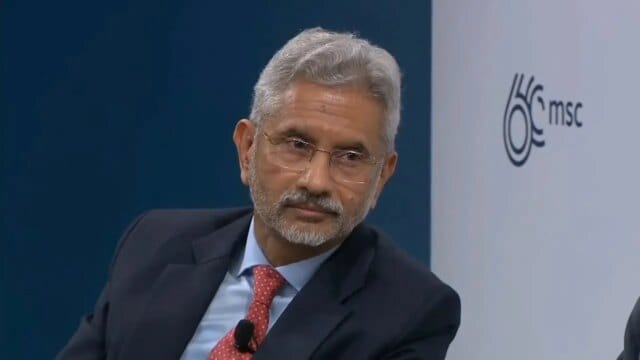
Terrorism will eventually come back to haunt you: Jaishankar

0
Jaishankar, US counterpart Rubio discuss Pahalgam terrorist attack

Brussels [Belgium], June 11: Indian External Affairs Minister S. Jaishankar, during his visit to Brussels this week, met European Commission President Ursula von der Leyen and the EU’s foreign affairs chief Kaja Kallas, where he highlighted India’s strategic importance, its global positioning, and expressed reservations on key EU policies, according to Euractiv.

Speaking amid ongoing EU-India free trade agreement negotiations, Jaishankar made a strong case for India as a reliable economic partner. “India – a nation of 1.4 billion – offers skilled labour and a more trustworthy economic partnership than China,” he said, as reported by Euractiv in an edited transcript.

Turning to recent global coverage of the Pahalgam terror attack in Kashmir, in which 26 lives were lost, Jaishankar pushed back against the narrative that equates India’s response with regional tensions. “Let me remind you of something – there was a man named Osama bin Laden. Why did he, of all people, feel safe living for years in a Pakistani military town, right next to their equivalent of West Point?” he said.

“I want the world to understand – this isn’t merely an India-Pakistan issue. It’s about terrorism. And that very same terrorism will eventually come back to haunt you.”

On India’s position regarding the Russia-Ukraine conflict, Jaishankar reaffirmed India’s non-prescriptive stance. “We don’t believe that differences can be resolved through war – we don’t believe a solution will come from the battlefield. It’s not for us to prescribe what that solution should be. My point is, we’re not being prescriptive or judgemental – but we are also not uninvolved.”

Responding to criticism over India’s refusal to join sanctions against Russia, he said, “We have a strong relationship with Ukraine as well – it’s not only about Russia. But every country, naturally, considers its own experience, history and interests.”

He further offered a historical perspective on India’s foreign policy outlook. “India has the longest-standing grievance – our borders were violated just months after independence, when Pakistan sent in invaders to Kashmir. And the countries that were most supportive of that? Western countries.”

“If those same countries – who were evasive or reticent then – now say ‘let’s have a great conversation about international principles’, I think I’m justified in asking them to reflect on their own past.”

On India’s role in the changing global order, Jaishankar emphasized multipolarity. “Multipolarity is already here. Europe now faces the need to make more decisions in its own interest – using its own capabilities, and based on the relationships it fosters globally.”

“I hear terms like ‘strategic autonomy’ being used in Europe – these were once part of our vocabulary.”

“The EU is clearly a major pole in the global order – and increasingly an autonomous one. That is precisely why I’m here: to deepen our relationship in this multipolar world.”

Reacting to the EU’s climate policies, particularly the Carbon Border Adjustment Mechanism (CBAM), Jaishankar expressed clear opposition. “Let’s not pretend – we’re opposed to parts of it. We have very deep reservations about CBAM and we’ve been quite open about it. The idea that one part of the world will set standards for everybody else is something which we are against.”

When asked whether he trusts US President Donald Trump, Jaishankar responded, “Meaning what?” On whether Trump is a partner India is willing to deepen ties with, he said, “I take the world as I find it. Our aim is to advance every relationship that serves our interests – and the US relationship is of immense importance to us. It’s not about personality X or president Y.”

Speaking on China, Jaishankar pointed to efforts by European companies to shift away from dependence on Chinese supply chains. “I just met with several European companies in India that have chosen to set up there specifically to de-risk their supply chains. Many companies are becoming increasingly careful about where they locate their data – they’d rather place it somewhere secure and trustworthy than simply go for efficiency. Would you really want that in the hands of actors you don’t feel comfortable with?”

Greater Kashmir

Immovable properties of two notorious drug peddlers attached in Handwara: Police

0
Immovable properties of two notorious drug peddlers attached in Handwara: Police

Srinagar, June 11: Jammu and Kashmir Police on Wednesday attached properties of two notorious drug peddlers under the provisions of the Narcotic Drugs and Psychotropic Substances (NDPS) Act in Handwara.

A police spokesperson said that acting in compliance with the stipulated legal provisions, Police Station Qalamabad, under the supervision of senior police officials, attached an immovable property which includes a plot of land with raised plinth owned by Fayaz Ahmad Bhat, son of Late Ab. Ahad Bhat, resident of Jandipora Maratgam. The action was taken under Section 68-F of the NDPS Act in connection with case FIR No. 47/2024 U/S 8/21 NDPS Act, registered at Police Station Qalamabad.

He said that preliminary investigation revealed that the said property was acquired through illicit proceeds generated from drug trafficking activities. The accused, Fayaz Ahmad Bhat, is currently lodged in District Jail Kupwara in the same case.

In a separate action, a Police Station Handwara acting under Section 68-F of the NDPS Act attached two commercial shops along with the land situated at Main Market Handwara, belonging to Javaid Ahmad Sofi, son of Abdul Razaq Sofi, resident of Khunbal Handwara. The attachment was executed in the presence of Executive Magistrate 1st Class Handwara in connection with Case FIR No. 193/2024 U/S 8/21 NDPS Act of Police Station Handwara

The spokesperson said that preliminary investigation has revealed that the said property was acquired through proceeds generated from illegal narcotics trade. The accused is also involved in Case FIR No. 266/2022 U/S 8/21 NDPS Act registered at Police Station Handwara.

The police spokesperson highlighted that such actions underscores police’s unwavering resolve to curb the drug menace by striking at the financial roots of drug networks. He also said the department remains committed to taking stringent legal measures, including property attachment, to dismantle the infrastructure enabling drug trafficking.

Greater Kashmir

ICC chair Jay Shah extends best wishes to SA & Australia

0
ICC chair Jay Shah extends best wishes to SA & Australia

New Delhi, Jun 10: As the World Test Championship (WTC) final is set to begin on Wednesday, where South Africa and Australia will fight for the coveted mace, the International Cricket Council (ICC) chairman Jay Shah expressed his excitement for the “enthralling contest” and gave his best wishes to both teams for the “Ultimate Test.”

Pat Cummins-led Australia will be looking to retain the mace that they claimed after defeating India in the previous edition of the World Test Championship Final at the Oval in June 2023. On the other side, South Africa are aiming for their first ICC trophy in over two decades, with Temba Bavuma leading the charge.

Taking to X, Shah wrote, “Looking forward to an enthralling contest in the @ICC World Test Championship Final at Lord’s. Best of luck to both @ProteasMenCSA and @CricketAus in the Ultimate Test!”

The winner of the WTC 2023-25 will walk away with USD 3.6 million, a significant jump from the USD 1.6 million awarded in both 2021 and 2023, while the runners-up will earn USD 2.16 million, up from USD 800,000.

South Africa’s WTC journey started with a 1-1 drawn series against India at home before being handed a 2-0 series defeat by New Zealand. They then travelled to the West Indies, winning 1-0, before picking up pace with 2-0 wins against both Bangladesh and Sri Lanka.

Then, their thrilling two-wicket win against Pakistan at Centurion was enough to help them seal their berth in the final. They went on to win the series 2-0 against Pakistan, earning their seventh consecutive Test win in this cycle to qualify for the final as table toppers.

The ICC No. 1 ranked Australia started their journey to the WTC Final with two Ashes wins before England’s comeback to draw the series 2-2, followed by a clean sweep at home, winning three tests against Pakistan.

Aussies were dropped to the second spot in the WTC standings after the Test series against the West Indies ended in a 1-1 draw. Then, a 2-0 sweep away from home against New Zealand followed. Australia then hosted India for the Border-Gavaskar Trophy, which they claimed 3-1 after 10 years.


Greater Kashmir

US, China say they have agreed on framework to resolve their trade disputes

0
US calls out China's unfair trade practices as 28 textile plants shut down

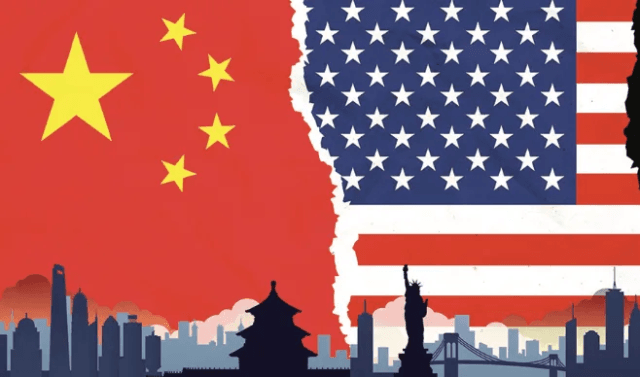
London, June 11:  Senior US and Chinese negotiators have agreed on a framework to get their trade negotiations back on track after a series of disputes that threatened to derail them, both sides have said.

The announcement came at the end of two days of talks in the British capital that wrapped up late Tuesday.

The meetings appeared to focus on finding a way to resolve disputes over mineral and technology exports that had shaken a fragile truce on trade reached in Geneva last month. It’s not clear whether any progress was made on the more fundamental differences over China’s sizeable trade surplus with the United States.

“First we had to get sort of the negativity out and now we can go forward,” US Commerce Secretary Howard Lutnick told reporters after the meetings.

Asian stock markets rose Wednesday after the agreement was announced.

The talks followed a phone call between President Donald Trump and Chinese leader Xi Jinping last week to try to calm the waters.

Li Chenggang, a vice minister of commerce and China’s international trade representative, said the two sides had agreed in principle on a framework for implementing the consensus reached on the phone call and at the talks on Geneva, the official Xinhua News Agency said.

Further details, including any plans for a potential next round of talks, were not immediately available.

Li and Wang Wentao, China’s commerce minister, were part of the delegation led by Vice Premier He Lifeng. They met with Lutnick, Treasury Secretary Scott Bessent and Trade Representative Jamieson Greer at Lancaster House, a 200-year-old mansion near Buckingham Palace.

Wendy Cutler, a former US trade negotiator, said the disputes had frittered away 30 of the 90 days the two sides have to try to resolve their disputes.

They agreed in Geneva to a 90-day suspension of most of the 100 per cent-plus tariffs they had imposed on each other in an escalating trade war that sparked fears of recession. The World Bank, citing a rise in trade barriers, cut its projections Tuesday for US and global economic growth this year.

“The US and China lost valuable time in restoring their Geneva agreements,” said Cutler, now vice president at the Asia Society Policy Institute. “Now, only sixty days remain to address issues of concern, including unfair trade practices, excess capacity, transshipment and fentanyl.”

Since the Geneva talks, the US and China have exchanged angry words over advanced semiconductors that power artificial intelligence, visas for Chinese students at American universities and rare earth minerals that are vital to carmakers and other industries.

China, the world’s biggest producer of rare earths, has signalled it may speed up the issuing of export licenses for the elements. Beijing, in turn, wants the US to lift restrictions on Chinese access to the technology used to make advanced semiconductors.

Lutnick said that resolving the rare earths issue is a fundamental part of the agreed-upon framework, and that the US will remove measures it had imposed in response. He did not specify which measures.

“When they approve the licenses, then you should expect that our export implementation will come down as well,” he said.

Cutler said it would be unprecedented for the US to negotiate on its export controls, which she described as an irritant that China has been raising for nearly 20 years.

“By doing so, the US has opened a door for China to insist on adding export controls to future negotiating agendas,” she said.

In Washington, a federal appeals court agreed Tuesday to let the government keep collecting tariffs that Trump has imposed not just on China but also on other countries worldwide while the administration appeals a ruling against his signature trade policy.

Trump said earlier that he wants to “open up China,” the world’s dominant manufacturer, to US products.

“If we don’t open up China, maybe we won’t do anything,” Trump said at the White House. “But we want to open up China.”

Greater Kashmir

India’s population reaches 1.46 billion, sees decline in fertility rate: UN

0
India’s population reaches 1.46 billion, sees decline in fertility rate: UN

New Delhi, June 11: While India continues to be the most populous country, with an estimated 1.46 billion people in 2025, the country’s total fertility rate has fallen to 1.9, below the replacement level of 2.1, according to the latest report by the United Nations Population Fund (UNFPA) released on Tuesday.

The 2025 State of World Population (SOWP) report underscores that the real crisis lies not in population size, but in the widespread challenges to support individuals’ right to decide freely and responsibly if, when, and how many children to have.

The UN report estimates “India’s population at present at 1,463.9 million”.

“India is now the world’s most populous nation, with nearly 1.5 billion people — a number expected to grow to about 1.7 billion before it begins falling,” the report said.

The Total Fertility Rate (TFR) in India is currently 2.0 children per woman. This means that on average, a woman in India would be expected to have 2 children during her childbearing years (typically ages 15-49). This rate has remained constant since 2020, according to the Sample Registration System (SRS) report for 2021.

However, the new report showed it has declined to 1.9 births per woman, which means that, on average, Indian women are having fewer children than needed to maintain the population size from one generation to the next, without migration.

Despite the slowing birth rate, India’s youth population remains significant, with 24 per cent in the age bracket of 0-14, 17 per cent in 10-19, and 26 per cent in 10-24.

While 68 per cent of the population accounts for the 15-64 age bracket, the elderly population (65 and older) stands at seven per cent.

As of 2025, life expectancy at birth is projected to be 71 years for men and 74 years for women.

The UN report also placed India in a group of middle-income countries undergoing rapid demographic change, with the population doubling time now estimated at 79 years.

“India has made significant progress in lowering fertility rates — from nearly five children per woman in 1970 to about two today — thanks to improved education and access to reproductive healthcare,” said Andrea M. Wojnar, UNFPA India Representative.

“This has led to major reductions in maternal mortality, meaning million more mothers are alive today, raising children and building communities,” Wojnar added.

–IANS

rvt/

Greater Kashmir

- Advertisement -
Google search engine

Recent Posts