Home Blog Page 478

New criminal laws bring community service into justice system

0
Pulwama court orders admin to refrain from erecting height barriers on Naina-Awantipora link road till next hearing

Srinagar, Sep 21: The newly implemented criminal laws have introduced a provision that allows courts to award community service as a form of punishment for first-time offenders involved in minor offenses.

This is being hailed as a progressive, restorative approach to justice that prioritizes rehabilitation over incarceration.

The provision, which came into force with the implementation of the Bharatiya Nyaya Sanhita, 2023 (BNS), marks a significant departure from the colonial-era Indian Penal Code (IPC) of 1860.

For the first time in Indian legal history, community service is formally recognized as a legal punishment under criminal jurisprudence.

Under Section 4 of the Bharatiya Nyaya Sanhita, courts may impose community service on first-time offenders guilty of minor infractions — such as petty theft, public nuisance, defamation, or simple hurt – if the offense does not carry a mandatory imprisonment clause and no serious injury, damage, or threat to public safety has occurred.

Judges have been given discretion to evaluate the nature of the crime, the offender’s background, and the likelihood of reoffending before opting for community service instead of a jail term or fine.

Community service may include activities such as cleaning public spaces, assisting in government welfare programs, volunteering in hospitals or old-age homes, and participating in environmental conservation drives.

The exact terms and duration of community service will be decided by the sentencing court in consultation with probation officers and local administration.

Legal experts, criminologists, and human rights advocates have long argued that India’s justice system is burdened with overcriminalization and overcrowded prisons. Minor offenders often end up in jails where they are exposed to hardened criminals, leading to further criminalization instead of reform.

“One of the breakthrough provisions of the new criminal laws is the provision of awarding community service to first-time offenders of minor offenses. #NewCriminalLaws  @KashmirPolice  @ZPHQJammu  @crimebranchjkp,” J&K Police said in a post on X.

“This is a much-needed reform that brings a humane and modern approach to justice,” says a senior advocate here at the J&K High Court.  “Community service helps offenders give back to society, take responsibility for their actions, and reintegrate without the stigma of incarceration.”

India’s prison population, as per National Crime Records Bureau (NCRB) data, has been steadily increasing, with nearly 77% being undertrials. Many of them are poor, uneducated, and caught in the web of minor cases where bail is difficult due to a lack of legal awareness or resources.

India now joins a growing list of countries – including the United States, the United Kingdom, Canada, and South Africa – that use community service as a sentencing option for non-violent crimes. In these jurisdictions, community service has shown promise in reducing repeat offenses (recidivism), promoting accountability, and saving state resources.


Greater Kashmir

PM Modi unveils GST 2.0

0
PM Modi unveils GST 2.0

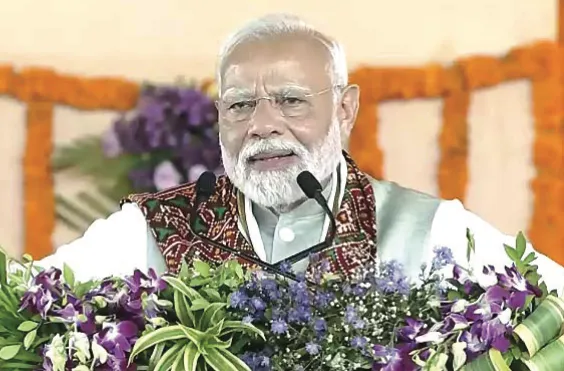
New Delhi, Sep 21: Prime Minister Narendra Modi unveiled GST 2.0 on Sunday, calling it the dawn of next-generation tax reforms that would put India’s “one nation, one tax” journey on a fast track.

Addressing the nation via video conferencing, PM Modi said that only 5 percent and 18 percent slabs would remain under the new regime.

He said that the reforms mark the beginning of a ‘GST Bachat Utsav’, promising cheaper essentials, affordable homes and vehicles, lower insurance costs, and higher savings for millions of Indians.

Hailing the move as a turning point in India’s growth story, the PM said that the poor, middle class, farmers, traders, and entrepreneurs alike would reap the benefits of this simplified structure.

Extending heartfelt greetings to all citizens on the commencement of Navratri, the festival of worshipping Shakti, he said that from the very first day of Navratri, the nation was taking a significant step forward in the Aatmanirbhar Bharat campaign.

Beginning at sunrise on September 22, the country will implement next-generation GST reforms.

PM Modi said that this marks the beginning of a GST Bachat Utsav (savings festival) across India.

He said that this festival would enhance savings and make it easier for people to purchase their preferred items.

The PM said that the benefits of this savings festival would reach the poor, middle class, neo middle class, youth, farmers, women, shopkeepers, traders, and entrepreneurs alike.

He said that in this festive season, every household would experience increased happiness and sweetness.

Extending his congratulations, PM Modi conveyed best wishes to crores of families across the country for the next generation GST reforms and the GST savings festival.

He said that these reforms would accelerate India’s growth story, simplify business operations, make investments more attractive, and ensure that every state becomes an equal partner in the pursuit of development. Recalling that India took its first steps towards GST reform in 2017, marking the end of an old chapter and the beginning of a new one in the country’s economic history, the PM said that for decades, citizens, and traders were entangled in a complex web of taxes – Octroi, Entry Tax, Sales Tax, Excise, VAT, and Service Tax – amounting to dozens of levies across the nation.

He said that transporting goods from one city to another required crossing multiple checkpoints, filling numerous forms, and navigating a maze of differing tax rules at every location.

PM Modi shared a personal memory from 2014, when he assumed office as PM, mentioning a striking example published in a foreign newspaper.

He said that the article described the challenges faced by a company that found it so difficult to send goods from Bengaluru to Hyderabad, a distance of just 570 km, that it preferred to ship the goods from Bengaluru to Europe and then back to Hyderabad.

The PM said that such were the conditions due to the entanglement of taxes and tolls.

He said that the earlier example was just one among countless instances.

PM Modi highlighted that lakhs of companies and crores of citizens faced daily hardships because of the complex web of multiple taxes.

He said that the increased cost of transporting goods from one city to another was ultimately borne by the poor and recovered from customers like people.

Emphasising that it was imperative to free the nation from the prevailing tax complexities, the PM said that upon receiving the mandate in 2014, the government prioritised GST in the interest of the people and the nation.

He said that extensive consultations were held with all stakeholders, every concern raised by states was addressed, and solutions were found for every question.

PM Modi said that by bringing all states together, such a monumental tax reform in independent India became possible.

He said that it was the result of joint efforts by the Centre and the states that the country was liberated from the maze of multiple taxes, and a uniform system was established across the nation.

The PM said that the dream of ‘one nation-one tax’ was realised.

He said that reform was a continuous process, and as times change and national needs evolve, next-generation reforms become equally essential.

PM Modi said that keeping in view the current requirements and future aspirations of the country, these new GST reforms were being implemented.

He said under the new structure, only 5 percent and 18 pecent tax slabs would primarily remain.

The PM said that most everyday-use items would become more affordable.

He listed food items, medicines, soap, toothbrushes, toothpaste, health and life insurance among the many goods and services that will either be tax-free or attract only a 5 percent tax.

PM Modi said that of the items previously taxed at 12 percent, 99 percent – virtually all – had now been brought under the 5 percent tax bracket.

Highlighting that in the past 11 years, 25 crore Indians had overcome poverty and emerged as a significant neo middle class segment playing a vital role in the country’s progress, he said that this neo middle class had its own aspirations and dreams.

The PM said that this year, the government had gifted tax relief by making income up to Rs 12 lakh tax-free, bringing substantial ease and convenience to middle-class lives.

He said that now it was the turn of the poor and the neo middle class to benefit.

PM Modi said that they were receiving a double bonanza – first through income tax relief, and now through reduced GST.

He said that with lower GST rates, fulfilling personal dreams would become easier for citizens – whether it’s building a house, purchasing a TV or refrigerator, or buying a scooter, motorcycle, or car – all would now cost less.

The PM said that travel would also become more affordable, as GST on most hotel rooms had been reduced.

He expressed happiness over the enthusiastic response of shopkeepers towards the GST reforms and said that the government was actively working to pass on the benefits of GST reductions to customers.

PM Modi said that in many places, boards displaying price comparisons – before and after the reforms – were being prominently displayed.

Underlining that the mantra of ‘Nagarik Devobhava’ was clearly reflected in the next generation GST reforms, he said that when the income tax relief and GST reductions were combined, the decisions taken over the past year would result in savings exceeding Rs 2.5 lakh crore for the people of India.

The PM said that this was precisely why he calls it a ‘Bachat Utsav’.

Emphasising that achieving the goal of a developed India requires unwavering commitment to the path of self-reliance, he said that a major responsibility in making India self-reliant rests with the MSMEs – India’s micro, small, and cottage industries.

PM Modi said that whatever meets the needs of the people and can be manufactured within the country must be produced domestically.

Highlighting that reduced GST rates and simplified procedures would significantly benefit India’s MSMEs, small-scale industries, and cottage enterprises, he said that these reforms would boost their sales and reduce their tax burden, resulting in a double advantage.

The PM expressed high expectations from MSMEs and underscored their historic role as the backbone of India’s economy during its peak of prosperity.

He said that India’s manufacturing and product quality were once globally recognised and superior.

PM Modi said the need to reclaim that pride, urging that products made by small industries must meet the highest global standards.

He said that India’s manufacturing should surpass all benchmarks with dignity and excellence, and that the quality of Indian products must enhance the country’s global identity and prestige.

The PM called upon all stakeholders to work with this goal in mind.

He said that just as the mantra of Swadeshi empowered India’s freedom struggle, it would similarly energise the nation’s journey toward prosperity.

PM Modi said that many foreign items had unknowingly become part of daily life, and citizens often do not even realise whether the comb in their pocket was foreign or indigenous.

“There is a need to liberate ourselves from such dependence,” he said, and urged people to buy products that are ‘Made in India’, infused with the hard work and sweat of the country’s youth.

The PM called for every household to become a symbol of Swadeshi and every shop to be adorned with indigenous goods.

He encouraged people to proudly declare their commitment to Swadeshi – ‘I buy Swadeshi,’ ‘I sell Swadeshi’ and said that this mindset must become intrinsic to every Indian.

PM Modi said that such a transformation would accelerate India’s development.

He appealed to all state governments to actively support the ‘Aatmanirbhar Bharat’ and ‘Swadeshi’ campaigns by boosting manufacturing in their regions with full energy and enthusiasm, and by creating a conducive environment for investment.

The PM said that when the Centre and states move forward together, the dream of a self-reliant India would be fulfilled, every state would develop, and India would become a developed nation.

Concluding his address, he extended warm wishes for the GST ‘Bachat Utsav’ and the auspicious occasion of Navratri.


 

Greater Kashmir

India Inc hails PM Modi’s clarion call to boost Swadeshi drive powered by GST 2.0

0
Yoga gives world the direction of peace: PM Modi

The Prime Minister’s address marks a landmark for India’s growth path, with the reduction of taxes on essential and daily-use products under GST 2.0 reforms poised to enhance disposable incomes for households and stimulate domestic demand, the Confederation of Indian Industry (CII) said in a statement.

These reforms, which will kick in from Monday, will significantly boost domestic manufacturing and demand for Indian-made products, giving fresh momentum to the Swadeshi movement, it said.

By focusing on manufacturing and supporting Swadeshi, Indian industry is poised to become more self-reliant and globally competitive, accelerating India’s journey towards Aatmanirbhar and Viksit Bharat, the statement added.

“On behalf of CII, I congratulate the Prime Minister and the government for unveiling the GST 2.0reforms under the GST Bachat Utsav,” CII President Rajiv Memani said.

PM Modi, in his address to the nation on Sunday, gave a clarion call for industry and consumers to push for creating a Swadeshi economy. He remarked that just as the mantra of Swadeshi empowered India’s freedom struggle, it will similarly energise the nation’s journey toward prosperity. He highlighted that many foreign items have unknowingly become part of daily life, and citizens often do not even realise whether the comb in their pocket is foreign or indigenous.

Greater Kashmir

Govt needs statehood to fully deliver manifesto: Speaker Rather

0
Govt needs statehood to fully deliver manifesto: Speaker Rather

Srinagar, Sep 21: Jammu and Kashmir assembly speaker Abdul Rahim Rather said that elected government lacks the powers necessary to implement its manifesto in full until statehood is restored.

Rather said that while people had voted enthusiastically for change, the absence of adequate powers remained the biggest obstacle.

“The government doesn’t have the authority to implement all those promises immediately. Until the restoration of statehood takes place, I believe it will be difficult for the government to deliver on its manifesto in full,” Rather said.

He added that there was a widespread perception that the Chief Minister did not have the powers expected of the office. “According to the business rules, decisions regarding powers between the government and the Lieutenant Governor’s administration must be clarified. This itself is a significant issue, particularly concerning reservation policies,” he said.

Asked whether people’s hopes had not been met despite the ruling party’s two-thirds majority, Rather said frustrations were visible but resignation was not an answer.
“Resignation is not a solution. It’s not a problem-solving tool. If resigning were the answer to people’s troubles, then we would have already asked everyone to resign and walked away from governance,” he said.

On the timeline for statehood restoration, Rather said that assurances given at the highest levels. “We have three major pillars affirming statehood’s restoration: the Prime Minister of India, the Home Minister of India, and the Supreme Court of India. All three have stated in unison that statehood will be reinstated. We should have faith in these assurances,” he said.
Responding to opposition charges of bias in Assembly proceedings, Rather said he acted strictly within constitutional limits. “I took decisions based solely on legal frameworks, not political convenience. Whether a de

Greater Kashmir

UK, Canada and Australia recognise Palestinian state in historic shift despite US, Israel pushback

0
UK, Canada and Australia recognise Palestinian state in historic shift despite US, Israel pushback

Srinagar, Sep 21: Britain, Canada and Australia on Sunday formally recognised a Palestinian state in a coordinated diplomatic move aimed at reviving prospects for a two-state solution, despite strong opposition from Israel and the United States.

British Prime Minister Keir Starmer confirmed that the UK was extending recognition, describing the decision as a “historic moment” intended to “revive the hope of peace for the Palestinians and Israelis.”

His announcement followed similar statements from Canadian Prime Minister Mark Carney and Australian Prime Minister Anthony Albanese.

The move is largely symbolic but significant, given the UK’s historic role in the Middle East. Britain was the governing power of Palestine after World War I and author of the 1917 Balfour Declaration, which supported the creation of a Jewish homeland while pledging not to prejudice Palestinian rights.

Starmer said Hamas would have no role in any future governance and must release Israeli hostages still held from the October 7, 2023 attacks.

Canada said its recognition was accompanied by “direct commitments” from the Palestinian Authority to reform governance, hold elections in 2026, and exclude Hamas from power.

“This in no way legitimises terrorism, nor is it any reward for it,” Carney said. Australia echoed that position, stressing that Hamas must play no role in the Palestinian state.

Palestinian Foreign Minister Varsen Aghabekian Shahin welcomed the announcements, calling them “an irreversible step that preserves the two-state solution and brings us closer to sovereignty and independence.”

Husam Zomlot, head of the Palestinian mission in London, said the recognition corrected a “colonial-era wrong” dating back to 1917.

More than 140 UN member states already recognise Palestine, and further declarations are expected at this week’s UN General Assembly, including from France and Saudi Arabia.

Israel strongly rejected the move. Prime Minister Benjamin Netanyahu has repeatedly insisted there will “never” be a Palestinian state, while officials dismissed the recognitions as irrelevant gestures that change nothing on the ground.

US President Donald Trump, who visited the UK days earlier, said he “disagreed” with the decision. Washington has argued that recognition rewards Hamas and undermines negotiations.

Despite criticism, UK Deputy Prime Minister David Lammy said recognition was needed to keep the two-state option alive amid what he described as a “historical injustice.”

He noted that Israeli settlement expansion in the West Bank and the devastation of Gaza had made peace harder to achieve.

Israel has faced increasing diplomatic isolation over its nearly two-year military campaign in Gaza. A UN Commission of Inquiry last week concluded Israel has committed genocide in Gaza — an allegation Israel denies.

“This is not symbolic,” Shahin said. “It is practical, tangible, and irreversible. Today in Gaza, people are systematically murdered. Recognition is a step to hold Israel accountable and to protect the Palestinian people.” (The Telegraph)

Greater Kashmir

Er Rashid enters second day of hunger strike in Tihar

0
Terror funding case: Delhi HC issues notice to NIA on MP Engineer Rashid's bail plea

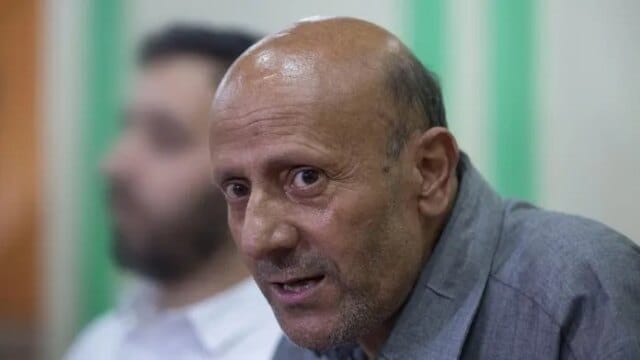
Srinagar, Sep 21: Baramulla MP Engineer Rashid has entered the second day of his hunger strike at Tihar Jail, having completed over 30 hours of his planned 48-hour protest, Awami Itihaad Party (AIP) chief spokesperson Inam Un Nabi said on Sunday.

Inam described the strike as “not merely a personal sacrifice, but a moral outcry against the hypocrisy of Indian and Pakistani governments,” highlighting the ongoing hardships faced by the people of Jammu and Kashmir.

Hundreds of party activists, social and human rights defenders, and members of civil society visited the AIP office in Srinagar to express solidarity with the incarcerated MP, he added.

Inam stated that the widespread support underscores that Rashid’s voice, though confined behind prison walls, continues to resonate with the public, representing their collective pain, resilience, and demand for justice.

Greater Kashmir

J&K govt fully committed to address challenges posed by recent rainfall: Deputy CM

0
Elected govt won’t step down, will fight for statehood, people’s rights: Deputy CM

Jammu, Sep 21: Jammu and Kashmir government led by Omar Abdullah is fully committed to address the challenges posed by the recent record rainfall, Deputy Chief Minister Surinder Chaudhary said on Sunday, as he visited flood and landslide affected areas in Dhansal block here.

He directed the local revenue officials to prepare a detailed report on the losses and submit it to the District Commissioner’s office to facilitate the prompt distribution of compensation to those affected.

“Omar Abdullah-led National Conference government is working tirelessly to restore the region’s infrastructure, surface connectivity, and basic utility services, all of which have been severely impacted by the record rainfall last month,” Chaudhary said interacting with the affected population.

He said substantial progress has already been made, with ongoing efforts to tackle the extensive damage caused.

He assured the public that the government is fully committed to address the challenges posed by the weather vagaries across the Jammu division.

The deputy CM inspected several severely impacted areas, including the Bal Devji foot bridge, which was washed away in the recent floods.

He gave explicit instructions to the concerned Chief Engineer of the Roads and Buildings (R&B) department to expedite the restoration of the bridge and ensure that it is reconstructed as a motorable bridge.

Chaudhary also visited locations where both public and private properties had sustained significant damage.

He also emphasised the need for immediate restoration of essential services, instructing the concerned officials from Jal Shakti, Power Development Department (PDD), and municipal authorities to prioritize the restoration of water and power supply in the affected areas.

Echoing the Deputy Chief Minister’s sentiments, National Conference provincial president Ratan Lal Gupta highlighted the importance of the party’s local functionaries actively engaging with the people to understand their difficulties and promptly raise these issues with the administration.

He reiterated that National Conference remains the “all-weather friend of the public” and assured the residents that the party would stand by them through these challenging times.

Greater Kashmir

Exchange of gunfire in Kishtwar, operation underway: Army

0
Kulgam encounter enters day 2

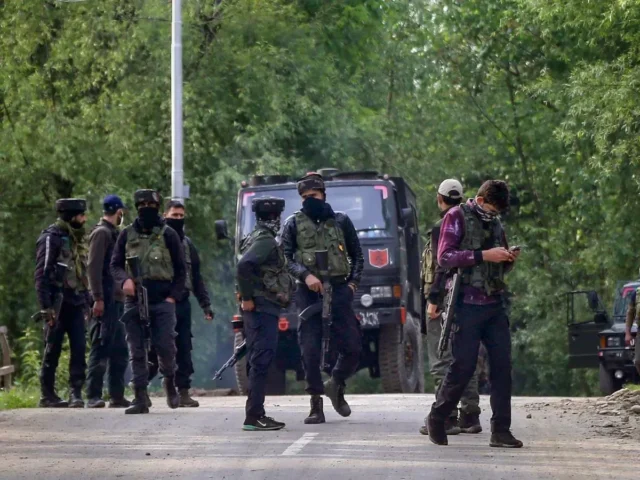
Kishtwar, Sep 21: Army on Sunday said that its troops exchanged fire with terrorists while carrying out an intelligence-based operation in Keshwan area of Kishtwar.

In a post on X, the white Knight Corps said: “Alert troops of #WhiteKnightCorps at around 1 pm today, while carrying out an intelligence based operation in general area of Kishtwar have established contact with terrorists”.

“Fire was exchanged with terrorists. Operation is in progress,” it added.

Greater Kashmir

‘GST Utsav’ from tomorrow, will be a ‘festival of savings’ for all countrymen: PM Modi

0
‘GST Utsav’ from tomorrow, will be a 'festival of savings' for all countrymen: PM Modi

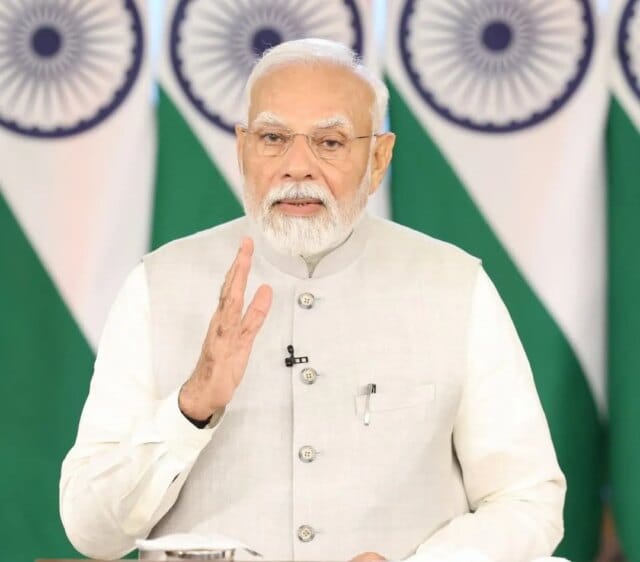
New Delhi, Sep 21: Prime Minister Narendra Modi on Sunday announced the launch of a nationwide “GST Utsav” from the first day of Navratri on Monday, calling it a festival of savings for the people of India.

In his address to the nation, the Prime Minister said that from September 22, people will be able to buy their favourite items at lower prices as the new GST rates come into effect.

“Next Gen GST reforms being implemented from tomorrow, it is like ‘GST saving festival’,” PM Modi said.

“From tomorrow, you will be able to buy your favourite items with ease. This is like a GST saving festival for every Indian,” the Prime Minister added.

PM Modi said that the poor and the new middle class are getting double benefits after the GST rate cuts.

Greeting citizens on the occasion of Navratri, he said that the new phase of GST reforms will directly benefit the common man, farmers, MSMEs, middle-class families, women and youth.

The government had earlier announced GST rate cuts on September 4, covering a wide range of products — from automobiles to daily consumer items.

This marks the biggest indirect tax reform since the Goods and Services Tax was rolled out in July 2017.

The new system, often called GST 2.0, introduces a two-slab structure of 5 per cent and 18 per cent, with an additional 40 per cent rate only for super luxury, sin and demerit goods.

The reforms were cleared by the GST Council at its 56th meeting, where both the Union and state governments reached a consensus.

Earlier in the day, the Prime Minister’s Office had posted on X that PM Modi would address the nation at 5 p.m.

During his speech, PM Modi underlined that the reforms symbolise the cooperative spirit between the Centre and the states.

The Prime Minister said the decision to move forward with the new tax structure will make goods cheaper, encourage industry, and strengthen India’s economy.

Greater Kashmir

GK School to host free online & in-person Q&A session on Sep 27

0
GK School to host free online & in-person Q&A session on Sep 27

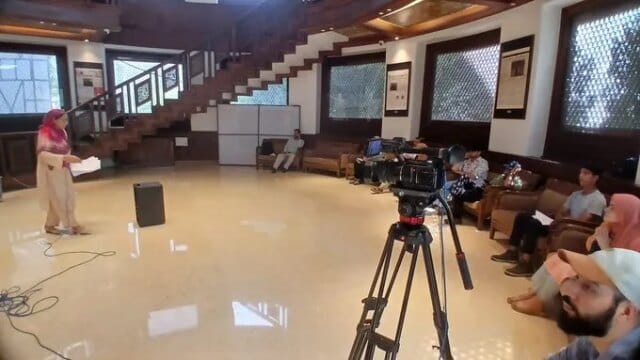
Srinagar, Sep 21: The GK School for Communications (GKSC) will hold a free interactive Q&A session for prospective students on Saturday (September 27, 2025) from 12:20 pm to 1:30 pm. The session is open to anyone interested in the school’s training programs – both in-person at the Greater Kashmir headquarters at Rangreth and online.

Aspirants can learn about GKSC’s 8-week Writing Bootcamp and Communication Skills Training, interact directly with the instructors, and get answers to all their queries regarding course content, format, fees, and its usefulness in your career pursuits.

This is a chance for anyone curious about our courses to engage with us, ask questions freely, and decide whether it’s the right fit.

Participation in the Q&A session is free, and you can register for it by sending a Whatsapp to this no: 9906122295, or you can email to gksc@greaterkashmir.com

Greater Kashmir

- Advertisement -
Google search engine

Recent Posts