Home Blog Page 576

When is it time to take them and what the science really says
0
When is it time to take them and what the science really says

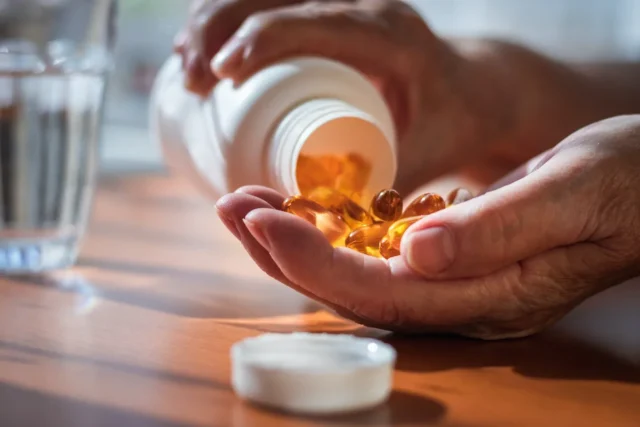
Srinagar, Aug 16: Vitamin supplements can be a convenient way to fill nutritional gaps in our diets — but they’re far from a cure-all. The global market for vitamin and mineral supplements is booming, valued at around $32.7 billion (£24.2bn) according to a BBC report. In fact, more than 74% of Americans and about two-thirds of Britons report using them in hopes of improving their health.

Yet despite their popularity, supplements remain controversial. Some studies suggest they offer little to no health benefit, while others indicate potential risks. So what does the science actually say? Should everyone be taking vitamins — or only certain people? And do we really need them at all? As per experts

Why Do People Take Vitamins and Minerals?

Vitamins and minerals are essential nutrients our bodies can’t produce on their own. That means we must get them through our diet. For example: Vitamin A is crucial for vision and skin health.
Vitamin C supports the immune system.
Vitamin K helps with blood clotting.
Key minerals like calcium, magnesium, selenium, and potassium play a range of important roles, from bone strength to heart function. These nutrients are called micronutrients because we need them in small amounts — unlike macronutrients such as carbohydrates, proteins, and fats, which our bodies require in larger quantities. Ideally, we should be getting all these nutrients from a balanced diet rich in fruits, leafy greens, whole grains, nuts, dairy, and fish. But the reality is that many people fall short. The rise of fast food and ultra-processed meals means convenience often outweighs nutrition.

As one study put it, “The average individual is eating only half the recommended amount of fruits and vegetables,” highlighting a growing dietary gap that supplements aim to fill.

Bess Dawson-Hughes, a senior scientist at the US Department of Agriculture’s Human Nutrition Research Center on Aging, and professor of medicine at Tufts University. “So if you’re leaning in that direction, then you are probably missing out on some essential nutrients.”

Meanwhile, according to the National Institutes of Health (NIH) in the US, excess vitamin A can cause “severe headache, blurred vision, nausea, dizziness, muscle aches, and problems with coordination. In severe cases, getting too much preformed vitamin A can even lead to coma and death.”

The clinical trials that have been done on vitamins and minerals sometimes have contradictory results, and suggest that whether you will benefit from taking vitamin supplements depends on who you are, as well as the exact micronutrient the supplement contains.

Should You Be Taking Vitamin D Supplements?

While it’s generally unwise to exceed the recommended daily allowance for antioxidants, the picture is more nuanced when it comes to other nutrients — especially vitamin D.

Why Vitamin D Matters

Vitamin D is crucial for building and maintaining strong bones, yet many people don’t get enough of it. Technically, vitamin D isn’t a true vitamin, as our bodies can produce it naturally when our skin is exposed to sunlight. It’s also found in some foods, but dietary sources alone are often insufficient.

In regions with limited sunlight, especially during the winter, this becomes a problem. That’s why public health guidelines in the UK recommend that everyone take a vitamin D supplement between October and March. Similar advice applies to anyone living north of 37 degrees latitude (roughly the latitude of Santa Cruz, California) or south of 37 degrees latitude in the Southern Hemisphere.

What Does the Research Say?

One of the largest studies on vitamin D is the VITAL trial, led by Dr. JoAnn Manson and involving over 25,000 U.S. adults. The study investigated whether daily vitamin D or omega-3 supplements could reduce the risk of cancer, heart disease, or stroke in people with no prior history of these conditions.

The results were mixed:

No overall reduction in cardiovascular disease, stroke, or cancer rates.
But: A 17% reduction in cancer deaths among those taking vitamin D.
Among participants who took vitamin D for two years or more, there was a:
25% reduction in cancer mortality, and
17% reduction in advanced metastatic cancer.
“It may be that vitamin D affects the biology of tumor cells — making them less invasive and less likely to metastasize — but it doesn’t appear to prevent the initial development of cancer,” explains Dr. Manson.

Other Benefits and Limitations

The VITAL trial also found that vitamin D supplements significantly lowered the incidence of autoimmune diseases, such as rheumatoid arthritis and psoriasis.

However, when it comes to bone health — perhaps the most commonly cited reason for taking vitamin D — the findings are less conclusive. An early 2000s French study showed that older adults, particularly women in care homes, could benefit from supplementation. But more recent trials, including VITAL, ViDA, and D-Health, found no significant reduction in fractures or falls from taking vitamin D.

One possible explanation? Many trial participants may have already had adequate vitamin D levels, meaning extra supplementation had little effect. As Bess Dawson-Hughes puts it, “The average American eats only half the recommended amount of fruits and vegetables,” which can lead to broader nutrient gaps — but not necessarily vitamin D deficiency in all cases.

So when should you actually take Vitamin supplements?

According to experts intriguingly, evidence is starting to grow that popping a daily multivitamin could be beneficial for health, particularly for older adults.

Manson’s physician’s health study II, which began over 20 years ago, found that the risk of being diagnosed with cancer was 8% lower in people who took a daily multivitamin for 11 years. The greatest benefit was in older participants who were above the age of 70, who had an 18% reduction in cancer with the multivitamin assignment compared to the placebo group.

For most people, vitamin supplements aren’t necessary if you’re eating a healthy, balanced diet — whole foods provide not only better-absorbed nutrients but also additional health benefits like fibre. Both JoAnn Manson and Bess Dawson-Hughes agree: food should come first.

However, supplements can play a useful role in specific cases. Those who may benefit include:

Older adults (60+) for potential cancer and cognitive benefits
Pregnant women, who need folic acid to prevent birth defects
Vegetarians or those who eat little fish, who may lack omega-3s
People with absorption disorders or those on certain medications
Nursing home residents, who often need vitamin D and calcium
Ultimately, while supplements aren’t a magic fix, they can act as a nutritional safety net — particularly for those at risk of deficiencies. Just remember: more isn’t better, and exceeding recommended doses can do more harm than good.
Greater Kashmir

J-K CM at cloudburst-hit village

0
People's anger genuine, rescuers focused on saving those trapped: J-K CM at cloudburst-hit village

Chasoti, Aug 16: The anger of people seeking information about their kin missing in the aftermath of a cloudburst is quite understandable, Jammu and Kashmir Chief Minister Omar Abdullah said on Saturday after several locals confronted him in Chasoti and vented their frustration.

He said the focus of the rescue operation right now is to find those still trapped under the debris.

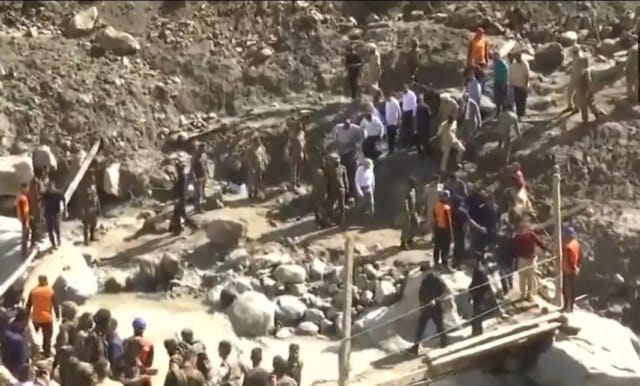
A coordinated rescue and relief operation is underway in the village where 70 to 80 people have been reported missing by their families, even as locals and witnesses claim that hundreds may have been swept away by the flash flood and buried under giant boulders, wooden logs, and rubble.

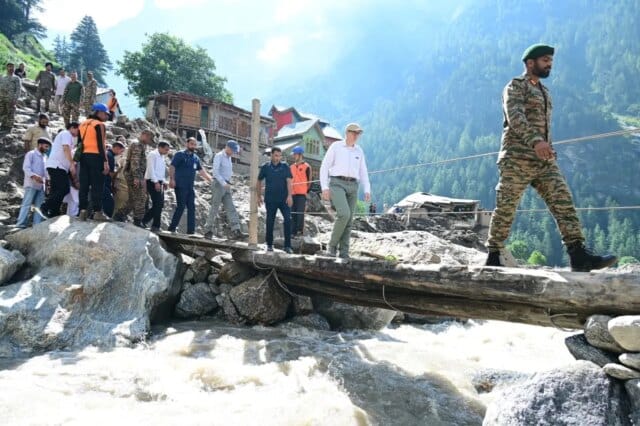
Abdullah reached the cloudburst-hit Chasoti, the last motorable village en route to the Machail Mata temple in the Kishtwar district, by car this morning and faced some people who were not happy with the rescue and relief efforts.

After being briefed by a senior Army officer and assessing the damage, the chief minister met several affected families on both sides of the stream, which is connected by a makeshift bridge made of logs.

Several hundred people vented their frustration in front of Abdullah, who tried to calm them down, saying he himself wants the rescue operation to be over as soon as possible.

The chief minister also invited them to a nearby tent to listen to their grievances, but some of them were reluctant. Following this, Abdullah left the scene.

“I can understand their anger. They have been waiting for their missing family members for the past two days. They want an answer. They want to know if their family members will come out alive or not,” he told reporters on his return journey.

The chief minister said the demand of the people is that if those missing are no longer alive, then the bodies should be handed over to them at the earliest for the last rites.

“We have deployed as many forces as we could, whether it is the NDRF, SDRF, Army, Jammu and Kashmir police or the CISF. We are trying to rescue the trapped people. And where there is no rescue, we will at least retrieve the bodies and hand them over to their families,” Abdullah said.

“At the moment, it is not really a relief operation. We are focusing on rescuing people as far as possible. After that, the aim would be to retrieve the bodies to the best extent possible.”

He said the death toll is around 60, while the number of missing people is between 70 and 80. “The number will fluctuate a little, but I do not think the number will reach 500 or 1,000 as is being projected. At the moment, it is 80, which is also a big number.”

The chief minister said immediate relief has been distributed to people whose homes have been partially or totally damaged.

“If I am not mistaken, about Rs 36 lakh that the deputy commissioner had at his disposal has already been distributed. I have spoken to the additional chief secretary in my office and instructed him to immediately release money from the chief minister’s relief fund so that it can be put at the disposal of the deputy commissioner,” he said.

Asked if there are plans to shift the affected families to safety, the chief minister said there is no plan, but such a demand was raised by some villagers.

“To shift or not to shift, in what conditions to shift, where to shift, for that, I think a team of experts should come and tell us. What if we pick them up from here and put them in a place where there will be more danger? Can we give them a place nearby where they can live and there is less danger? We will consider all these things,” he added.

Tragedy struck Chasoti around 12:25 pm on August 14, flattening a makeshift market, a community kitchen site for the pilgrimage, and a security outpost.

At least 16 houses and government buildings, three temples, four water mills, a 30-meter-long bridge, and over a dozen vehicles were also damaged in the flash flood.

The annual Machail Mata Yatra, which began on July 25 and was scheduled to conclude on September 5, remained suspended for the third consecutive day on Saturday. The 8.5-kilometre trek to the 9,500-foot-high shrine starts from Chasoti, around 90 kilometres from Kishtwar town.

Greater Kashmir

Death toll rises to 307 as monsoon rains continue

0
Death toll rises to 307 as monsoon rains continue

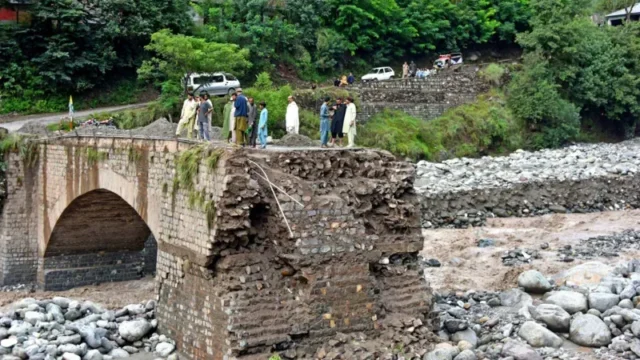
Srinagar, Aug 16: The death toll from severe monsoon-triggered floods and landslides in Pakistan has climbed to 307, with numbers continuing to rise as per a BBC report.

The majority of fatalities have been reported in the mountainous Khyber Pakhtunkhwa province in northwest Pakistan, according to disaster management authorities. At least 74 homes have been damaged, and a rescue helicopter crashed during operations, killing all five crew members on board.

Elsewhere, nine deaths were confirmed in Pakistan-occupied Kashmir, and five more in the Gilgit-Baltistan region in the north.

According to reports, government meteorologists have warned that heavy rainfall is expected to continue until 21 August, particularly in the northwest, where several areas have already been declared disaster zones.

The chief minister of Khyber Pakhtunkhwa, Ali Amin Gadapur while speaking to BBC said that an M-17 helicopter crashed due to bad weather while flying to Bajaur, a region bordering Afghanistan. As per officials in July, Punjab, home to nearly half of Pakistan’s 255 million people, recorded 73% more rainfall than the previous year and more deaths than in the entire previous monsoon.

Monsoon rains between June and September deliver about three-quarters of South Asia’s annual rainfall. Landslides and flooding are common and more than 300 people have died in this year’s season, as per various reports.

Greater Kashmir

J-K CM Omar meets cloudburst victims in Kishtwar, announces ex-gratia relief

0
J-K CM Omar meets cloudburst victims in Kishtwar, announces ex-gratia relief

Srinagar, Aug 16: Jammu and Kashmir Chief Minister Omar Abdullah visited the cloudburst affected areas of Kishtwar today and met affected families.

He expressed deep sorrow over the loss of lives and damage and said the Government stands firmly with the people in this hour of grief.

As a mark of solidarity and immediate succor, Chief Minister announced ex-gratia relief from the CM’s Relief Fund:

2 lakh for each deceased.

1 lakh for severely injured, 50,000 for minor injuries.

1 lakh for fully damaged structures.

50,000 for severely damaged structures.

25,000 for partially damaged structures.

Instructions were also issued for immediate restoration of the affected infrastructure in the area, said the CM, in a post on X.

At least 60 people, mostly pilgrims, died and scores got injured and missing after a massive cloudburst triggered landslides in Chasoti village.

Greater Kashmir

91 government websites officially down

0
Digital meltdown in J&K: 91 government websites officially down

Srinagar, Aug 16: In a stunning revelation, the Jammu & Kashmir government has disclosed that 91 official websites remain non-operational, affecting public access to vital services across the Union Territory.

The Jammu & Kashmir e-Governance Agency (JaKeGA), in response to a Right to Information (RTI) application filed by Syed Adil—an activist from Central Kashmir’s Ganderbal district—confirmed that the websites are down due to the non-availability of ‘safe to host’ certificates.

According to the agency, the websites were taken offline because the concerned departments failed to conduct mandatory security audits.

It further stated that these audits are now underway through CERT-In empanelled agencies. “In addition, websites already hosted by the Jammu & Kashmir State Data Centre and lacking a ‘safe to host’ certificate are being audited by the third-party auditor, M/S Grant Thornton, appointed by the Government of Jammu & Kashmir,” reads the response from JaKeGA’s administrative officer, who also serves as its Public Information Officer (PIO) under the RTI Act.

To a query whether any temporary or alternative arrangements had been made to ensure service continuity, JaKeGA dodged the question, saying, “The information in this regard can be provided by the concerned departments.”

These websites have been inaccessible since the first week of May.

Speaking to Kashmir News Observer, Syed Adil slammed the government’s failure to restore these websites.

“It has been officially revealed that 91 websites are down, but the actual number could be around 150,” he said. “There has been little follow-up from the government to restore these websites, which reflects a lack of seriousness.”

Minister for Information Technology, Satish Sharma couldn’t be contacted for comments. (KNO)

Greater Kashmir

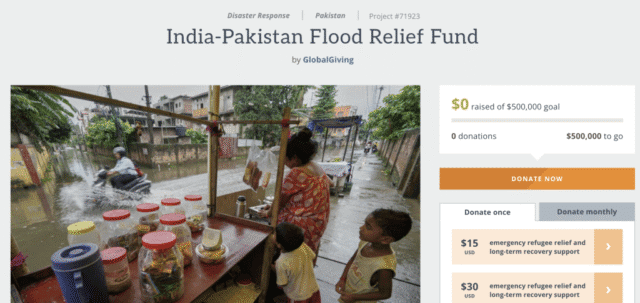
GlobalGiving launches India-Pakistan flood relief fund to aid victims

0
GlobalGiving launches India-Pakistan flood relief fund to aid victims

A non-profit platform GlobalGiving has launched the India-Pakistan Flood Relief Fund to support immediate rescue and relief efforts in the wake of catastrophic flooding across India and Pakistan.

The fund, it said, aims to provide urgent assistance including medical care, food, clean water, and temporary shelter for displaced families.

The appeal comes as torrential rains and a cloudburst in Jammu and Kashmir’s Kishtwar district triggered flash floods and landslides, leaving at least 60 people, mostly pilgrims, dead, and scores injured and missing.

In neighbouring Pakistan, authorities have reported nearly 200 deaths and large-scale displacement after rivers breached embankments and submerged settlements.

GlobalGiving, a ‘top-rated charity on Charity Navigator and BBB Accredited’, said its priority is to channel aid through locally led organizations, ensuring timely and effective delivery to the hardest-hit and underserved communities. Once emergency needs are met, the fund will transition towards long-term recovery and rehabilitation, it said.

On its website, GlobalGiving said they have been “responding to disasters and supporting emergency aid and long-term relief programs since 2004. We have facilitated more than $285M in disaster donations to funds just like this one.”

Further details are available on their website

Greater Kashmir

J-K CM Omar Abdullah meets flash-flood affected families in Kishtwar

0
J-K CM Omar Abdullah meets flash-flood affected families in Kishtwar

Kishtwar, August 16: Jammu and Kashmir Chief Minister Omar Abdullah on Saturday met with the families affected by the flash flood due to a cloud burst in Chasoti village of Kishtwar district.

CM Abdullah also reviewed the ongoing relief and rescue operations and received a detailed briefing from Army personnel. He used a Virtual Reality (VR) headset to review the destruction and said immediate relief measures would be taken to support affected families.

The Indian Army, along with the National Disaster Response Force (NDRF), State Disaster Response Force (SDRF), local police and district administration, is carrying out rescue operations in the village.

The cloudburst, which occurred along the Machail Mata Yatra route, triggered flash floods and widespread destruction on Thursday, killing at least 60 people.

On Friday, Abdullah confirmed the deaths and said that the number of missing people was still being verified.

“Around 60 bodies have been found. The number of missing persons is being assessed. After the rescue and relief operation concludes, we will inquire whether the Administration could have taken any preventive steps when the Met Department had issued a warning and also advised people not to venture out if not needed. The rescue operation by the Army, NDRF, SDRF, Police, and Administration is underway. Workers of different political parties are also working on the ground,” Omar Abdullah told reporters.

Union Minister Jitendra Singh also visited Chesoti late on Friday evening to take stock of the situation.

Meanwhile, as per sources, the Indian Air Force has been put on standby to support the operations. Two Mi-17 helicopters and one Advanced Light Helicopter have been kept ready at Jammu and Udhampur for deployment if needed.

Earlier, in his Independence Day address, Prime Minister Narendra Modi expressed solidarity with those affected by natural disasters across the country.

Greater Kashmir

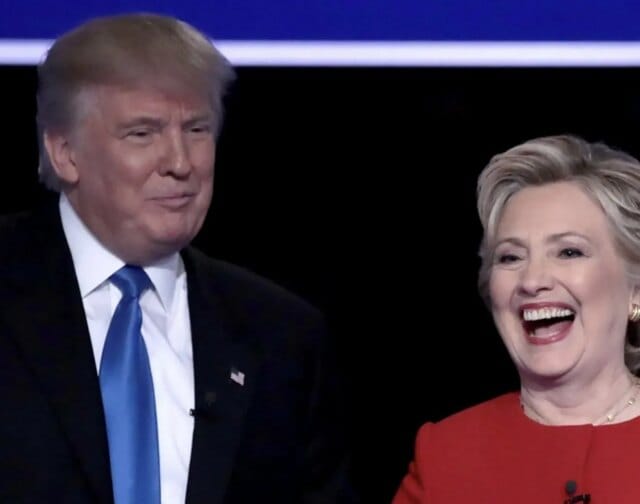
Hillary Clinton says she’d nominate Trump for Nobel Peace prize — if he ends Ukraine war without territorial concessions

0
Hillary Clinton says she’d nominate Trump for Nobel Peace prize — if he ends Ukraine war without territorial concessions

New Delhi, Aug 16: In an unexpected twist, former US Secretary of State Hillary Clinton said she would nominate her longtime political rival US President Donald Trump for a Nobel Peace Prize — if he manages to end the Russia-Ukraine war without forcing Kyiv to cede any territory to Moscow.

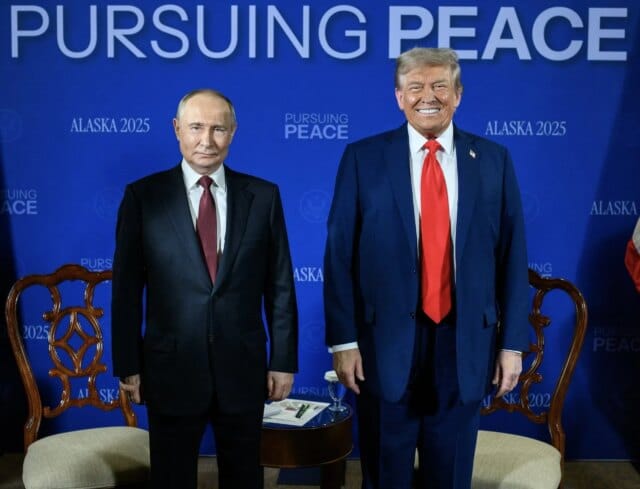
Clinton made the surprising remark just hours before Trump’s high-stakes meeting with Russian President Vladimir Putin at Joint Base Elmendorf-Richardson, a Cold War-era military installation in Anchorage, Alaska.

Speaking on ‘Raging Moderates’ podcast, Clinton said, “If he could bring about the end to this terrible war, if he could end it without putting Ukraine in a position where it had to concede its territory to the aggressor, could really stand up to Putin — something we haven’t seen — but maybe this is the opportunity. If President Trump were the architect of that, I’d nominate him for a Nobel Peace Prize.”

Clinton emphasised the geopolitical stakes, saying, “He is not meeting a friend. He is meeting an adversary who wants to see the destruction of the US and the Western alliance.”

Her comments underscored the gravity of the Alaska summit, which some observers called a potential turning point in the nearly three-year-long conflict in Eastern Europe.

The Clinton-Trump rivalry dates back to the 2016 US presidential election, when Trump defeated the former First Lady in a bruising contest. During that campaign, Clinton criticised Trump’s admiration for authoritarian leaders like Putin.

“He praises dictators like Vladimir Putin and picks fights with our friends,” she said.

She also famously referred to some of his supporters as a “basket of deplorables,” and called Trump “temperamentally unfit” for office. In return, Trump repeatedly mocked Clinton on the campaign trail and later questioned her handling of foreign policy as Secretary of State.

Despite their acrimonious history, Clinton’s remarks suggest that even she might acknowledge a breakthrough should Trump succeed in ending the war on favorable terms for Ukraine.

Trump has repeatedly pledged to end the war in Ukraine “quickly,” although critics have questioned how he would achieve that, particularly given Russian President Vladimir Putin’s insistence on Ukraine recognising Russia’s territorial claims and lifting Western sanctions. Ukrainian President Volodymyr Zelensky, who was not invited to the summit, has firmly rejected any territorial concessions.

Significantly, after the summit Presidents Donald Trump and Vladimir Putin said that they made progress in three hours of talks on Friday, moving closer to finding an end to the Ukraine War, but did not announce an immediate ceasefire.

“It’s not a done deal at all”, he told a Fox News interviewer after Friday’s summit in Alaska. “And Ukraine has to agree. President (Volodymyr) Zelensky has to agree.”

“We had a very good meeting today, and I think a lot of points were negotiated on behalf of Ukraine”, he said.

Before the summit, he said that he would not be negotiating on behalf of Ukraine and that the meeting was a sounding board aimed at facilitating a direct meeting between Presidents Putin and Zelensky.

Putin called the meeting “constructive and mutually respectful,” stating that the discussions had laid the groundwork for peace. He urged Ukraine and European leaders to engage in the process and warned against provocations that could jeopardise progress.

Trump echoed the sentiment, calling the talks “extremely productive.”

He noted that multiple points of agreement had been reached, including one “very significant” breakthrough.

Still, he cautioned, “There’s no deal until there’s a deal.”

Trump said he would consult with Zelensky and key European allies before moving forward with any formal agreements.

Greater Kashmir

J-K CM reaches cloudburst-hit Chasoti village to assess damage

0
J-K CM reaches cloudburst-hit Chasoti village to assess damage

Chasoti, Aug 16: Jammu and Kashmir Chief Minister Omar Abdullah on Saturday reached Chasoti village in the Kishtwar district to assess the damage caused by flash floods triggered by a cloudburst that left 60 people dead and over 100 injured.

A coordinated rescue and relief operation is underway in the village where 75 people have been reported missing by their families, even as locals and witnesses claim that hundreds may have been swept away by the flash flood and buried under giant boulders, wooden logs, and rubble.

The chief minister, who arrived in Kishtwar on Friday evening, left for Chasoti by road early Saturday. He is accompanied by his political advisor, Nasir Aslam Wani.

A senior army officer, supervising the relief and rescue operation, briefed Abdullah at the scene about the ongoing operation. The chief minister was also provided with a virtual reality headset to understand the extent of damage caused by the flash floods.

Tragedy struck Chasoti — the last motorable village en route to the Machail Mata temple — around 12:25 pm on August 14. It flattened a makeshift market, a community kitchen site for the pilgrimage, and a security outpost.

At least 16 houses and government buildings, three temples, four water mills, a 30-meter-long bridge, and over a dozen vehicles were also damaged in the flash flood.

The annual Machail Mata Yatra, which began on July 25 and was scheduled to conclude on September 5, remained suspended for the third consecutive day on Saturday.

The 8.5-kilometre trek to the 9,500-foot-high shrine starts from Chasoti, around 90 kilometres from Kishtwar town.

Greater Kashmir

On day of meeting Putin, Trump repeatedly claims he resolved India-Pak conflict

0
On day of meeting Putin, Trump repeatedly claims he resolved India-Pak conflict

New York, Aug 16: On the day of his summit meeting with Russian President Vladimir Putin, US President Donald Trump repeated multiple times his claim that he stopped the war between India and Pakistan, while also commenting on New Delhi’s purchases of Russian oil.

New Delhi has been maintaining that India and Pakistan halted their military actions following direct talks between their militaries without any mediation by the US.

“I’ve negotiated five wars to their end, and the wars that were tough. India, Pakistan…” Trump said in an interview with Fox News a couple of hours after his high-stakes summit meeting with Putin ended in Anchorage, Alaska, on Friday.

The meeting between the two leaders concluded without any agreement on ending the Russia-Ukraine war.

In the same interview, Trump again spoke about resolving the conflict between India and Pakistan, as well as others, including between Congo and Rwanda, Thailand and Cambodia, and Armenia and Azerbaijan.

“Look at India. Take a look at India and Pakistan. They were shooting down airplanes already, and that would have been maybe nuclear. I would have said it was going to go nuclear, and I was able to get it done,” Trump claimed.

Stressing that wars are “very bad”, Trump said that he seems to have “an ability to end them, to get people together” for which he uses the “power of the United States”.

When asked about how he settles conflicts like the one between India and Pakistan, Trump said he does so through trade.

“Because I deal with all of the countries for trade, and while I have them on the phone, if I’m dealing with them…they say, you know, there’s a war going on, and if we’re doing trade with one or both of them, I say ‘we’re not going to do a deal unless you make peace’.”

In a separate interview with Fox News aboard Air Force One on his way to Alaska for the summit meeting, Trump spoke about the tariffs on India.

“Well, he (Putin) lost an oil client, so to speak, which is India, which was doing about 40 per cent of the oil. China, as you know, is doing a lot…And if I did what’s called a secondary sanction, or a secondary tariff, it would be very devastating from their standpoint. If I have to do it, I’ll do it. Maybe I won’t have to do it,” Trump said.

Last week, Trump imposed tariffs totalling 50 per cent on India, including 25 per cent for Delhi’s purchases of Russian oil, which will come into effect from August 27.

Responding to the tariffs, the Ministry of External Affairs has said that the targeting of India is unjustified and unreasonable.

“Like any major economy, India will take all necessary measures to safeguard its national interests and economic security,” it said.

In the interview, the US president said that he would like to focus on his country but keeps getting “these interruptions.”

“I’ve solved six wars in six months, when you think about it, and that’s from Pakistan to India, that was going to be a terrible one, planes being shot down, that was getting ready to flare, and they are nuclear powers and so many others,” Trump claimed.

Since May 10, when Trump announced on social media that India and Pakistan had agreed to a “full and immediate” ceasefire, he has repeated his claim on several occasions.

Trump has claimed that he told the nuclear-armed South Asian neighbours that America will do a “lot of trade” with them if they stopped the conflict.

India has been consistently maintaining that the understanding on cessation of hostilities with Pakistan was reached following direct talks between the Directors General of Military Operations (DGMOs) of the two militaries.

Greater Kashmir

- Advertisement -
Google search engine

Recent Posts