Home Blog Page 598

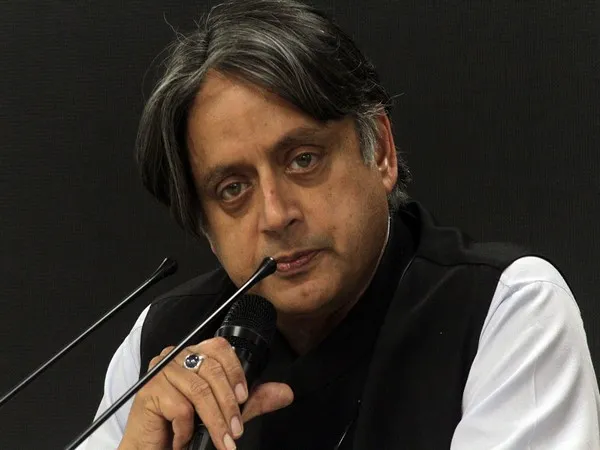
“Why should we stop at 17%? We should also raise it to 50%” says Shashi Tharoor on US tariffs
0
Tharoor slams ‘zealots’; says was clearly speaking only about reprisals for terrorist attacks

New Delhi, August 07: Congress leader Shashi Tharoor on Thursday said that India should also raise tariffs on American goods to 50 per cent in response to the US imposing an additional 25 per cent tariff on Indian exports.

Tharoor questioned why India should stop at the current 17 per cent tariff and emphasised that the country should not be intimidated by such actions. He also said that no country should be allowed to threaten India in this manner.

Speaking to the reporters, Shashi Tharoor said, “It will definitely have an impact because we have a trade of $90 billion with them, and if everything becomes 50% more expensive, buyers will also think why should they buy Indian things?… If they do this, we should also impose a 50% tariff on American exports… It is not that any country can threaten us like this…”

“Our average tariffs on American goods are 17%. Why should we stop at 17%? We should also raise it to 50%… We need to ask them, do they not value our relationship? If India doesn’t matter to them, they should also not matter to us,” he added.

Earlier, US President Donald Trump signed an Executive Order on August 6 imposing an additional 25 per cent tariff on imports from India. Trump cited matters of national security and foreign policy concerns, as well as other relevant trade laws, for the increase, claiming that India’s imports of Russian oil, directly or indirectly, pose an “unusual and extraordinary threat” to the United States.
Terming the United States’ move to impose additional tariffs on India over its oil imports from Russia as “unfair, unjustified and unreasonable,” the Ministry of External Affairs (MEA) declared that New Delhi will take “all actions necessary to protect its national interests.

In further development, a senior United States Administration Official said that there is simply “no comparison” between the hundreds of billions of dollars of growing Indian imports of Russian oil and the modest US imports of Russian goods.

In response to a question, the US official said, “There is simply no comparison between the hundreds of billions of dollars of growing Indian imports of Russian oil, and the modest U.S. imports of Russian goods, which amount to less than 1% of the value of Indian imports”.
Greater Kashmir

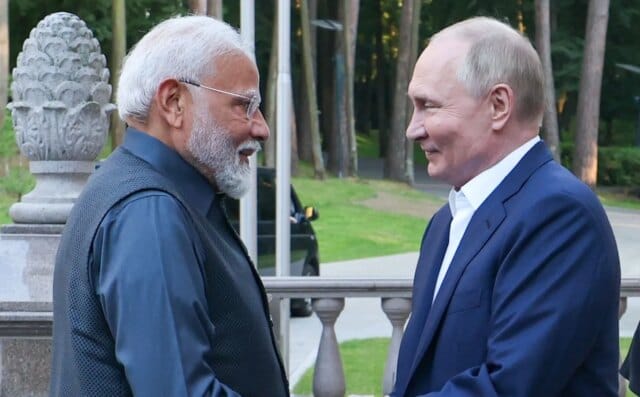
Putin to visit India later this month, reports Russian media

0
President Putin calls PM Modi, condemns Pahalgam terror attack, offers full support

Moscow, Aug 07: Russian President Vladimir Putin’s visit to India is expected at the end of August, a leading news agency of the country reported on Thursday citing comments made by National Security Advisor (NSA) Ajit Doval during his ongoing visit to Moscow.

“We have now established very good relations, which we value very much, a strategic partnership between our countries. We interact at a high level… We were pleased to learn about President Putin’s visit to our country, scheduled for late August,” the Interfax news agency quoted NSA Doval as saying at a meeting with Russian Security Council Secretary Sergei Shoigu in Moscow on Thursday.

Earlier, Kremlin aide Yury Ushakov had confirmed that Putin is expected to visit India following an invitation from Prime Minister Modi.

The visit is being planned as part of the ongoing commitment to annual meetings between the two leaders.

“Our leaders have an agreement to meet once a year. This time, it is our turn,” Ushakov had said during a press briefing.

The last visit by the Russian President to India took place on December 6, 2021, during the 21st India-Russia Annual Summit in New Delhi.

PM Modi, meanwhile, held two high-profile visits to Russia last year, attending the 22nd Russia-India Summit in July and later participated in the BRICS Summit held in Kazan in October.

Citing that the political dialogue between India and Russia is “developing dynamically” and is facilitated by the fact that Moscow and New Delhi “have close or even coinciding views on the objectively emerging multipolar world order”, Russian Foreign Minister Sergei Lavrov had also indicated that preparations are being made for Russian President Vladimir Putin’s upcoming visit to India.

“Relations between our countries have a long history. It can be said that they have stood the test of time more than once. Today, Russia and India are developing equal cooperation based on sincere, mutual respect and consideration of each other’s interests,” Lavrov told the participants of the first international conference ‘Russia and India: Towards a New Agenda for Bilateral Relations’ which was also addressed by External Affairs Minister (EAM) S. Jaishankar in March, this year.

“It is difficult to overestimate the contribution of our leaders to this process. It is symbolic that Prime Minister Narendra Modi made his first bilateral foreign visit after his re-election last year to Russia. Now it is our turn. Russian President Vladimir Putin accepted the invitation of the head of the Indian government. The visit of the head of the Russian state to the Republic of India is being prepared,” he added.

In June, the Russian President sent a message of condolences to President Droupadi Murmu and Prime Minister Narendra Modi over the passenger plane crash in Ahmedabad.

“Please accept the deepest condolences over the tragic consequences of a passenger plane crash in Ahmedabad. Kindly convey the words of sincere sympathy and support to the families and near ones of the victims, as well as wishes for a speedy recovery to all those injured in this catastrophe,” said Putin

In May, President Putin also called Prime Minister Modi and “strongly condemned” the April 22 terror attack in Pahalgam, offering “full support” to India in its ongoing fight against terrorism.

A statement issued by the Kremlin said that Putin expressed sincere condolences to PM Modi over the death of Indian citizens as a result of the barbaric terrorist attack on April 22 and emphasised the need for an “uncompromising fight” against terrorism in any form.

“During the conversation, the strategic nature of Russian-Indian relations of a special privileged partnership was emphasised. These relations are not subject to external influence and continue to develop dynamically in all directions,” read the statement issued by the Russian President’s office.

“The Indian leader reiterated his invitation to the Russian President to visit India for the traditional annual bilateral summit. The invitation was accepted with gratitude,” it added.

PM Modi, who had also been invited by Putin for the participation in the Victory Day celebrations, however could not travel to Russia.

The Russian President had earlier extended his condolences to President Droupadi Murmu and Prime Minister Modi over the tragic consequences of the terrorist attack in Pahalgam.

Greater Kashmir

Locals call for relocation amid anti-terror operation in J-K’s Kulgam

0
Operation Akhal: Blasts, firing continue on day 3 as encounter rages in Kulgam forests

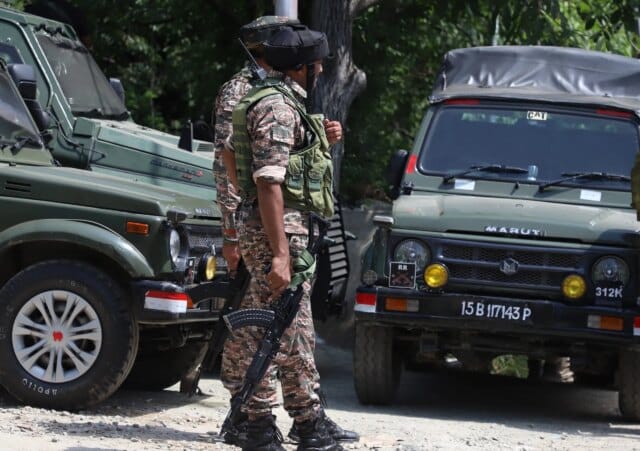
Srinagar, Aug 07: Amidst the ongoing anti-terror operation in Kulgam, which entered its seventh day on Thursday, locals from the Akhal village have called for their relocation from the area, citing severe hardships.

The residents claimed they were unable to sleep due to the relentless firing and were now running out of food as well.

“We have been facing severe difficulties for the past seven days. Firing and bombs go on during the night. There is a shortage of ration in our homes now,” Mubarak Khanday, a villager living close to the encounter site, said.

Emphasising that the women and children in the area are terrified, Khanday claimed that they have developed ‘psychological problems’ due to the continuous firing and explosions, he added.

Appealing to the government to make arrangements for their relocation, Khanday said, “We have not slept for seven days. Children are awake, and they cry. There is a shortage of medicine and rations.”

He further noted that the nomadic population living in the area have also run out of food grains. “The Gujjar people called us…they have no ration,” Khanday said.

However, locals were grateful to village officials like the numberdar and the chowkidar for taking care of the village. “The numberdar was giving ration to people from his home, but now he too is facing a shortage,” Khanday mentioned.

Sheikh Mehboob, a village official, urged the government to address the ration shortage and provide drinking water in the village.

“We are facing a shortage of water and medicines. We request that the Public Health Engineering (PHE) department arrange water for us. While the security forces are doing their job, the ongoing firing is causing problems for the elderly and children,” Mehboob said.

He thanked the deputy commissioner and the SSP for making arrangements for an ambulance for the locals.

Sheeraza Akhtar, another local, appealed to the Kulgam deputy commissioner to extend help to the villagers.

“We appeal to the deputy commissioner. We are poor and are facing shortages. Please help us as we are facing so many problems. Many people have left and some houses are empty. Please relocate us from here,” Akhtar said.

The counter-terror operations were launched in the forests of the Akhal area on August 1 following a tip-off about the presence of terrorists in the area.

So far, two terrorists have been killed while several security forces personnel have sustained injuries. Security forces are using technical surveillance gadgets, including drones and helicopters, to track down the terrorists hiding in the forest.

This is the longest anti-terror operation in the Kashmir valley, so far, this year.

Greater Kashmir

Chronic back pain relief that lasts? Lancet study finds hope in new therapy

0
Chronic back pain relief that lasts? Lancet study finds hope in new therapy

Srinagar, Aug 07: A new study published in The Lancet Rheumatology marks a major milestone in back pain research, confirming that Cognitive Functional Therapy (CFT) can offer lasting relief for people living with chronic low back pain. This is the first trial to demonstrate that the benefits of CFT can persist for up to three years.

Earlier research, published in The Lancet, had already shown that CFT was more effective than standard care in boosting physical activity levels for up to one year. Now, this latest study provides evidence of the therapy’s sustained impact.

CFT works by helping individuals better understand their pain, challenge unhelpful beliefs and behaviours, and reduce the fear that movement could worsen their condition. It equips them with tools to manage pain, restore function, and build the confidence to return to meaningful activities.

Dr Mayur Kardile, consulting spine surgeon, Jehangir Hospital, Pune, has seen patients with low back pain, who are afraid of any movement that causes pain or aggravates it. That kind of fear leads to inactivity and can worsen the pain worse over time. “With CFT, patients are progressively challenged to undergo better exercises, slowly and safely guided to move again and face the things they’ve been avoiding”, he said.

Dr Anand Gangwal, associate professor, Sancheti College of Physiotherapy, Pune, says self-management skills are extremely important in case of gradual onset pain, especially low back pain and neck pain.

CFT is a form of psychotherapy, and the findings show that long-term benefits are possible through self-management, pain coping strategies, and increased confidence—alongside adopting a healthier lifestyle according to Prof. Mark Hancock from the Spinal Pain Research Centre at Macquarie University, Sydney.

492 patients with chronic low back pain in Australia, who were randomly assigned to receive eight treatment sessions of usual care, CFT, or CFT plus biofeedback . Those who received CFT and CFT plus biofeedback saw improvements in their physical activity participation over usual care.

Greater Kashmir

Why August’s full moon is known as the Sturgeon moon – and what it signifies

0
Why August’s full moon is known as the Sturgeon moon – and what it signifies

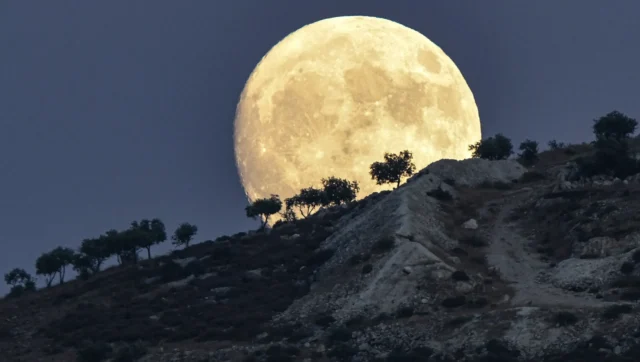
Srinagar, Aug 07: The full moon in August is traditionally known as the Sturgeon Moon, a name rooted in the seasonal rhythms of the Great Lakes region in North America. According to TimeandDate, the name reflects the historical abundance of sturgeon fish during this time of year, when they were most easily caught.

The lake sturgeon is a fascinating freshwater species—males can live up to 55 years, while females can reach 150 years. These ancient fish can grow over 2 meters long and weigh as much as 90 kilograms.

The Center for Native American Studies stated that it’s called the Wild Rice Moon by the Anishinaabe people. According to NASA, it is known as the Green Corn and Grain Moon elsewhere in North America.

As The Old Farmer’s Almanac explains, the name “Sturgeon Moon” comes from the giant lake sturgeon once found in large numbers in the Great Lakes and Lake Champlain. They were a vital food source for Native American communities during late summer. Though once plentiful, lake sturgeon are far less common today due to habitat loss and overfishing.

On August 9, Venus and Jupiter will appear close together in the eastern pre-dawn sky, creating a rare celestial event. The Moon will make a close pass to Saturn and Neptune on August 12, although only Saturn will be visible to the naked eye.

Greater Kashmir

New study raises health concerns, especially for Children

0
New study raises health concerns, especially for Children

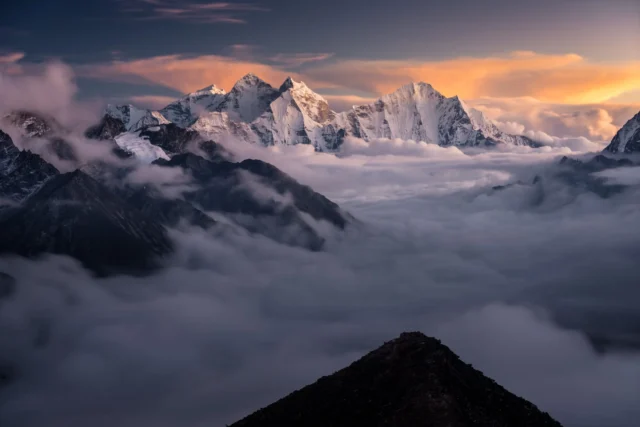
Srinagar, Aug 07: Clouds drifting over the Himalayas—once thought to bring the purest drinking water—may be carrying a hidden danger. A recent study has revealed that these clouds could be laced with toxic heavy metals, posing serious health risks, particularly for children. The research found that pollution levels in clouds over the Eastern Himalayas are 1.5 times higher than those over the Western Ghats.

Conducted by the Bose Institute, an autonomous research organization under India’s Department of Science and Technology (DST), the study detected elevated levels of heavy metals such as cadmium (Cd), copper (Cu), and zinc (Zn) in non-precipitating clouds during the early monsoon season.

“Children are at higher risk of 30 per cent of such toxic metals than adults in India. Inhalation of polluted clouds over Eastern Himalayas containing high concentrations of toxic metals is the most potential route for non-carcinogenic diseases,” the study published in the journal Science Advances highlighted.

To carry out the analysis, scientists collected low-level cloud samples in 2022 from two locations: the rooftop of the Indian Institute of Tropical Meteorology (IITM) in the Western Ghats and the Bose Institute campus in Darjeeling, located in the Eastern Himalayas. Their findings point to the need for deeper investigation into atmospheric pollution and its potential carcinogenic and non-carcinogenic effects, especially in ecologically sensitive and densely populated regions.

The study linked elevated levels of cadmium, chromium, copper and zinc in the region’s clouds to vehicular and industrial emissions from the foothills. They warned that clouds act as transport mediums for heavy metals, which can enter the body through breathing, skin exposure and consumption of rainwater in high-altitude areas.


Greater Kashmir

LG expresses grief over death of CRPF personnel in Udhampur road accident

0
LG Sinha expresses grief over pilgrim's death in Vaishno Devi landslide

Srinagar, Aug 07: Lieutenant Governor Manoj Sinha has expressed his deep grief over the loss of lives of CRPF personnel due to tragic accident in Basantgarh area of Udhampur.

The Lieutenant Governor in a post on X has said: “Saddened by loss of CRPF personnel due to an accident near Udhampur. We will never forget their exemplary service to the nation. My thoughts are with bereaved families. Praying for speedy recovery of injured. Directed senior officials to ensure best possible care and assistance”.

Greater Kashmir

It flowed away like a leaf

0
Uttarkashi: Rescuers resume search for over 60 missing people in flood-hit Dharali village

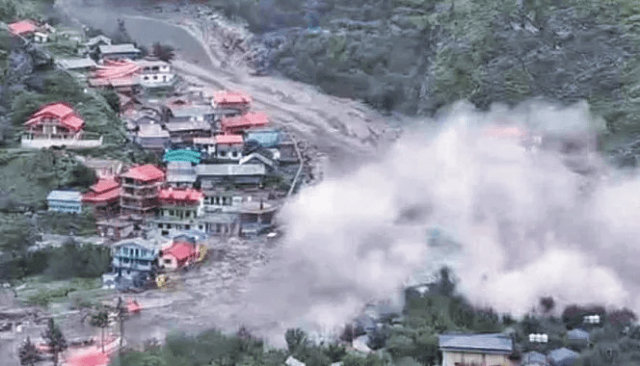
Srinagar, Aug 07: On Tuesday, with his hotel eerily empty, Jai Bhagwan, a hotelier in Dharali village, decided to visit a nearby temple for a local festival in honour of the naag devta. The temple, located some distance from the village market, was one of the few structures left untouched by the disaster that was about to unfold.

According to Indian Express report around 1:40 a.m., while attending the mela, Bhagwan heard a sudden commotion. “At first, there was a thunderous roar,” he recalled. “Then came screams from the nearby village. People started whistling, but we didn’t understand what was happening. Moments later, huge waves of mud, water, and rocks came crashing down.”

Bhagwan’s four-storey hotel was one of the structures swept away in the deluge. “We did not immediately understand what was happening. I tried to rush to my home, some metres away, but in 20 minutes, the water reached our house,” Bhagwan said. He later rushed to Harsil on foot.

Flash floods and mudslides tore through Dharali, sweeping away buildings in the market area and leaving a trail of destruction. Rescue operations are ongoing, with more than 60 people feared missing. So far, two bodies have been recovered, according to government officials.
Bhagwan told Indian Express that most hotels were empty due to the lull in tourism in the monsoon season, and the market had fewer people on the day the tragedy struck “In other months, my hotel is completely booked when the Char Dham yatra is going on”.

Greater Kashmir

“Farmer interests are our top priority,” says PM Modi after Trump announces new tariffs

0
Kashmir to Kanyakumari no longer a dream: PM Modi

New Delhi, August 7: In a strong message against the tariffs imposed by the United State, Prime Minister Narendra Modi on Thursday asserted that farmers remain India’s top priority and that the country would never compromise their interests.

“For us, the interest of our farmers is our top priority. India will never compromise on the interests of farmers, fishermen and dairy farmers. I know we will have to pay a heavy price for it and I am ready for it. India is ready for it,” said PM Modi.

His remarks come amid chaos over the Trump administration doubling the tariff imposition to 50 per cent on goods from India. During trade negotiations the United States was pushing for greater access to India’s agricultural market, specially corn, soybeans, and cotton.

However, India has so far resisted opening of the agricultural sector, and dairy products, due to concerns about domestic livelihoods and potential impacts on farmers. Earlier on Wednesday, US President Donald Trump signed an Executive Order imposing an additional 25 per cent tariff on imports from India.

According to the order issued by the White House, Trump cited matters of national security and foreign policy concerns, as well as other relevant trade laws, for the increase, claiming that India’s imports of Russian oil, directly or indirectly, pose an “unusual and extraordinary threat” to the United States. After the order, the total tariff on Indian goods will be 50 per cent. While the initial duty becomes effective on August 7, the additional levy will come into effect after 21 days and will be imposed on all Indian goods imported into the US, except for goods already in transit or those meeting specific exemptions.

The Executive Order also allows for modifications based on changing circumstances, including potential retaliation by other countries or steps taken by Russia or India to address the national emergency.

Meanwhile, economists feel the US additional tariff move could dent the India’s GDP growth in FY26 by 0.4 per cent. Sonal Badhan, Economics Specialist at Bank of Baroda, told ANI, “We had initially priced in approx. 0.2 per cent impact (on GDP growth) of 25-26 per cent tariffs imposed by the US on imports from India. The additional 25 per cent hike will come into effect after 21 days. During this time or in the coming months, there is a likelihood that lower rates may be negotiated.”

She added that depending on the final trade agreement, the total impact of these tariffs on GDP growth may range between 0.2-0.4 per cent. Sectors likely to be affected include garments, precious stones, electronics, pharma, auto parts, and MSMEs.

While the executive order imposes tariffs on most Indian imports, some items have been excluded under Annex II of Executive Order 14257. These include certain mineral substances, metallurgical ores, fuels, industrial chemicals, and pharmaceutical precursors.

Greater Kashmir

2 CRPF personnel dead, 12 injured in Udhampur road accident

0
2 CRPF personnel dead, 12 injured in Udhampur road accident

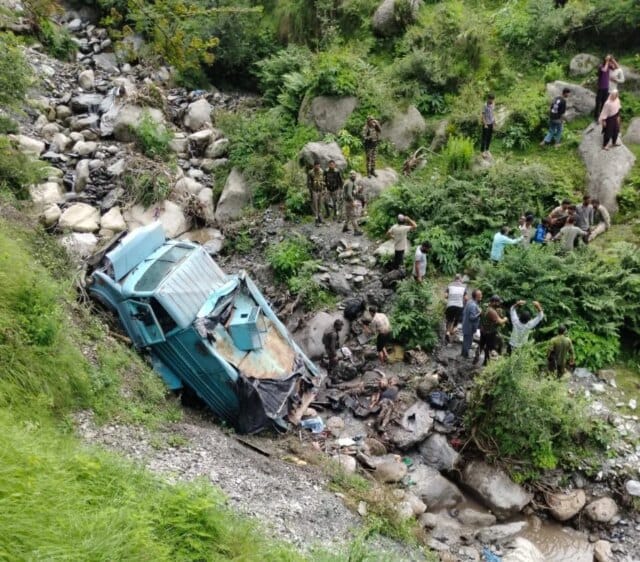
Udhampur, Aug 7: Two CRPF personnel died and 12 others were injured after a vehicle carrying them met with an accident near Kandva in the Basantgarh area of Jammu and Kashmir’s Udhampur district.

According to sources, the CRPF vehicle was travelling on the Kandva–Basantgarh road when it skidded off and plunged into a deep gorge. Police and local residents quickly launched a rescue operation and shifted the injured personnel to a nearby hospital for treatment.

Additional SP Udhampur, Sandeep Bhat, confirmed the incident and said, “Two CRPF personnel have died, and 12 others are injured. After receiving information, police teams rushed to the spot, started the rescue operation, and evacuated the injured to the hospital.”

Meanwhile, Union Minister Dr. Jitendra Singh shared an update on social media, saying:

“Disturbing to receive the news of a road accident involving a CRPF vehicle in the Kandva–Basantgarh area. The vehicle was carrying several brave jawans of the CRPF.
I have just spoken to DC Saloni Rai, who is personally monitoring the situation and keeping me updated. Rescue measures were initiated immediately, and locals have voluntarily come forward to assist. All possible help is being ensured.”

Greater Kashmir

- Advertisement -
Google search engine

Recent Posts