Home Blog Page 702

Shastri lauds Rishabh Pant’s ton against England

0
Shastri lauds Rishabh Pant's ton against England

New Delhi, Jun 22: Former India head coach Ravi Shastri heaped praise on the team’s wicketkeeper-batter Rishabh Pant following his exceptional batting performance on the second day of the Leeds Test against England at Headingley.

Pant slammed 134 runs off 178 balls, which was laced with 12 boundaries and six maximums, scoring at a run rate of above 75.

Speaking about Pant in a video posted by BCCI, Ravi Shastri said, “He’s outrageous. I saw that from the first day I saw him. He’s different from the rest. He plays on his own terms. At times, he’ll play the numbers game. At times, he’ll just do what his mind says. There’s a package there that can be extremely dangerous in Test match cricket. I think ever since he’s come into that number 5 slot, he’s been extremely consistent.”

Further, the former cricketer went on to talk about the boundary which Rishabh Pant slammed on his second ball of his innings on the bowling of England captain Ben Stokes to open his account.

“If you’re 30 for 3, for example, you might be tempted to send someone else. But with him, he’s so aggressive, he can turn the course of the game. For the others to make the most of it. The other way to look at it is, if he had got a platform like he got today, in this innings. Comes in after lunch, with a score in excess of 100. He can really make you pay the price for it because of the range of shots and the audacity. I mean, the second ball – how many people will hit Stokes down the ground, second ball? So, it’s a message to the opposition. I’m not here to just fool around. I’m here to take the attack to you,” the cricketer-turned-commentator added.

In the end, the 63-year-old spoke about the 209-run partnership between Team India’s captain Shubman Gill and vice-captain Rishabh Pant for the fourth wicket in the ongoing first Test of the five-match series.

“I’m really happy for him because when you see where he was after that accident. And to come and get a 100 in the first test of the series. I know what one against Bangladesh is, but this is special. When needed, the first test of the series as vice-captain of the side, batting with his captain, they know each other very well. To get involved in that partnership, fabulous,” Shastri concluded.

On Saturday, Pant overtook former skipper Rohit Sharma, becoming the team’s leading six-hitter in the history of the ICC World Test Championship (WTC).

Pant’s six count in WTC has gone up to 62, overtaking Rohit’s tally of 56 in 40 Tests. The 27-year-old has smashed these sixes in just 35 matches, scoring a total of 2,386 runs at an average of 41.85 with five centuries and 13 fifties in his WTC career. The leading six-hitter in ICC WTC history is England skipper Ben Stokes, who has smashed 83 sixes in 54 Tests. Pant on Saturday also surpassed MS Dhoni to register the most Test centuries by an Indian wicketkeeper-batter and continued his good show in what are regarded as tough wickets in countries outside Asia.

Pant now has seven centuries, overtaking Dhoni, who has six Test centuries. This is also his fifth century in SENA (South Africa, England, New Zealand and Australia) conditions, the most by an Asian batter. Three of these centuries have come in England, and one each has come in Australia and South Africa.

Also, he has equalled Sri Lankan legend Kumar Sangakkara (seven centuries) for most centuries in Tests as a designated keeper among all Asian countries.

Earlier on Friday, Pant also completed his 3,000 Test runs, becoming the second Indian wicketkeeper-batter to do so after Dhoni, and overtook Dhoni to become Asia’s most successful wicketkeeper-batter in SENA on the basis of run count.

In 44 Tests for India, Pant has scored 3,082 runs at an average of 43.40, with seven centuries and 15 fifties in 76 innings. His runs have come at a stunning strike rate of 73.69.

Greater Kashmir

Amit Shah lays foundation stone for NFSU, CFSL in Raipur

0
BSF dealt major blow to Pak which would them take years to overcome: Amit Shah

New Delhi, Jun 22: Union Home Minister and Minister of Cooperation Amit Shah on Sunday laid the foundation stone for the upcoming campus of the National Forensic Sciences University (NFSU) and the Central Forensic Science Laboratory (CFSL) in Raipur. He also virtually inaugurated the temporary campus of NFSU Raipur. The event was attended by Chhattisgarh Chief Minister Vishnu Deo Sai, the Union Home Secretary, and the Director of the Intelligence Bureau, among other senior officials.

The Home Minister described the day as a significant milestone for the state’s criminal justice system, as three major initiatives were launched to modernize policing, forensic science, and judicial processes in central India. He said these steps would act as a new foundation for justice delivery across the region.

Shah also inaugurated the i-HUB initiative in the state, aimed at boosting innovation and entrepreneurship among Chhattisgarh’s youth. He said this platform would help turn young citizens into startup founders and MSME entrepreneurs, opening up fresh investment avenues and accelerating the state’s industrial transformation.

Highlighting the government’s investment in Raipur’s forensic infrastructure, Shah said ₹145 crore has been allocated for the NFSU campus and ₹123 crore for the CFSL, totalling ₹268 crore. These institutions, he noted, would make New Raipur a hub of forensic science excellence and offer guaranteed job opportunities to graduates, further enhancing Chhattisgarh’s education and employment landscape.

The Home Minister also linked the day’s developments to the centenary celebrations of former Prime Minister Atal Bihari Vajpayee, under whose leadership Chhattisgarh was created. As the state marks its 25th year of formation, he credited Prime Minister Narendra Modi for steering Chhattisgarh’s development in recent years. The state government, he added, has designated this milestone year as “Atal Nirman Varsh” in Vajpayee’s honour.

Shah stressed that the mandatory involvement of forensic teams in all cases carrying sentences of over seven years will dramatically improve the conviction rate. He called forensic science a fast-growing field with massive potential, both domestically and globally. Providing an overview of the rapid expansion of NFSU, Shah said 16 campuses have already been established—seven operational and nine approved—with 10 more proposed. The government plans to expand the network to 26 major locations nationwide. Once complete, the system is expected to produce 32,000 trained forensic professionals annually. He also cited estimates suggesting that the global forensic technology market, currently valued at $20 billion, is projected to reach $55 billion by 2036, with India expected to capture a 9% share.

Greater Kashmir

A dangerous gamble

0
Israel-Iran war stretches into second week without diplomatic breakthrough

In the dead of night, American stealth bombers dropped bunker-busting bombs on Iran’s heavily fortified nuclear sites, marking a stunning escalation in the region’s already volatile landscape. President Trump, declaring “spectacular military success,” insisted this strike cripples Iran’s nuclear programme and deters future ambitions. Israeli Prime Minister Netanyahu hailed it as “historic.” But beneath this triumphalism lies a far graver reality: this brazen strike risks unleashing consequences that could ripple through the Middle East for years, making nuclear proliferation more likely, not less.

Washington and Tel Aviv may claim victory today, but the costs could be catastrophic tomorrow. Iran’s leadership has long used the spectre of a foreign threat to justify its nuclear ambitions. By bombing Fordo, Natanz, and Isfahan, the US has handed Tehran fresh political capital to rally domestic support for an accelerated nuclear push, this time more covert, dispersed, and potentially more dangerous.

Regional stability, already fragile, hangs by a thread. The conflict in Gaza,  Lebanon, Syria, Iraq, and simmering tension in the Red Sea have left the region teetering. By entering the fray directly, the US has created conditions for a far larger conflict. It could trigger renewed Houthi attacks on global shipping to possible retaliation on American assets in the Gulf. Meanwhile, the UN has rightly expressed alarm over a “dangerous escalation,” which should not be brushed aside.

The irony is bitter: this strike comes seven years after Trump abandoned the Iran nuclear deal, which, despite its flaws, verifiably curbed Tehran’s enrichment. Now, instead of a negotiated freeze, we have a bombed-out program that will likely regroup underground, shielded from inspectors and more determined than ever.

A lasting solution was never going to come from 30,000-pound bombs. It required tough, patient diplomacy, the very path abandoned for a quick solution. As the region braces for retaliation and a possible spiral into wider war, Washington should remember: destroying a nuclear site is easy, but its long term consequences could be potentially dangerous for both the Middle East and the world.

What the Middle East needs is de-escalation and real dialogue, not bunker busters. Anything less risks ensuring exactly what this strike claimed to prevent: a nuclear-armed Iran. Now, not just Iran, other countries opposed to the west will conclude that only a bomb can guarantee their sovereignty. And this is a dangerous message to go out to the world.

Greater Kashmir

JKCS holds meeting to discuss reservation policy

0
JKCS holds meeting to discuss reservation policy

Srinagar, Jun 22: The Jammu and Kashmir Civil Society (JKCS), headed by its Chairman, Imtiyaz Chashti, held a consultative meeting with parents and student representatives to discuss pressing issues related to the reservation policy and social justice in J&K.

A statement of JKCS issued here said that the meeting was convened with the aim of fostering constructive dialogue and exploring ways to resolve the matter in a balanced, constitutional, and forward-looking manner.

During the meeting, it was unanimously agreed that efforts must be made to defuse the unfortunate war of words that has surfaced between students and sections of society belonging to reserved and unreserved categories on social media platforms.

Greater Kashmir

Iran’s Parliament approves closure of Strait of Hormuz after US attacks on nuclear facilities

0
Iran's Parliament approves closure of Strait of Hormuz after US attacks on nuclear facilities

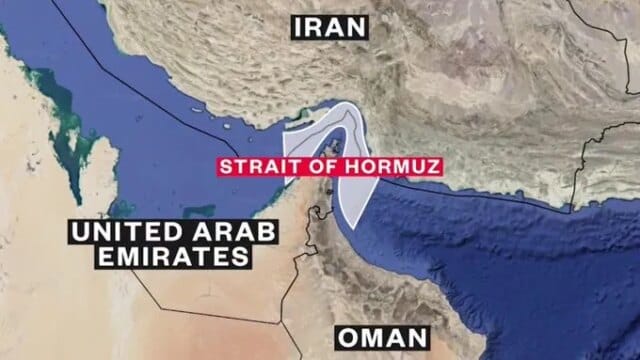
Tehran, June 22: The Iranian Parliament has voted in support of closing the Strait of Hormuz, one of the world’s most critical oil transit chokepoints, a day after US strikes on Iran’s nuclear facilities, according to media reports.

Any final decision on retaliation, however, will rest with the country’s Supreme National Security Council and leader Ayatollah Ali Khamenei.

The parliament vote merely advises him of the option to pursue.

The US strikes on three Iranian nuclear sites — dubbed “Operation Midnight Hammer”—in Isfahan, Fordow and Natanz marks the first direct involvement of America in the escalating crises between Iran and Israel.

The action has received backlash, with many citing the lack of Congressional approval for the military move.

Iran has long held that it can shut down the Strait of Hormuz, which it has held onto as a last resort for escalation.

“Closing” the Strait would mean making it impossible to navigate, with the Iranian Navy possibly laying down mines in the water to deter ships or the military shooting missiles to harass tankers.

“The Parliament has reached the conclusion that the Strait of Hormuz should be closed, but the final decision in this regard lies with the Supreme National Security Council,” Revolutionary Guards Commander Ismail Kowsari, member of the National Security Commission of the Parliament, announced on Sunday, according to Al Arabiya and the Jerusalem Post.

The vote took place on Sunday following “Operation Midnight Hammer,” in which seven B-2 stealth bombers flew into Iran and dropped 14 Massive Ordinance Penetrator (MOP) bombs on two of Iran’s nuclear sites, including the Fordow site.

A third site was hit with Tomahawk submarine-launched cruise missiles

President Donald Trump said the sites had been obliterated by the US operation, which included 125 aircraft overall in an operation that took 25 minutes to complete.

However, Trump’s Joint Chiefs of Staff Chairman General Dan Caine said on Sunday that it will take some time to assess the full extent of damage to the sites.

The MOP bombs used to hit the sites had never been deployed in a combat scenario prior to Saturday’s strikes.

Khamenei will need to approve any final action that would see a “closure” of the Strait, which can happen as soon as Sunday now that the Parliament has approved such measures.

The Strait of Hormuz is a narrow waterway connecting the Persian Gulf to the Gulf of Oman and the Arabian Sea.

At its narrowest point, the strait is about 21 miles wide, with two shipping lanes that are 2 miles wide in each direction.

Around 20 per cent of global oil trade passes through the Strait.

Some experts have said that if Iran were to cut off access to the Strait, it could spike oil prices by 30 to 50 per cent immediately, with gas prices likewise rising by as much as $5 per gallon.

During the Iran-Iraq War in the 1980s, Iran targeted oil tankers and oil loading facilities.

These actions did not fully block the Strait but caused sharp increases in shipping insurance premiums and delayed maritime traffic.

Greater Kashmir

Indian delegation reaches Ireland to attend 40th anniversary memorial of Kanishka bombing

0
Indian delegation reaches Ireland to attend 40th anniversary memorial of Kanishka bombing

Chandigarh, June 22: A high-level Indian delegation led by Union Housing and Urban Affairs Minister Hardeep Singh Puri along with BJP National General Secretary Tarun Chugh and representatives from five states has reached Ireland to attend the 40th anniversary memorial of the Air India Kanishka bombing at the Ahakista Memorial in Cork.

The delegation includes prominent elected representatives including Arvinder Singh Lovely (Delhi MLA), Baldev Singh Aulakh (Minister from Uttar Pradesh), Gurveer Singh Brar (MLA from Rajasthan), Trilok Singh Cheema (MLA from Uttarakhand), and Narinder Singh Raina (MLA from Jammu & Kashmir).

The memorial service will be held on June 23, 2025, in the presence of Ireland’s Prime Minister Micheál Martin, Canada’s Minister of Public Safety Gary Anandasangaree, and several other international dignitaries. This solemn event not only commemorates the 329 innocent victims of the 1985 terror attack, but also reinforces the global commitment against terrorism.

Speaking ahead of the ceremony, Tarun Chugh said, “The Kanishka bombing was a painful reminder of the brutal face of terrorism, which claimed innocent lives across nations. As I stand on Irish soil, I pay my heartfelt tribute to those who perished, and reaffirm our resolve to unite against terror in all its forms.”

Greater Kashmir

CM Omar Abdullah expresses joy over ‘bustling’ Pahalgam

0
Train connectivity will transform tourism, boost trade: CM Omar

Srinagar, June 22: Jammu and Kashmir chief minister Omar Abdullah on Sunday expressed joy over ‘bustling’ activity in Pahalgam after a gap of two months.

He said the tourists from various parts of the country are competing for space with local picnickers who are enjoying cool and rainy weather conditions.

While sharing photographs of jam packed roads on social media, he expressed satisfaction over efforts taken up for restoring tourism in Kashmir valley.

In a post on X (formerly Twitter), chief minister Omar Abdullah said: “”The last time I was in Pahalgam I cycled through a market that was all but deserted. Today I came back to a Pahalgam that was bustling with activity. Tourists from various parts of the country competed for space with local picnickers who were enjoying the cool climate & rainy weather. It’s very satisfying to see the efforts my colleagues & I have been putting in slowly bearing fruit”.

On April 22, 2025 terrorists fired upon and killed 26 people, mostly tourists in Baisaran valley of Pahalgam. The incident led authorities to shut down several tourist destinations in Jammu and Kashmir as preventive measure, while as tourists curtailed their Kashmir tour and rushed back to their homes for safety.

Greater Kashmir

Another flight from Iran carrying 311 Indians lands in Delhi; over 1,400 evacuated so far

0
Another flight from Iran carrying 311 Indians lands in Delhi; over 1,400 evacuated so far

New Delhi, June 22: India on Sunday evacuated more than 300 Indian nationals from Iran amid the escalating tensions between the Persian Gulf nation and Israel following the US bombing of three Iranian nuclear sites.

The Ministry of External Affairs (MEA) said 311 Indians landed in Delhi on a special flight from the Iranian city of Mashhad.

With the fresh batch of evacuees, the total number of those brought back from Iran now stands at 1,428.

Three-hundred eleven Indian nationals arrived in New Delhi on a special flight from Mashhad at 1630 hours on June 22, External Affairs Ministry spokesperson Randhir Jaiswal said.

He said a total of 1,428 Indian nationals have been evacuated from Iran so far.

India launched Operation Sindhu last week to bring back Indians from Iran and Israel in view of increasing hostilities between the two nations.

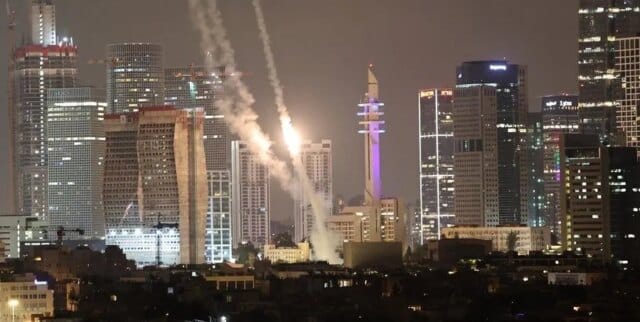
Israel and Iran have fired hundreds of missiles and drones at each other’s cities and military and strategic facilities since the hostilities began over a week back.

The tensions escalated significantly following the US bombing of three major Iranian nuclear sites on Sunday morning.

India has evacuated its nationals on chartered flights operated from the Iranian city of Mashhad, the Armenian capital of Yerevan and the Turkmenistan capital of Ashgabat since Wednesday.

Iran lifted airspace restrictions on Friday to facilitate three chartered flights from Mashhad.

The first flight landed in New Delhi late on Friday with 290 Indians, and the second one landed in the national capital on Saturday afternoon with 310 Indians.

Another flight arrived from the Armenian capital city of Yerevan on Thursday. A special evacuation flight from Ashgabat landed in New Delhi early on Saturday morning.

Greater Kashmir

Air India to temporarily reduce flights operated with narrow-body planes on 19 routes

0
Now, Air India cancels Delhi-Paris flight due to an ‘issue’

New Delhi, June 22: Air India on Sunday said it will temporarily reduce 118 weekly flights operated with narrow-body planes on 19 routes and suspend services on three routes.

The announcement comes days after the Tata Group-owned carrier said it will cut international flights operated with wide-body planes by 15 per cent temporarily.

In a statement, the airline said it is going for “temporary cuts of less than 5 per cent to its overall narrow-body network”.

“This voluntary decision leads to the temporary suspension of Air India’s services on 3 routes and reduction of frequency on 19 routes. The changes are effective until at least 15 July 2025,” it said.

Seven-weekly flights on three routes — Bengaluru-Singapore, Pune-Singapore and Mumbai-Bagdogra (AI551/552) — will be suspended till at least July 15.

Flights on various other routes, including Delhi-Bengaluru and Delhi-Mumbai, will be reduced.

According to the airline, the reductions are aimed at strengthening Air India’s network-wide operational stability and minimising last-minute inconvenience to passengers.

Greater Kashmir

Global leaders urge restraint, warn of escalation after US strikes Iranian nuclear sites

0
Over 230 reported dead as Israel, Iran trade strikes for third consecutive day

New Delhi, June 22: The US military strikes on Iranian nuclear facilities have triggered a wave of international reactions, with world leaders calling for restraint and a return to diplomacy amid fears of a broader conflict erupting in the Middle East.

UK Prime Minister Keir Starmer expressed support for the US action while stressing the importance of regional stability.

“Iran’s nuclear programme is a grave threat to international security. Iran can never be allowed to develop a nuclear weapon and the US has taken action to alleviate that threat,” he posted on X.

“The situation in the Middle East remains volatile and stability in the region is a priority. We call on Iran to return to the negotiating table and reach a diplomatic solution to end this crisis,” he added.

Former UK Prime Minister Rishi Sunak echoed these concerns and supported the strikes.

“The Iranian regime has long been a threat to regional and global security. The prospect of Iran having a nuclear weapon is unacceptable,” he said, adding, “Israel and the US have acted decisively to address this threat and deserve our support and thanks for their efforts.”

UK Secretary of State for Defence John Healey noted that the UK was not involved in the operation but had taken steps to ensure security.

“The US has taken action to alleviate the grave threat that Iran poses to global security,” Healey posted.

“The UK did not participate in these strikes. The safety of UK personnel and bases is my top priority. Force protection is at its highest level and we deployed additional jets this week,” he added.

Saudi Arabia voiced concern over the potential for escalation, saying it was following the developments “with great concern.”

In a statement, the Kingdom stressed the importance of restraint and called on the international community to “exert all efforts” to de-escalate the crisis and seek a political solution.

Australia, which recently evacuated its diplomatic staff and closed its embassy in Tehran, reiterated its preference for diplomacy.

“We have been clear that Iran’s nuclear and ballistic missile programme has been a threat to international peace and security,” said an official statement.

“We note the US President’s statement that now is the time for peace. The security situation in the region is highly volatile. We continue to call for de-escalation, dialogue and diplomacy,” the statement read.

Qatar’s foreign ministry warned that the ongoing escalation could have dire consequences.

“The current dangerous escalation in the region may lead to catastrophic consequences at both the regional and international levels,” the statement said.

“It calls on all parties to exercise wisdom, restraint, and to avoid further escalation,” it read.

Oman’s Foreign Ministry issued a strong condemnation of the US strikes, calling them a “serious violation” of international law and the UN Charter.

“The Sultanate of Oman deplores this illegal aggression and calls for immediate and comprehensive de-escalation,” the statement read.

Oman also reaffirmed the right of states to develop nuclear programs for peaceful purposes under international oversight.

Ireland’s Deputy Prime Minister, Simon Harris, warned of an “extremely dangerous spiral of escalation” and emphasised the need for diplomacy.

“This has been the focus of my engagement with EU partners and countries in the region since this current crisis began,” Harris stated.

“Europe, including Ireland, is fully united in the clear view that Iran should not be allowed to possess nuclear weapons. The way to address this was always through a negotiated solution. Any alternative is simply too dangerous,” he added.

Latvian President Edgars Rinkevics stressed the importance of regional stability and posted on X, “Iran’s nuclear program is a threat to global and regional security. US have taken an action to address that threat. Iran must not possess a nuclear weapon.”

“All parties should return to talks in order to reach a diplomatic solution,” he added.

Belgian Deputy Prime Minister Maxime Prevot also weighed in, saying, “The theocratic regime of the mullahs of Iran must not be allowed to develop a nuclear weapon, as it would be a threat to international security.”

“We must prevent further escalation. It delays indispensable work towards a diplomatic solution for the long-term assurance that it does not happen. I recall Belgium’s support for the work of the IAEA to this end. I call again for maximum restraint and on the parties to come back to the negotiating table. The EU has a role to play to facilitate a solution. I will discuss the situation with my colleagues tomorrow,” he added.

As tensions rise following the US strikes, the global community continues to urge de-escalation and a swift return to diplomatic engagement to prevent a full-blown regional conflict.

Greater Kashmir

- Advertisement -
Google search engine

Recent Posts