Home Blog Page 1162

XUV 3XO Revx model unveiled at Mahindra Himalayan Motors

0

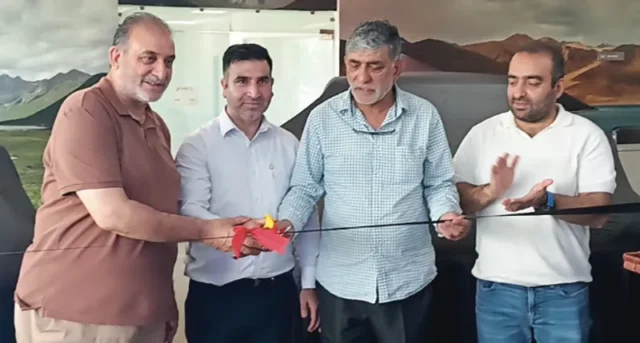
Srinagar, Jul 19: The much-anticipated XUV 3XO Revx was officially unveiled today at Mahindra Himalayan Motors in Tengpora, with an attractive starting ex-showroom price of Rs 8.94 lakh.

The event was held under the supervision of Zubair Ahmad, Deputy Circle Head of Punjab National Bank, and attended by Managing Directors Ghulam Mohammad Beigh, Bashir Ahmad Beigh, and Jybran Beigh, along with General Managers Waseem Ghani and Sumeer Panditha.

The unveiling witnessed immediate interest, with one on-the-spot booking and delivery marking a promising start for the XUV 3XO Revx in the region.

The new model features black leatherette seats, a body-coloured grille, a dual-tone roof, REVX badging, black wheel covers, and dual-tone interiors. It comes equipped with a 10.25-inch infotainment system, four premium speakers, steering-mounted audio controls, driver seat height adjustment, remote keyless entry, electric and panoramic sunroof, and R16 painted black alloy wheels. The vehicle is powered by Mahindra’s advanced TGDi engine.

Mahindra Himalayan Motors invites customers to visit the showroom and experience the XUV 3XO Revx, which combines performance, design, and technology in a compact SUV format.

Greater Kashmir

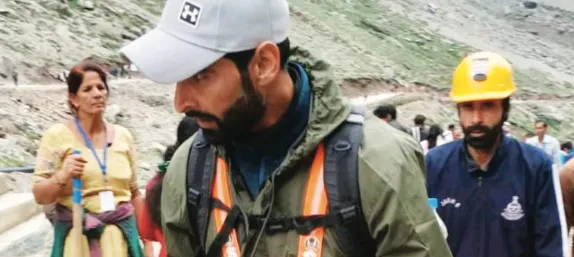
SDRF emerges as lifeline for Amarnath Yatra pilgrims amid treacherous terrain

0
SDRF emerges as lifeline for Amarnath Yatra pilgrims amid treacherous terrain

Srinagar, Jul 19: As thousands of devotees brave the rugged Himalayan terrain to undertake the Amarnath Yatra, it is the personnel of the State Disaster Response Force (SDRF) who are emerging as the unsung heroes—offering critical assistance, rescuing distressed yatris, and ensuring their safety throughout the pilgrimage.

Faced with unpredictable weather, steep mountain paths, and the high-altitude challenges of the Pahalgam and Baltal routes, many pilgrims have found themselves in life-threatening situations.

Time and again, SDRF teams have stepped in, providing swift evacuation, medical aid, and guidance through some of the most difficult stretches of the pilgrimage. The SDRF, alongside the National Disaster Response Force (NDRF), forms the backbone of the Command Control Centre for the annual Amarnath Yatra. This hi-tech control centre brings together nearly 60 personnel from 20 departments, including J&K Police, CRPF, Health, PHE, and Telecom, all working round the clock to ensure a smooth and secure pilgrimage.

This year, 45 Mountain Rescue Teams (MRTs) from SDRF, NDRF, BSF, JKAP, CRPF, SSB, and Homeguards were ceremonially flagged off on June 24 from the SDRF 1st Battalion in Srinagar.

The deployment covered both Pahalgam and Baltal axes—two critical routes of the Yatra. These highly trained MRTs are equipped with specialized gear and have undergone rigorous training in high-altitude rescue, avalanche response, and emergency disaster relief.

Alok Kumar, Commandant General of Home Guards, Civil Defence and SDRF J&K, addressed the teams during the ceremony, lauding their courage and urging them to continue serving Yatris with compassion and commitment.

“Your presence along the Yatra routes is vital. You are not only rescuers but also the emotional and physical support for pilgrims who find themselves overwhelmed by the terrain,” he had said.

Over the course of the pilgrimage, numerous pilgrims who suffered injuries, fatigue, or altitude-related complications were safely rescued and provided medical assistance by SDRF personnel.

The forces’ proactive presence has reassured Yatris and significantly boosted the confidence of those taking part in the arduous journey.

Beyond Yatra, the SDRF and NDRF have played a crucial role in responding to drowning incidents and natural calamities across Kashmir.

In June and July when the Valley witnessed its hottest month in 19 years, resulting in multiple drowning deaths, it was the SDRF teams who led search, rescue, and recovery operations—often under extremely challenging conditions.

With battalions spread across 13 districts, the SDRF remains on 24/7alert, prepared to tackle a range of disasters, including floods, fires, and accidents. Senior officers affirm that the force continues to upgrade its skills and equipment to meet the growing demands of disaster response in the region.


Greater Kashmir

Mortar shell defused near LoC in Jammu

0
Social media handler detained for spreading false narrative regarding Bandipora encounter: Police

Jammu, July 19: An unexploded mortar shell was found and subsequently defused by experts in a forward village near the Line of Control (LoC) in Jammu’s Akhnoor sector on Saturday, officials said.

The mortar shell was noticed lying at a secluded place by some villagers in the outskirts of Dhalery village this evening, the officials said.

They said bomb disposal squad of police and army experts cordoned off the area and the mortar shell was safely defused.

Greater Kashmir

3 drug peddlers held with contraband substance in Kashmir: Police

0
Anantnag police cracks abduction & murder case, accused arrested

Srinagar, July 19: Continuing its efforts to eradicate the menace of drugs from society, Police have arrested three drug peddlers in Baramulla & Kulgam and recovered contraband substances from their possession.

A police statement said that a police party from Police Station Tangmarg headed by SHO PS Tangmarg established a checkpoint at Ferozpora Mahyan Crossing. During checking, one person identified as Younis Mohammad Bhat, son of Gh Mohammad Bhat, resident of Reram, Kunzer was intercepted. Upon search, 06 grams of Brown Sugar-like substance was recovered from his possession. He has been arrested and shifted to police station where he remains in custody.

Similarly, a police party of PS Kulgam at a checkpoint established at Village Chancer intercepted a vehicle (Truck) bearing registration number JK19-4106 with two persons on board. During search, 6.785 Kg of Poppy Straw like substance was recovered from their possession. They have been identified as Mohd Sahil, son of Irshad Ahmad Wani, resident of Seri Ramban (driver) and Majid Ahmad Malik, son of Rafiq Ahmad Malik, resident of Tazipora, Mohammadpora, Kulgam. They have been arrested and shifted to police station where they remain in custody. Vehicle used in commission of crime has also been seized.

The police stated that cases under relevant sections of law have been registered at respective police stations and further investigation has been initiated.

The police urged general public to report any instances of drug peddling or other criminal activities to the nearest police station or by dialing 112, and assured the community that police will continue to act firmly against such offenders as per the law.

Greater Kashmir

Scientists say Android phones can detect earthquakes before they strike

0
Scientists say Android phones can detect earthquakes before they strike

Srinagar, July 19: In 2020, Google launched the Android Earthquake Alerts (AEA) system to help people in earthquake-prone areas get early warnings using their smartphones. Unlike traditional earthquake early warning systems, which rely on costly seismic stations, Google’s approach is both accurate and affordable.

Now available in 98 countries, the AEA system has reached over 2.5 billion people in just three years. It works by collecting data from millions of Android devices worldwide, turning smartphones into mini-seismometers.

A recent study published in the journal Science confirms that the system performs as well as traditional seismic networks when it comes to detecting earthquakes and sending timely alerts. This crowd-sourced method proves to be an innovative and reliable alternative to expensive infrastructure.

As it turns out, 85 per cent of users who received earthquake alerts also experienced sharing. Out of these, 36 per cent said they got an alert before the earthquake, while 28 per cent and 23 per cent of people said they received an alert during and after the shaking began. In the video below, the yellow dots indicate the number of smartphones nearby, while the red dot marks the epicentre.
The yellow circle is the P-wave’s estimated location, and the red circle is for the S-wave, which is responsible for most of the damage. The animation shows how phones detected shaking as the 6.2 magnitude earthquake progressed in Turkey, causing damage and loss of life in the country.

In a blog post, Google explained that its Android Earthquake Alert system uses accelerometer sensors in smartphones to sense vibrations, which may or may not indicate if an earthquake is happening. If the system thinks an earthquake is imminent, it then sends a signal to the tech giant’s earthquake detection server along with an approximate location of where the shaking was recorded.

The server then combines data from various smartphones in the vicinity to determine if an earthquake is actually happening. With more than 2 billion devices around the world acting as mini-earthquake detectors, Google says its system is the world’s largest earthquake detection network.

Greater Kashmir

Export of handmade products nearly triple in Q1 CFY, cross Rs 300 Cr

0
Export of handmade products nearly triple in Q1 CFY, cross Rs 300 Cr

Srinagar, July 19: In a major fillip to Kashmir’s famed craft sector, hand-made products worth ₹309.62 Cr have been exported to various overseas destinations in the First Quarter of the current financial year, up from ₹126.90 Cr in the same quarter last year.

As per figures made available by the concerned financial institutions, exports have recorded a huge jump of 243% and is the highest for Q1 in last four years.

In a press statement issued here today, a spokesperson from the Handicrafts and Handloom Department, Kashmir, stated that the Department is targeting craft exports of over Rs.1500 Cr during the current FY, provided global conflicts relent. “Higher exports of craft products to overseas destinations secures the welfare of Kashmir’s famed artisans and weavers,” he said.

Last year, craft products worth ₹733.59 Cr were exported, largely affected due to various global conflicts. “While Kani, Sozni shawls and hand-knotted carpets continue to lead exports, the other products exported include crewel, papier mache, chain stitch and wood carving items,” he added.

The spokesman urged the exporters to avail Export Subsidy Scheme notified by the Government, which provides incentive of 10% of the total volume of GI registered handloom/ handicraft export products to any country with maximum reimbursement up to ₹5.00 crore in favour of eligible exporters registered with the Department,” he explained.

Highlighting the Government’s strategy for welfare of artisan community, the spokesman further stated that the Department has a well-established Design Studio in the Indian Institute of Carpet Technology at Bagh-e-Ali Mardan Khan and unique prototypes conceived by the School of Designs and Craft Development Institute. “We urge the business stakeholders to access these designs and packaging models to add value to their products in high-end global markets,” he added.

Greater Kashmir

Over 30 Palestinians killed trying to reach US group’s food distribution sites: Gaza authorities

0
Israeli airstrikes, shooting kill 82 Palestinians in Gaza: Authorities

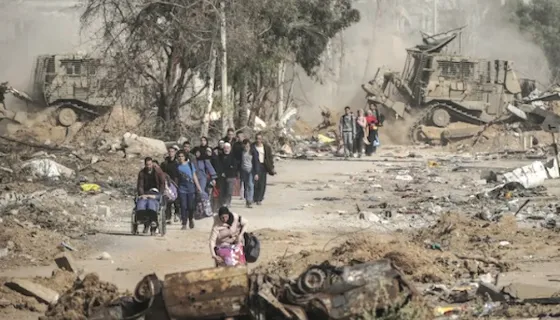
Deir al-Balah (Gaza Strip), July 19: Israeli troops opened fire on Saturday toward crowds of Palestinians seeking food from distribution hubs run by a US and Israeli-backed group in southern Gaza, killing at least 32 people, according to witnesses and hospital officials.

The two incidents occurred near hubs operated by the Gaza Humanitarian Foundation.

The organisation launched operations in late May with backing from the US and Israel.

The two governments are seeking to replace the traditional UN-led aid distribution system in Gaza, saying that Hamas militants siphon off supplies. The UN denies the allegation.

While the GHF says it has distributed millions of meals to hungry Palestinians, local health officials and witnesses say that hundreds of people have been killed by Israeli army fire as they try to reach the distribution hubs.

The army, which is not at the sites but secures them from a distance, says it only fires warning shots if crowds get too close to its forces.

The GHF, which employs private armed guards, says there have been no deadly shootings at its sites, though this week, 20 people were killed at one of its locations, most of them in a stampede.

The group accused Hamas agitators of causing a panic, but gave no evidence to back the claim.

The army and GHF did not immediately comment on Saturday’s violence.

Indiscriminate fire

Most of Saturday’s deaths occurred as Palestinians massed in the Teina area, around three kilometres away from a GHF aid distribution centre east of the city of Khan Younis.

Mahmoud Mokeimar, an eyewitness, said he was walking with masses of people — mostly young men — toward the food hub. Troops fired warning shots as the crowds advanced, before opening fire toward the marching people.

“It was a massacre … the occupation opened fire at us indiscriminately,” he said. He said he managed to flee but saw at least three motionless bodies lying on the ground, and many other wounded fleeing.

Akram Aker, another witness, said troops fired machine guns mounted on tanks and drones. He said the shooting happened between 5 a.m. and 6 a.m.

“They encircled us and started firing directly at us,” he said. He said he saw many casualties lying on the ground.

Sanaa al-Jaberi, a 55-year-old woman, said she saw many dead and wounded as she fled the area.

“We shouted: food, food,’ but they didn’t talk to us. They just opened fire,” she said.

Monzer Fesifes, a Palestinian-Jordanian, said his 19-year-old son Hisham was among those killed in the Teina area.

“He went to bring food from the failed US, Zionist aid to feed us,” the father of six said, pleading for the Jordanian government to help evacuate them from the Palestinian enclave.

The Nasser Hospital in Khan Younis said it received 25 bodies, along with dozens wounded.

Seven other people, including one woman, were killed in the Shakoush area, hundreds of metres north of another GHF hub in Gaza’s southernmost city of Rafah, the hospital said. The toll was also confirmed by the health ministry.

Dr. Mohamed Saker, the head of Nasser’s nursing department, said it received 70 wounded people. He told The Associated Press that most of the casualties were shot in their heads and chests, and that some were placed in the already overwhelmed intensive care unit.

“The situation is difficult and tragic,” he said, adding that the facility lacks badly needed medical supplies to treat the daily flow of casualties.

Humanitarian crisis

Gaza’s more than 2 million Palestinians are living through a catastrophic humanitarian crisis, and the territory is teetering on the edge of famine, according to food security experts.

Distribution at the GHF sites has often been chaotic. Boxes of food are left stacked on the ground inside the centres and, once opened, crowds charge in to grab whatever they can, according to witnesses and videos released by GHF itself.

In videos obtained recently by the AP from an American contractor working with GHF, contractors are seen using tear gas and stun grenades to keep crowds behind metal fences or to force them to disperse. Gunshots can also be heard.

Hamas triggered the ongoing 21-month war in Gaza when it stormed into southern Israel on October 7, 2023, killing some 1,200 people and taking 250 others hostage.

An Israeli military offensive has killed over 58,000 Palestinians, according to the Gaza Health Ministry, displaced nearly all of Gaza’s 2 million people and caused widespread destruction.

The ministry does not say how many militants are among the dead, though it says over half were women and children. The ministry is part of the Hamas government, but is seen by the UN and other international organisations as the most reliable source of data on war casualties.

Israel and Hamas have been holding ceasefire talks in Qatar in recent weeks. But international mediators say there have been no breakthroughs in the talks.

Greater Kashmir

CIK raids multiple locations across Kashir in terror case, finds suspicious technical signatures

0
CIK raids10 locations across Kashmir in terror case

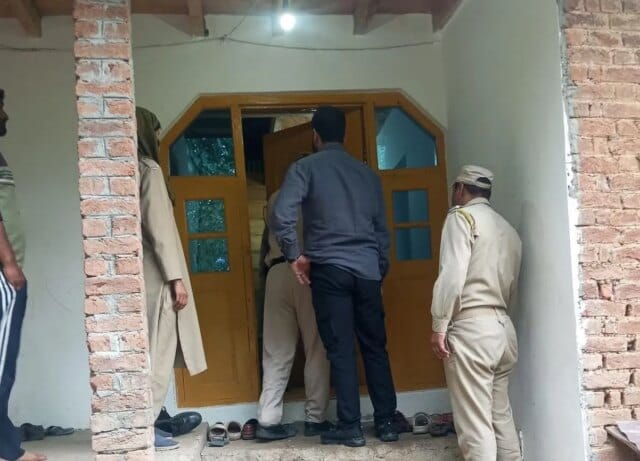
Srinagar, July 19: Counter Intelligence Kashmir (CIK) on Saturday conducted searches at ten locations across four districts of Jammu and Kashmir– Srinagar, Ganderbal, Budgam and Pulwama–linked to a terror case under NIA Act. During investigation, suspicious technical signatures were traced as the suspects were found using suspected encrypted messaging applications, officials confirmed.

As per a press statement issued to the Greater Kashmir, “searches at multiple locations across Kashmir were conducted by CIK officers after obtaining search warrant from the Hon’ble Court of Special Judge, designated under NIA Act, Srinagar in a terror linked case FIR No. 07/2023 U/S 13, 18, 38, 39 ULA(P) Act r/w 120-B IPC of P/S CIK Srinagar.”

“During further analysis, various suspects were found using a ‘specific encrypted messaging application’ which is widely used by terrorists/handlers from across for coordinating, financing and executing a variety of terrorist related activities including recruitment into terrorist ranks” it adds.

It reads, these individuals /users are suspected to be in touch with adversaries including ‘Abdullah Gazi’, a Pak based LeT/ JeM terrorist handler across the border. As such, maintaining the element of surprise, the searches were meticulously planned and conducted in furtherance of the investigation by CIK into this terrorist recruitment/financing module of Jaish-e-Mohammad/LeT terrorist outfit, operating from a known city in Pakistan which has been established by peaking into the server of encrypted messaging application.

It further reads that the terrorist commander/ handler was in continuous touch with these local Kashmiri youth and reportedly trying to radicalize them for recruitment into terrorist ranks. The terrorist commander/handler is operating in close coordination with Pak ISI.

During searches, large number of documentary evidence and digital devices having bearing on the investigation of the case were seized. So far, 10 suspects have been rounded up. Analysis of the data would follow and leads that would emerge would become the basis for further investigation.

It is pertinent to mention here, reads the statement, that the operation is primarily aimed on prevention, to save the precious lives and careers of local Kashmir youth from falling prey to the designs of terror organizations besides, to uncover crucial evidence, curb illicit activities, prevent the misuse of communication devices, such as mobile phones, and dismantling the terror ecosystem in the UT by identifying terrorist associates/ Over Ground Workers (OGWs) supporting and abetting terrorism and also ensuring legal action against them as envisaged by the law of the land.

Greater Kashmir

India will enter trade deals only if they’re in country’s interest: Piyush Goyal

0
India will enter trade deals only if they’re in country’s interest: Piyush Goyal

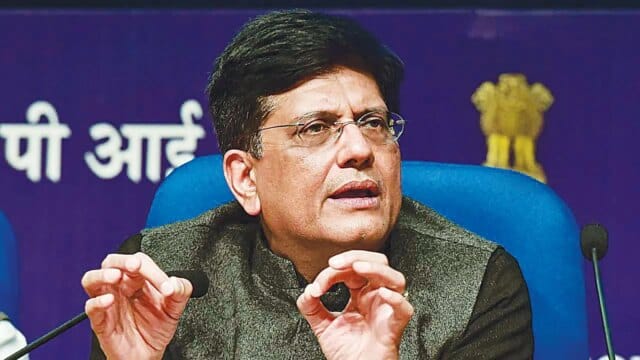
Mumbai, July 19: Union Commerce Minister Piyush Goyal on Saturday said that India will enter international trade agreements only if they serve the country’s interests.

Addressing the media during an event organised by leading industry chamber Assocham here, the minister said if India gets a good trade deal, it will go ahead with it.

Goyal said that negotiations with the US are ongoing, adding that trade deals would materialise only if these are in the country’s larger interests. “If it doesn’t happen, we will not do it. India always puts the country’s interest first,” the minister asserted.

India and the US teams have concluded the fifth round of talks for the proposed bilateral trade agreement (BTA) in Washington this week. The negotiations were held for four days in Washington, DC. India’s chief negotiator and special secretary in the Department of Commerce, Rajesh Agrawal, lead the team for negotiations.

He further stated that India has huge domestic demand. “We have imports coming into the country which can be replaced by developing domestic industry to scale for high-quality production,” said the minister.

Addressing a gathering of industry leaders and entrepreneurs during the event, the minister emphasised the importance of mindset change in the micro, small and medium enterprises (MSME) sector.

He called for a shift towards collective growth and mutual cooperation between small and large companies.

“We need a change in goals, guidance and mindset. Big or small, companies have to grow together. We have to support each other and be vocal for local interests,” he highlighted. He also emphasised the need for focus on research, innovation, quality and expansion by MSMEs to compete globally.

The minister urged MSME stakeholders to proactively inform the government about non-tariff barriers that are impacting their businesses. “Only when you inform us, we can take up these issues during bilateral discussions and work towards their resolution,” Goyal told the industry leaders.

Dwelling on the macroeconomic framework, the minister compared the current banking system with the tenure of the previous UPA government. He said the Prime Minister Narendra Modi-led government has successfully restructured the banking sector.

“During the UPA regime, the banking sector was in shambles due to rising non-performing assets (NPAs). We have restructured it in a transparent manner. Today, the banking system is strong and performing well,” said the minister.

Greater Kashmir

Simple lifestyle changes that work

0
Simple lifestyle changes that work

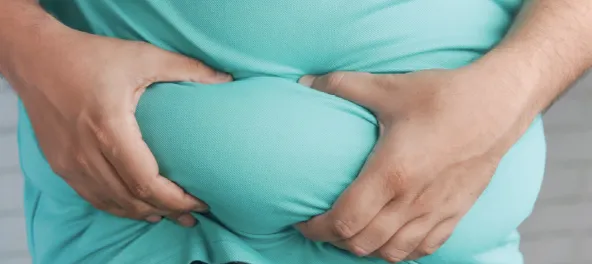
Srinagar, July 19: Losing belly fat is not just about aesthetics; it’s about improving your overall health and reducing the risk of chronic diseases. The good news is that exercise is one of the most effective ways to target and reduce belly fat. But how does it work? Understanding the science behind belly fat loss can help you make informed decisions about your fitness routine and maximize your results.

Belly fat—also known as visceral fat—is more than just a cosmetic concern. It sits deep within the abdomen and wraps around vital organs, posing serious health risks. Studies have shown that excess belly fat is linked to high blood pressure, elevated cholesterol, and increased inflammation—all of which raise the risk of heart disease.
It can also interfere with how your body uses insulin, increasing the chances of insulin resistance and type 2 diabetes. In some cases, it’s been associated with hormonal imbalances, metabolic disorders, and even a higher risk of certain cancers.
Belly fat is both preventable and treatable. With consistent changes in diet, physical activity, and overall lifestyle, it’s possible to reduce abdominal fat in a healthy and sustainable way—while significantly lowering long-term health risks.

A well-balanced diet helps maintain a healthy weight, ensures optimal nutrient intake and promotes overall health. To reduce belly fat:
Focus on consuming whole foods such as fruits, vegetables and whole grains.
Consume protein-rich foods and add healthy fats to your diet.
Minimise consumption of sugary drinks, sweets, and processed foods. Opt for natural sweeteners and whole fruits instead.
Consider reducing refined carbs and replacing them with whole grains that are higher in fibre.
Add enough fibre and protein to your diet.

How Exercise Burns Belly Fat

When you exercise, your body taps into its fat stores for energy, and belly fat is no exception. During physical activity, your muscles require more energy, and your body begins to break down fat reserves to fuel them. This process is known as lipolysis. However, not all exercises are equally effective at targeting belly fat. Research shows that a combination of cardiovascular exercise, strength training, and high-intensity workouts is the most efficient way to burn belly fat and improve overall body composition.

Lose Belly Fat with Walking and Low-Impact Cardio

If you’re just starting your fitness journey or have joint issues, walking and other low-impact cardio exercises are great ways to burn belly fat. These workouts are easy on the body, yet effective for improving heart health and supporting long-term fat loss.

You can include brisk walks around your neighborhood, treadmill sessions, or even light hikes in your routine. Aim for at least 30 minutes of walking, five days a week. Other low-impact options like swimming, dancing, or using an elliptical machine also work well.

According to the American Heart Association, regular walking not only improves overall health but can also reduce belly fat. In fact, a 2022 study published in the Journal of Obesity showed that people who walked 10,000 steps daily for 12 weeks lost about 10% of their belly fat. It’s a gentle yet powerful way to stay active and meet your weight loss goals.

Greater Kashmir

- Advertisement -
Google search engine

Recent Posts