Home Blog Page 533

Cancer cases highest in women in India, men more at risk of mortality: ICMR study

0
Study decodes how malaria can lead to childhood cancer

New Delhi, Sep 03: Women reported the highest incidence of cancers in India, while the risk of death was more among men, according to a study led by the National Centre for Disease Informatics and Research, Indian Council of Medical Research.

The study, published in the journal JAMA Network Open, is based on 708,223 cancer cases and 206,457 mortality cases reported from 43 population-based cancer registries (PBCRs) between 2015 and 2019.

Over 50 per cent of cancer incidences were reported among women, compared to 49 per cent in men. On the other hand, mortality was reported more among males (55 per cent) than females (45 per cent).

The most common cancers in males consisted of mouth cancer (113,249), followed by lung cancer (74,763), and prostate cancer (49,998).

Among females, the most common cancers were breast (238,085), cervix (78,499), and ovarian (48,984).

Female genital system cancers were estimated to account for 171,497 cases. In males, cancers of the oral cavity and pharynx were estimated to contribute to 217,327 cases.

“This underscores a need to strengthen the ongoing efforts for cancer prevention and control measures to reduce the burden of cancer in India,” the researchers said.

Notably, the cancer burden was found to increase rapidly in rural areas.

Several districts in Kerala and Assam — with more than 50 per cent rural population — reported the highest cancer burden among women and men.

“An average of 76 men and 67 women per one lakh population have cancer in areas with over 50 per cent rural population,” the study showed.

Further, regions such as Aizawl, East Khasi Hills, Papumpare, Kamrup Urban, and Mizoram of northeastern India consistently recorded the highest incidence rates of cancer.

Oesophageal cancer was most prevalent in the northeastern region of the country.

Among the metro cities, Delhi had the highest number of overall cases, 146 per 100,000. Ahmedabad saw a striking rise in 4.7 per cent of men and 6.9 per cent of women.

Based on the findings, “the estimated cancer incidence for 2024 was 1,562,099 cases, while the estimated cancer mortality stood at 874,404 cases,” stated the researchers.

For females, the estimated new cases stood at 781,277, and among males, it was 780,822, the study showed.

Greater Kashmir

With Israel’s offensive drawing close, Palestinians in Gaza City fear permanent displacement

0
US presents 'bridge' proposal to extend Gaza ceasefire, push for permanent solution

Deir al-Balah , Sep 3: As artillery and bombs pound around Gaza’s largest city and Israel promises a punishing new offensive, Palestinians in the city are paralysed with fear — unsure where to go, when to leave and if they will ever return.

Israel has declared Gaza City, in the north of the territory, to be a combat zone while the military moves forward with plans to overtake it in a campaign to push Hamas into submission. Parts of the city are already considered “red zones,” where Palestinians have been ordered to evacuate ahead of expected heavy fighting.

That has left residents — many of whom returned after fleeing the city in the initial stages of the Israel-Hamas war — on edge. With Israeli bulldozers razing the ground in occupied neighbourhoods and Israeli leaders supporting the mass relocation of Palestinians from Gaza, departing the city now could mean leaving for good. Moving costs thousands of dollars, and finding space in the overcrowded south to pitch a tent feels impossible. But staying behind, they say, could be deadly.

“The Israeli forces, when they mark any area by red colour and they request the people to leave, they really will destroy it,” said Mohammed Alkurdi, who is sheltering in Gaza City along with hundreds of thousands of other Palestinians.

“So it’s like you decide whether to live or die. It’s very simple like that.”

An impossible choice between staying and fleeing

Since Israel declared the area a combat zone on Friday, a small fraction — some 14,840 Palestinians of the nearly 1 million the U.N. estimates are in Gaza City — have left their homes in the city as of Monday, most to flee south, according to the Site Management Cluster, a joint humanitarian body that coordinates assistance for people in displacement sites.

A fraction of them, about 2,200, have moved to new places within Gaza City after being displaced by Israeli attacks.

Alkurdi, a project manager and consultant, said he can hear Israeli forces from the apartment where he’s sheltering as they “erase the area completely.”

Zeitoun was once Gaza City’s largest neighbourhood, filled with markets, schools and clinics. Over the last month, large swaths of it and the neighbouring area of Sabra have been flattened, according to satellite photos reviewed by The Associated Press from early August and early September. The photos show that entire blocks have been pummeled or bulldozed into empty, sandy lots.gaza

“It’s not something partial like before. It’s 100%,” he said. “The house, I’m telling my gazag friends, keeps dancing all day. It keeps dancing, going right and left like an earthquake.”

Many of the people in the city moved back to the north during a ceasefire in January, hoping to find their homes intact. Alkurdi’s home was completely destroyed, so he’s now living alone in a western area of the city. His children and wife were able to leave Gaza last year. He said he would flee south if his home fell under an evacuation order.

Amjad Shawa, the director of the Palestinian NGO network, left his home in the upscale Rimal neighbourhood in the early days of the war and also returned there with his family in January. He, like Al Kurdi, said his family would likely leave Gaza City if their area received an evacuation order.

But leaving this time would be different, he said. “Gaza will be levelled and destroyed. Last time, I had my car. There was fuel. Everyone had his income, his money.”

Back then, the cities of Rafah and Khan Younis still stood in southern Gaza.

Now, after months of bombardment, “there is no Rafah. Almost no Khan Younis,” Shawa said.

For others — medical workers, older and sick people — leaving Gaza City is nearly impossible.

“The elders, they’re saying we will die here,” Shawa said. “This has pushed the other members of the family to stay, not to leave.”

“My aunt is elderly and can’t walk, and my mother also struggles with mobility. We have so many belongings and no way to manage them. It feels unthinkable,” said Norhan Almuzaini, medical program officer in northern Gaza for the group Medical Aid for Palestinians.

Amal Seyam is the general director of the Women’s Affairs Centre in Gaza. Originally from the Tuffah neighbourhood in eastern Gaza City, her home was destroyed by bombardment. For nearly four months, she has been sheltering in the Nasr neighbourhood in the city’s west, where she stays alongside her colleagues inside the women’s centre.

Seyam has been displaced five times since the war began — three times within the city and twice to the south, in Rafah and Khan Younis. Each time, she fled with nothing.

When asked if she would consider leaving Gaza City, she said, “I will only leave when everyone who needs me here leaves. As long as there’s a woman who needs me, I am staying. All of Gaza feels like it’s in the red zone now anyway. The bombing is happening meters from us, not kilometres.”

She paused, her voice breaking into tears.

“Many people have started packing. Many have already left. Do you know what displacement means? It means moving once again, building your life once again, buying new things, blankets, tents, all over again.”

Those who have left Gaza City over the past few months have found dire conditions elsewhere in Gaza. Their arrival has crowded already overflowing tent camps and sent prices of basic goods up.

Iman El-Naya, from Khan Younis, fled Gaza City three months ago. “The beach is crowded. Everywhere is crowded. There’s no hygiene. It’s a struggle to get water and food.”

“I go and stand in line for water. Getting bread is a struggle. Everything is even more expensive after the people from the north came here.”

Shorouk Abu Eid, a pregnant woman from Gaza City, was displaced to Khan Younis four months ago. She said the arrival of more people from the north is creating an even more tragic situation.

“There is no privacy, no peace of mind. Places I used to walk to in five or 10 minutes are taking me around an hour now because of the congestion. There’s barely 10 centimetres between tents.”

Jamal Abu Reily lamented that the bathrooms are overflowing and that there’s so little room for new arrivals.


 

Greater Kashmir

Body of driver washed away in Bantalab nallah recovered: Jammu Police

0
Body of driver washed away in Bantalab nallah recovered: Jammu Police

Jammu, Sep 03: Jammu Police on Wednesday recovered the body of a driver who along with his vehicle had washed away in overflowing Nallah in Bantalab area on Tuesday evening.

An official said that the ill-fated Tata Mobile bearing registration number JK02DD-4176 being driven by one, Sham Lal, son of Milkhi Ram, resident of Gurha Brahmana, Bantalab Jammu was washed away in overflowing Nallah in Bantalab area last night. However couple of hours later, the vehicle was found around 2 kilometers downstream but the driver could not be traced then.

He said however on Wednesday the body of the driver was recovered from Akalpur.

Police requested people not to attempt such misadventures and stay safe wherever they are.


Greater Kashmir

CPI(M) deplores denial of bail to Umar Khalid, Sharjeel Imam and 8 others

0
CPI(M) deplores denial of bail to Umar Khalid, Sharjeel Imam and 8 others

New Delhi, Sep 03: The Polit Bureau of the CPI(M) on Wednesday deplored the Delhi High Court’s denial of bail to Umar Khalid, Sharjeel Imam and eight others in Delhi riots case.

“All of them have been under detention for over five years under the draconian UAPA for being linked to the alleged “conspiracy” behind the February 2020 communal riots in Delhi. This is the fifth time that their bail application is being rejected in the last five years,” read a statement, issued by the CPI (M).

“It is all the more disturbing that even the charges against them have not been framed for the last five years,” added the statement.

It said that the Delhi High Court’s decision amounts to a “travesty of justice”, and negation of the principle that “grant of bail is the rule and refusal the exception”.

“It is pertinent to note here that while these ten youth languish in jail for over five years without any conviction and even without any proof, BJP leaders like Kapil Mishra and Anurag Thakur, whose incendiary speeches actually fuelled the same Delhi communal riots, are roaming around scot-free.”

“It is also a grave judicial contradiction that while the accused in the Malegaon bomb blasts like Pragya Singh Thakur, Colonel Prasad Purohit and others were acquitted, Umar Khalid, Sharjeel Imam and others are made to rot in jails for over five years.”

Greater Kashmir

We get along with India very well: Trump

0
Trump says Israel agreed on terms for 60-day ceasefire in Gaza, warns Hamas to accept deal

New York/Washington, Sep 03: President Donald Trump has said the US gets along with India “very well” but the relationship was “one-sided” for many years since New Delhi was charging Washington “tremendous tariffs”.

“No, we get along with India very well,” Trump said in the White House on Tuesday in response to a question on whether he is considering taking away some of the tariffs imposed on India.

Trump’s comments come amid a strain in ties between New Delhi and Washington after the US imposed 50 per cent tariffs on India, among the highest in the world.

He said that for many years, the relationship between India and the US was “one-sided” and that changed when he assumed office.

“India was charging us tremendous tariffs, about the highest in the world,” Trump said, adding that the US was therefore not doing much business with India.

“But they were doing business with us because we weren’t charging them, foolishly, we weren’t charging them,” he said, adding that India was pouring its products into the US.

“They’d send it in, pour it into our country. Therefore it wouldn’t be made here, which is a negative, but we would not send in anything because they were charging us 100 per cent tariffs,” Trump said.

The US president cited the example of the Harley Davidson motorcycles, saying the company couldn’t sell into India because there was a 200 per cent tariff on a motorcycle.

“So what happens? Harley Davidson went to India and built a motorcycle plant, and now they don’t have to pay tariffs, same thing as us,” he said.

On Monday, Trump claimed that India has now “offered” to cut its tariffs to nothing, “but it’s getting late”, as he said that India buys most of its oil and military products from Russia and very little from the US.

The Trump administration has imposed 25 per cent reciprocal tariffs on India and an additional 25 per cent levies for Delhi’s purchases of Russian oil, bringing the total duties imposed on India to 50 per cent, with effect from August 27.

Prime Minister Narendra Modi has asserted he can’t compromise on the interests of farmers, cattle-rearers, small-scale industries, cautioning “pressure on us may increase, but we will bear it”.

India has called the tariffs imposed by the US “unjustified and unreasonable”.

New Delhi said that, like any major economy, it will take all necessary measures to safeguard its national interests and economic security.

In 2024-25, the bilateral trade in goods between the two countries stood at USD 131.8 billion (USD 86.5 billion exports and USD 45.3 billion imports).

Greater Kashmir

MP Mian Altaf expresses grief over mother-daughter death in Rajouri house collapse

0
MP Mian Altaf expresses grief over mother-daughter death in Rajouri house collapse

Srinagar, Sept 03: National Conference Member of Parliament for Anantnag-Rajouri, Mian Altaf Ahmad, on Wednesday expressed deep grief over the death of a mother and her daughter after their house collapsed due to heavy rains in Tanda Kangri area of Sunderbani in Rajouri district of Jammu and Kashmir.

In his statement, Mian Altaf appreciated the rescue efforts carried out by the district administration and police amid the natural calamity.

“Deeply saddened over the death of a mother and her daughter in a house collapse due to heavy rains in Sunderbani, Rajouri. I appreciate the District Administration Rajouri and police for their rescue efforts. I urge the government to provide immediate relief and compensation to the affected families,” he said.

Highlighting the widespread damage caused by the inclement weather across the Anantnag-Rajouri parliamentary segment, Mian Altaf said there has been significant loss of life and property. He urged the government to ensure proper relief and rehabilitation measures for the affected families, along with compensation for the next of kin who lost their loved ones.

Greater Kashmir

MHA names designated immigration posts at airports, seaports, railports

0
MHA names designated immigration posts at airports, seaports, railports

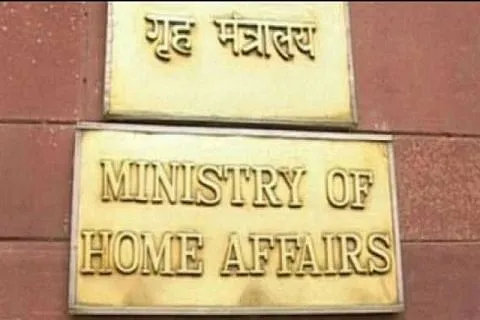
New Delhi, Sep 03: The Union Home Ministry has named 37 airports, 34 sea and river ports and 37 international land crossing points as the designated immigration posts for entry and exit of international passengers.

The home ministry also named six railway stations — all located along the India-Pakistan and India-Bangladesh borders — as the designated immigration posts for entry and exit of international passengers.

The announcement was made by the home ministry through a gazette notification after The Immigration and Foreigners Order, 2025, was notified on September 1.

The airports with designated immigration posts are Ahmedabad, Lucknow, Amritsar, Varanasi, Bagdogra, Bangalore, Bhubaneswar, Raja Bhoj International Airport, Bhopal, Calicut (Kerala), Chandigarh, Chennai, Cochin, Coimbatore, Dabolim (Goa), Delhi, Gaya (Bihar), Guwahati, Hyderabad, Indore (Madhya Pradesh), Jaipur, Kolkata.

The other airports are Kannur (Kerala), Madurai (Tamil Nadu), Mangalore, Mumbai, Manohar International Airport, Mopa (Goa), Nagpur, Patna, Port Blair, Pune, Srinagar, Surat, Trichy (Tamil Nadu), Thiruvananthapuram, Tirupati, Visakhapatnam, and Vijayawada (Andhra Pradesh).

The seaports are Alang (Gujarat), Agati and Minicoy Island (Lakshadweep), Bedi Bunder (Jamnagar, Gujarat), Bhavnagar (Gujarat), Calicut (Kerala), Chennai, Cochin, Cuddalore (Chennai), Dhamra (Odisha), Kakinada (Andhra Pradesh), Kolkata, Kandla (Gujarat), Krishnapatnam (Andhra Pradesh).

The other seaports are Kattupalli (Tamil Nadu), Karimganj (Assam), Kamarajar (Tamil Nadu), Kollam (Kerala), Mandvi ( Gujarat), Mormagoa Harbour (Goa), Mundra (Gujarat), Mumbai, New Mangalore, Nagapattinum (Tamil Nadu), Nhava Sheva (Maharashtra), Paradeep (Odisha), Porbander, Port Blair, Silghat (Assam), Tuticorin (Tamil Nadu), Visakhapatnam, Vallarpadam, Vizhinjam (both Kerala), Dhubri, and Pandu (both Assam).

The landports are Attari Road, Dera Baba Nanak (both Punjab), Banbasa (Uttarakhand), Changrabandha, Ghojadanga, Haridaspur, Hili, Jaigoan, Lalgolaghat, Mahadipur, Phulbari, Radhikapur, Raniganj, Gede (all West Bengal), Dalu, Dawki (both Meghalaya), Darranga, Karimganj, Mankachar, Sutarkandi (all Assam).

The other landports are Agartala, Dhalaighat, Khowal, Muhurighat, Ragna, Kailashahar, Sabroom, Srimantapur (all Tripura), Gauriphanta, Rupaidiha, Sonauli (all Uttar Pradesh), Jogbani, Raxaul (both Bihar), Moreh (Manipur), Sabroom (South Tripura), Kawrpuichhuah, Zorinpui, Zokhawthar (all Mizoram).

The railports with immigration posts are Munabao (Rajasthan), Attari (Punjab), Gede Rail and Road Check Post, Petrapole/Chitpur, Haridaspur, and New Jalpaiguri Railway Station (all West Bengal).

Greater Kashmir

All Health institutions fully functional, no need to Panic: Secy Health Abid Rasheed

0
All Health institutions fully functional, no need to Panic: Secy Health Abid Rasheed

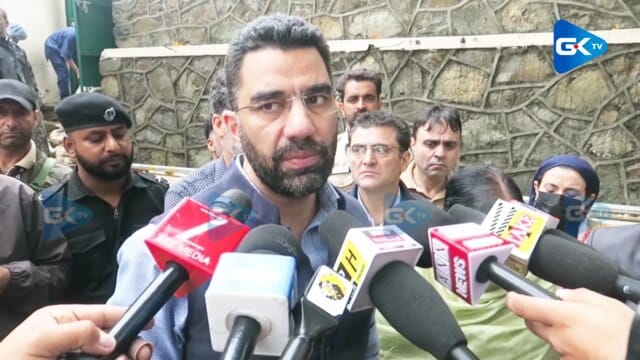
Srinagar, Sep 03: Amid continuing heavy rains across Jammu and Kashmir, Secretary Health Abid Rasheed on Wednesday said that the Union Territory’s healthcare system was “fully functional, operative and on the ground,” adding that there was “absolutely no need to panic.”

“For the last almost eight days, this has been the situation in Jammu and Kashmir. In Jammu, the situation was different, but today again it is raining heavily… all our health institutions from primary to tertiary care are fully functional, operative, and all doctors, paramedics and healthcare staff are on the ground,” Rasheed said.

He also said that special measures had been rolled out in flood-affected parts of Jammu. “Today we have started this campaign that health camps, particularly in Jammu where there are flood-affected areas, have been organized. Special health camps are providing medicines and treatment to people at their doorsteps,” he said.

In South Kashmir, which has received intense rainfall in the past 24 hours, hospitals are on high alert. “We are going to all the hospitals and checking that, God forbid, if there are any gaps due to which there will be a problem tomorrow, they are being plugged. The whole administration is involved in this… our effort is that all our structures, systems, machinery, equipment and most importantly, healthcare facilities for patients should be accessible and functioning in their normal routine,” he said.

Acknowledging the role of frontline health workers, Rasheed said that whether it is snowfall, rainfall, or any natural disaster, doctors, paramedics, nurses, ambulance drivers, all are risking their lives to meet the healthcare needs of people. “In remote areas too, they are doing their work, discharging their duties. I would like to thank all of them.”

Rasheed further said that the administration was maintaining constant preparedness and alertness. “We are all in a status of preparedness and alertness. But there is absolutely no need to panic, no need to worry. We are all on top of it, and we will make sure that there are no natural disasters or incidents where you have to face distress,” he said.

According to him, the health department is reviewing preparedness every two hours. “Especially where there has been flooding or very heavy rainfall, all precautions are being taken. And it is very important for people to pay special attention to precautions, particularly with regard to waterborne diseases. For this, we need the support of social media, print media and electronic media to spread the message,” Rasheed said.

“We are all united, and with your help, we are reviewing the healthcare preparedness every two hours… Inshallah, let’s hope for the best,” he added.(KNS)

Greater Kashmir

Flood situation alarming in J&K, rivers cross danger mark

0
Flood situation alarming in J&K, rivers cross danger mark

Srinagar, Sep 3: The flood situation worsened significantly on Wednesday in Jammu and Kashmir, with nearly all rivers and streams flowing above the flood mark as Chief Minister Omar Abdullah chaired a meeting to assess the latest conditions across the UT.

At 1 p.m., Chenab, Tawi, Ravi, Basantar, and Ujh rivers were flowing above the flood level in Jammu, and the Jhelum, Vishow, Sindh, Sheshnag, Lidder, and other streams and nallahs in Kashmir were fast reaching the flood mark.

The Jhelum River was flowing close to evacuation level at Sangam in Anantnag district, while at Ram Munshi Bagh in Srinagar, the river was barely a foot lower than the flood mark.

The Vishow, Lidder, and Sheshnag streams were flowing higher than the flood level in south Kashmir, while the Sindh stream in North Kashmir was flowing close to the flood mark.

Reports suggest some bridges in South and North Kashmir have been damaged by flood waters.

Flood waters from the Chenab River inundated many villages in the Akhnoor area of Jammu district as officials used loudspeakers to alert people in Jammu city to stay away from the Tawi River, which is in spate.

Chief Minister Omar Abdullah chaired a meeting to review the flood situation. Officials said he directed the administration to intensify ground response, ensure clearance of waterlogged areas, safeguard essential services, carry out timely evacuations in critical zones, and provide immediate relief.

Two ministers, Javed Rana and Satish Sharma, briefed him on the situation in Jammu, while Health Minister Sakina Itoo and advisor to the CM Nasir Sogami provided updates on the situation in Kashmir.

The Chief Minister appealed to the people to follow advisories and avoid vulnerable spots.

The Srinagar-Jammu highway, Mughal Road, and Sinthan Pass remained closed for the day as shortages of essentials of life triggered panic buying among people in the Valley.

Train services in the Jammu railway division remain severely disrupted after heavy rains and flash floods battered the region, causing extensive damage to the Pathankot-Jammu line.

The Northern Railway on Wednesday announced the cancellation of 68 incoming and outgoing trains from Jammu and Shri Mata Vaishno Devi Katra stations till September 30, even as 24 services are being gradually restored.

Officials said that rail traffic has been suspended for the past eight days due to breaches and track misalignments at several places on the Pathankot-Jammu section. The situation left scores of people, including Vaishno Devi pilgrims, stranded across the division.

“To facilitate stranded passengers, shuttle services have been pressed into service between Jammu Tawi and Shri Mata Vaishno Devi Katra. Additionally, long-distance trains, including Jammu Tawi-Kolkata and Katra-New Delhi, have been allowed to operate,” railway officials said.

Four trains have been inducted in the Jammu Katra section for shuttle service between September 1 and 15. The restored trains include Sampark Kranti, Sealdah Express, Kantri Express, Trivandrum Express and the popular Vande Bharat, which will resume operation from September 7.

Railways said that two pairs of shuttle services are now running daily between Jammu and Katra to cater to local commuters and pilgrims.

Officials added that so far, 5,784 stranded passengers have been transported in seven special trains from Jammu for their onward journey.

Despite the partial resumption, normalcy in rail operations is expected to take weeks, given the scale of damage.

Authorities have closed schools and colleges both in the Jammu division and the Valley for the day.

The Meteorological (MeT) department has forecast a gradual improvement in the weather beginning this evening.

Greater Kashmir

Electric Transmission Tower damaged in Lassipora, house collapses in Rajpora

0
Electric Transmission Tower damaged in Lassipora, house collapses in Rajpora

Pulwama, Sep 03: ​An electric transmission tower of 33KV was damaged in Rambaira Nallah at SIDCO Lassipora while a house collapsed in Rajpora area of South Kashmir’s Pulwama on Wednesday.

An official said that ​a single-storey kutcha residential house belonging to Asif Ahmad Gorsi from Nichendanjan Sangerwani of PS Rajpora was fully damaged.

​The family was safely evacuated to a relative’s house, and there were no casualties or injuries reported in the incident, official said. (KNC)

Greater Kashmir

- Advertisement -
Google search engine

Recent Posts