Home Blog Page 591

Kerala MLAs, Kashmiri activists discuss sustainable tourism, climate action

0
Kerala MLAs, Kashmiri activists discuss sustainable tourism, climate action

Srinagar, Aug 10: A delegation of six Members of the Legislative Assembly (MLAs) from Kerala met with local environmentalists and tourism stakeholders in Kashmir this morning to exchange views on sustainable tourism, environmental challenges, and climate change.

A statement said that the meeting was arranged on the recommendation of MLA Dr B.A. Veeri and hosted by noted social activist and environmentalist Dr. Raja Muzaffar Bhat, along with Manzoor Wangnoo, Farooq Kuthoo and Dr Rouf Malik. Discussions centred on ways to balance tourism growth with ecological preservation, particularly in fragile mountain regions.

The Kerala legislators, led by the Chairman of the Environmental Committee of the Kerala Legislative Assembly, extended a formal invitation to Kashmiri stakeholders to visit Kerala. The visit would aim to share best practices in environmental protection and explore opportunities to promote sustainable tourism in both regions.

Participants lauded Kerala’s reputation for environmental awareness, warm hospitality, and community-led conservation efforts.

In the wake of the recent Pahalgam incident, speakers also praised the tourism department, associations, and travel agents in Jammu and Kashmir for their continued efforts to keep tourism vibrant despite challenges.

Greater Kashmir

Man hospitalised after following dangerous diet advice from ChatGPT

0
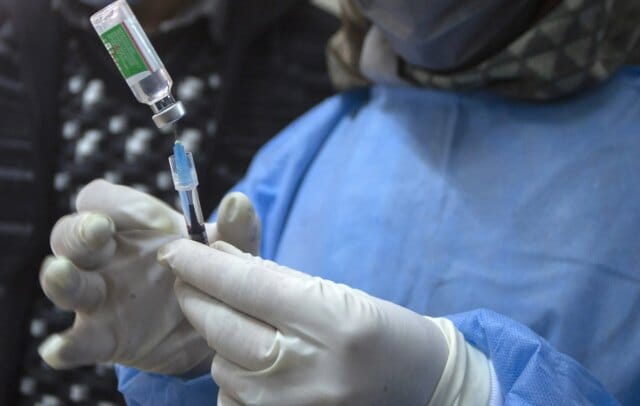
Covid variants NB.1.8.1, LF.7 detected in India: INSACOG data

New Delhi, Aug 10: In a rare and alarming case, a man in the United States developed life-threatening bromide poisoning after following diet advice given by ChatGPT.

Doctors believe this could be the first known case of AI-linked bromide poisoning, according to a report by Gizmodo.

The case was detailed by doctors at the University of Washington in ‘Annals of Internal Medicine: Clinical Cases’.

They said the man consumed sodium bromide for three months, thinking it was a safe substitute for chloride in his diet. This advice reportedly came from ChatGPT, which did not warn him about the dangers.

Bromide compounds were once used in medicines for anxiety and insomnia, but they were banned decades ago due to severe health risks.

Today, bromide is mostly found in veterinary drugs and some industrial products. Human cases of bromide poisoning, also called bromism, are extremely rare.

The man first went to the emergency room believing his neighbour was poisoning him. Although some of his vitals were normal, he showed paranoia, refused water despite being thirsty, and experienced hallucinations.

His condition quickly worsened into a psychotic episode, and doctors had to place him under an involuntary psychiatric hold.

After receiving intravenous fluids and antipsychotic medicines, he began to improve. Once stable, he told doctors that he had asked ChatGPT for alternatives to table salt.

The AI allegedly suggested bromide as a safe option — advice he followed without knowing it was harmful.

Doctors did not have the man’s original chat records, but when they later asked ChatGPT the same question, it again mentioned bromide without warning that it was unsafe for humans.

Experts say this shows how AI can provide information without proper context or awareness of health risks.

The man recovered fully after three weeks in hospital and was in good health during a follow-up visit. Doctors have warned that while AI can make scientific information more accessible, it should never replace professional medical advice — and, as this case shows, it can sometimes give dangerously wrong guidance.

Greater Kashmir

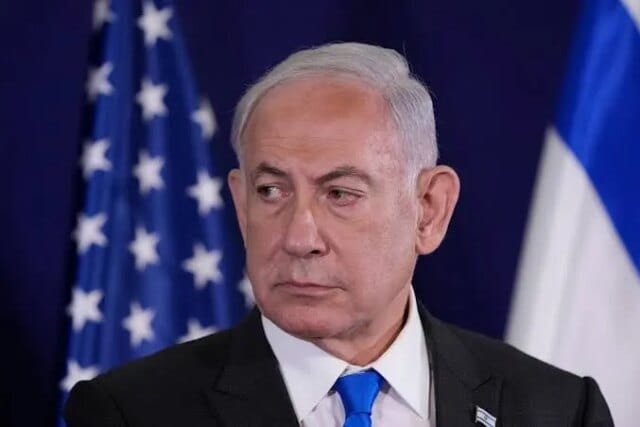
Netanyahu defends his planned military offensive in Gaza

0
Netanyahu defends his planned military offensive in Gaza

Jerusalem, Aug 10: Israeli Prime Minister Benjamin Netanyahu says Israel “has no choice but to finish the job and complete the defeat of Hamas”.

He is speaking to foreign media in Jerusalem and defending a planned military offensive. He asserts that “our goal is not to occupy Gaza, our goal is to free Gaza”. He is also pushing back against what he calls a “global campaign of lies” as condemnation of the plan grows both inside and outside Israel.

Netanyahu said there is a “fairly short timetable” in mind for next steps in Gaza.

The goals there, he said, include demilitarising Gaza, the Israeli military having “overriding security control” there and a non-Israeli civilian administration in charge.

The prime minister also said he had directed Israel’s military in recent days to “bring in more foreign journalists” – which would be a striking development as they have not been allowed into Gaza beyond military embeds.

Netanyahu again blamed many of Gaza’s problems on the Hamas militant group, including civilian deaths, destruction and shortages of aid.

Greater Kashmir

ISRO to launch 6,500 kg US communication satellite

0
ISRO to launch 6,500 kg US communication satellite

Chennai, Aug 10: After marking a humble beginning in the Indian space programme with a tiny rocket supplied by the United States, ISRO would launch a 6,500 kg communication satellite built by the US in the next couple of months, the chairman of the space agency, V Narayanan said on Sunday.

Following the historic launch of NASA-ISRO Synthetic Aperture Radar (NISAR) mission onboard a GSLV-F16 rocket on July 30, ISRO would be launching another satellite for the United States, he said at an event near Chennai.

Narayanan, who is also the secretary of Department of Space, was presented with the honorary degree of Doctor of Science, by the Governor of Maharashtra C P Radhakrishnan, during the 21st Convocation of SRM Institute of Science and Technology at Kattankulathur near Chennai.

In his acceptance speech, Narayanan recalled that the ISRO was set up in 1963 and the country was 6-7 years behind advanced countries then. In the same year, a tiny rocket was donated by the United States marking the beginnings of the Indian Space Programme. “It was on November 21, 1963,” he said.

In 1975, through satellite data given by the US, ISRO demonstrated ‘mass communication’ by keeping 2,400 television sets across 2,400 villages of 6 Indian states, he said.

“From that (kind of humble beginnings), the 30th of July was a historical day for the Indian space programme. We have launched the NISAR satellite. The costliest satellite ever built in the world. The L Band SAR payload from the USA and S Band payload provided by ISRO. The satellite was placed in orbit precisely by Indian launcher (GSLV). And today, we are shoulder to shoulder with advanced countries,” Narayanan remarked.

He noted that the team from the National Aeronautics and Space Administration (NASA) lauded their counterparts in ISRO for the precision launch of the GSLV-F16/NISAR Mission.

“In another couple of months, a country which received a tiny rocket from the United States, is going to launch a 6,500 kg communication satellite built by America using our own launcher from Indian soil. What a significant growth it is,” he noted.

From a country which did not possess satellite technology 50 years back, ISRO has, to date, launched 433 satellites of 34 countries using its own launch vehicles, he said.

Elucidating about the Indian space programme, he said, “Today, there are 55 applications where ISRO has been contributing for the welfare of the country.

“It includes television broadcasting, telecommunication, weather forecasting, disaster warning and mitigation, navigation, ensuring food and water security.”, he said.

“Even during Operation Sindoor, we have ensured through our satellites, the safety and security of whatever possible of all the citizens of Bharat, we could contribute, we contributed,” he remarked.

Listing out some of the significant missions, he said with the Chandrayaan-1 mission, ISRO was able to identify water molecule on the surface of the moon, and through Chandrayaan-3 till date, no country has made soft landing on the south pole of the Moon.

Referring to Russia’s rocket mission of placing 34 satellites into orbit using a single launch vehicle, he said India broke that record by placing 104 satellites into the intended orbit using a single rocket.

In 2017, ISRO scripted history by successfully launching 104 satellites, including India’s weather observation Cartosat-2 Series, in a single mission onboard PSLV-C37 rocket.

On the future launch missions planned by the Bengaluru-headquartered space agency, Narayanan said, currently there are 56 satellites orbiting the earth, serving the purpose of ISRO. The number of satellites would be increased ‘3xtimes’ over the next 2-3 years.

“We are going to have our own Gaganyaan programme (sending humans to space) and ISRO is also going to build its own space station by 2035. The Indian Space programme is really one of the outstanding programmes and by 2040 we will match all developed countries in terms of capability of all space programmes,” he said.

In his brief address, Radhakrishnan said, “Sincerity, hard work and patience are the true keys to success.”

“Challenges come to all, but it is overcoming them with determination that shapes your future,” he said.

Urging them to embrace lifelong learning, and to remain humble, he said, “With this spirit, the youth will lead India to become the world’s foremost economic power by 2047.”

Ministry of Earth Sciences, Secretary, M Ravichandran was awarded the honorary degree of Doctor of Science along with Narayanan.

On the occasion, a total of 9,769 students — 7,586 men and 2,183 women received their degrees. Additionally, 157 students who secured top ranks were honoured.

Greater Kashmir

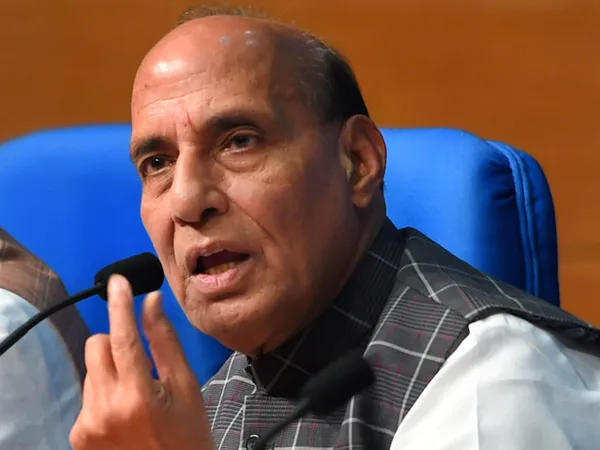
Rajnath Singh rebukes Trump-led hostile trade tactics

0
Defence Minister Rajnath Singh briefs PM Modi on J&K situation

New Delhi, Aug 10: In a blistering attack on global trade hostility, Defence Minister Rajnath Singh made a veiled attack on the US President Donald Trump and his tariff tactics, accusing of making “deliberate attempts” to derail India’s economic rise by targeting Indian-made products through “manipulative hostile trade practices”.

“There are people who feel threatened by India’s rapid economic growth,” Rajnath Singh said.

“They see themselves as global overlords. Many are working to box India with hostile trade tactics — scheming to make Indian goods dearer in international markets so that no one buys them. These are not random acts; they are calculated moves. But let me say this without hesitation,” Rajnath Singh asserted, “no force can stop India from advancing and becoming one of the world’s leading powers”.

Rajnath Singh’s remarks, delivered both in public and on his official X handle, reflect a growing confidence in India’s strategic and economic roadmap —particularly in the Defence sector, which he described as a cornerstone of national resurgence.

“When our government was formed in 2014 under the leadership of the Prime Minister Narendra Modi, India’s defence exports, once negligible, have surged to Rs 24,000 crore annually — a record Rajnath Singh attributes to visionary leadership and indigenous innovation.

“We resolved to become self-reliant in Defence. In contrary to the past when we used to import from weapons to fighter jets, now we are not only manufacturing them that we used to import but we are now exporting to other countries. This transformation is a testament to India’s growing capability and confidence.”

He also underscored the sector’s broader economic impact: “The Defence sector is playing a very important role in India’s economic progress. It is not only strengthening our security but also contributing to national growth.”

At the foundation stone-laying ceremony of a new BEML unit in Umaria village of Raisen district, Rajnath Singh highlighted the local benefits of Defence industrialisation.

“This unit will open new employment opportunities and encourage small and large industries linked to it. It will provide jobs to local people and enhance their technical skills and efficiency.”

Referencing Operation Sindoor, Singh sent a clear message to adversaries: “We do not provoke anyone. But if someone provokes us, we do not spare them either.” The tone of his throughout speech was brimming with assertions — India, Rajnath Singh made clear, is no longer a passive player in global affairs. It is a rising power, unwilling to be cornered by out-dated hierarchies or hostile trade regimes.

Greater Kashmir

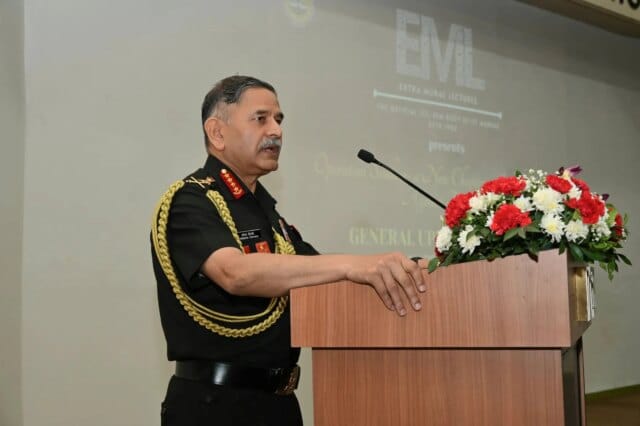
Operation Sindoor was unlike any conventional mission: Army chief

0
Operation Sindoor was unlike any conventional mission: Army chief

New Delhi, Aug 10: Army Chief Gen. Upendra Dwivedi has said that Operation Sindoor was akin to playing a game of chess, as “we did not know” what would be the enemy’s next move, and though the “test match stopped on the fourth day”, it could have been a protracted conflict.

He also emphasised the importance of “narrative management” in such a scenario as “victory is in mind”, and said if you ask a Pakistani “whether you lost or won, he would say, my (Army) chief has become a Field Marshal, we must have won only, that is why he has become a Field Marshal”.

The Army chief made the remarks in his address at a function held at IIT-Madras on August 4. The video of his address was shared by the Army over the weekend.

Without naming any country, the Army chief also underlined the threat perception, and said, “next time, it may be much more, and whether that country will do it alone, or supported by some other country, we do not know. But I have a strong hunch, feeling, that country will not be alone. That is where we have to be careful”.

The Army chief used the analogies of chess and cricket to emphasise the intricacies of Operation Sindoor, India’s decisive military action launched in May on terror infrastructure in Pakistan and Pakistan-occupied Kashmir (PoK) in retaliation for the April 22 Pahalgam attack.

The operation led to a four-day military conflict between India and Pakistan that was halted after an understanding reached between the two sides on May 10.

“Operation Sindoor, a new normal, is just the beginning. It is the age of acceleration, transformation we are living in. And if that be the case, then the journey to travel together for upholding peace, even if enforced through strength, synergy and sovereignty, is the call of the day,” the Army chief said.

Using the metaphor of the chess game, Gen. Dwivedi said, “In Operation Sindoor what we did, we played chess. So, what does it mean? It means, we did not know what is the next move, the enemy is going to take, and what we are going to do. This is something, we call.. the grey zone. Grey zone is that we are not going for the conventional operations. But, we are doing something, just short of a conventional operation.”

“Conventional operation means, go with everything, take everything you have. And, if you are able to come back, otherwise, stay there. That is called the conventional approach. Here, the grey zone means any activity that is taking place in all domains, that is something we are talking about and Operation Sindoor taught us that this is the grey zone,” he said.

“So, we were making the chess moves, and he (enemy) was also making the chess moves. Somewhere we were giving him the checkmate and somewhere we were going in for the kill at the risk of losing our own, but that’s the way, life is all about,” the Army chief said.

Gen Dwivedi emphasised that as far as the grey zone is concerned, it is ever present and this will remain.

“And, the next war which we are looking at, it may happen soon, and we have to prepare accordingly, and in this we have to fight this battle, non-kinetic one, together,” he said without elaborating.

The Army chief said the military alone will not be fighting it.

“If I look at it, India is facing a two-and-a-half front, and if it is facing the land borders, then keeping in with the psyche of people in India today, currency of victory will remain, as land,” he said.

As far as Operation Sindoor is concerned, ths Army chief said the Indian ground forces were “playing chess” and in this board game, something was visible, while something was not visible.

“And, if something that was not visible, maybe other countries were helping to make it visible for the adversary…This test match stopped on the fourth day, it could have gone to 14 days, 140 days also, 1400 days also, we don’t know, but we have to be prepared for those things,” he said.

In his address, he also underlined the components if a force orchestration an army has — force visualisation, force preservation and force application.

And, Operation Sindoor was a “whole of nation approach” and military was given a “free hand” to decide what was to be done, the general officer said.

And, that is the kind of confidence, the political clarity, political direction, for the first time we saw, he said, adding, having no terms of restrictions, raises the morale of the force.

That is how, it helped Army commanders on ground to “act as per their wisdom”.

Giving further details of the operation, he said that on April 25, “we visited the Northern Command, place where we thought, planned and conceptualised and executed seven out of the nine targets which were destroyed killing several terrorists.”

On the precision strikes on terror camps, he said it was “wide and deep where we hit the heartland, first time we hit the heartland, of course, our targets were the nursery and the masters”.

This has never been done, and even Pakistan was not expecting that the heartland will be hit, and that’s what came as a “shocker” to them. “But, were we prepared for it, yes, we were prepared for it, to absorb the blow back which will come up,” Gen Dwivedi said.

On how the battle of narratives was fought during Operation Sindoor, he said the Indian forces countered Pakistan’s strategy in their own way – using social media and other platforms to convey the message to the masses.

This is how, you can influence the population. It is the domestic population, the adversary’s population and the neutral population, he said.

“Strategic messaging was very important, and that’s why the first messaging that we did was, justice done. That hit the maximum, I am told, in the world today, the number of hits which we received,” Gen Dwivedi said.

He further said today, globally 56 conflicts are going on, involving a total of 92 countries, adding, this strategic continuum of persistence will continue to grow.

“As far as we are concerned, we share two borders, and both borders, you can call it live, semi-live, in whichever terminology you can look at, but these potential adversaries have the capabilities to orchestra a kind of war, which we have to face together or one by one, that we cannot say for sure, as of today, but capability-wise, we have to stand up to both the fronts,” the Army chief said.

Now, if that be the case, then “we have to look at five generations of warfare”.

To boost preparedness, technology has to percolate down to the soldier level, and that is “why I have said, ‘eagle on the arm’, our 12 lakh population of the Indian Army, everybody should have one drone each, ‘eagle on the arm’,” he said.

So, from muddy trenches to the Internet of Things, that is the kind of arena we are looking at, Gen Dwivedi said, emphasising the multiple domains of evolving nature of warfare.


Greater Kashmir

PM Modi flags off Amritsar-Shri Mata Vaishno Devi Katra Vande Bharat Train

0
PM Modi flags off Amritsar-Shri Mata Vaishno Devi Katra Vande Bharat Train

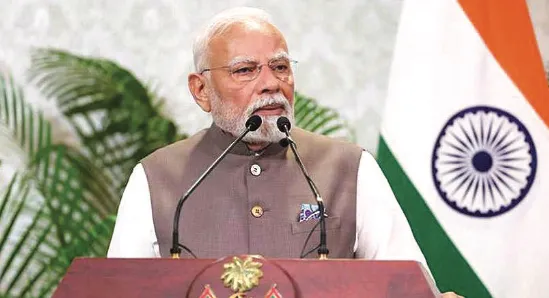
New Delhi, August 10: Hon’ble Prime Minister Shri Narendra Modi today flagged off Amritsar – Shri Mata Vaishno Devi Katra Vande Bharat Train.

The Lieutenant Governor Shri Manoj Sinha expressed gratitude to the Prime Minister Shri Narendra Modi for dedicating the Vande Bharat Train between Amritsar to Shri Mata Vaishno Devi Katra Station.

“The new Vande Bharat Train will ensure ease of travel for devotees of Shri Mata Vaishno Devi and spur the growth momentum of the local economy,” the Lieutenant Governor said.

The Lieutenant Governor observed that the transport infrastructure of J&K, particularly in railways, has witnessed unprecedented growth under the leadership of Hon’ble Prime Minister.

He said the first freight train that reached Anantnag from Punjab on August 09 has marked a significant milestone in transport infrastructure and trade of Kashmir valley.

The Lieutenant Governor posted on X, “Grateful to Hon’ble PM Shri Narendra Modi Ji for flagging off Vande Bharat Train between Amritsar to Shri Mata Vaishno Devi Katra Station. J&K’s transport infrastructure, particularly in railways, has witnessed unprecedented growth under the leadership of Hon’ble PM.

New Vande Bharat Train will ensure ease of travel for devotees of Mata Vaishno Devi and spur the growth momentum of the local economy. Yesterday, first freight train had reached Anantnag from Punjab, marking a significant milestone in Kashmir Valley’s transport infra and trade”.

The 26406 Shri Mata Vaishno Devi Katra – Amritsar Vande Bharat Express Train will depart from Katra at 06:40 a.m. to reach Amritsar at 12:20 p.m. the same day. In return direction, the 26405 Amritsar- Shri Mata Vaishno Devi Katra Vande Bharat Express Train will depart from Amritsar at 4:25 p.m. to reach Katra at 10 pm. The Train will run six -days a week except Tuesday.

Greater Kashmir

Boy drowns in Madumati river in north Kashmir’s Bandipora

0
String currents sweep away teen in Madumati river in Ganderbal

Ganderbal, Aug 10: An 18-year-old youth from Ganderbal drowned in Nallah Madumati near Muslim Abad in north Kashmir’s Bandipora district while taking a bath.

The deceased has been identified as Nazakat Ali, son of Akhter Ali, a resident of Malshi Bagh, Ganderbal.

Following the incident, locals immediately launched a search operation to trace the body.

Witnesses said the youth was swept away by the strong current of the stream while bathing.

Rescue efforts by locals were underway till last reports came in. [KNT]

Greater Kashmir

Indian tech and Make In India behind Operation Sindoor’s success: PM Modi

0
Kargil Vijay Diwas reminder of unparalleled courage of our soldiers: PM Modi

Bengaluru, Aug 10: Prime Minister Narendra Modi on Sunday said Indian technology and Make In India were behind the success of Operation Sindoor which brought Pakistan to its knees in a few hours.

He said the world for the first time saw the new face of India during Operation Sindoor when it demonstrated its ability in destroying the terror hubs deep inside Pakistan.

“The world has seen for the first time India’s new face during Operation Sindoor where the Indian military demonstrated the ability to destroy the terror hubs by targeting them deep inside Pakistan and bringing Pakistan to its knees within a few hours,” Modi said at the foundation laying ceremony of Metro Phase-3 project.

“Our technology and the strength of Make in India is behind the success of Operation Sindoor,” he said.

Bengaluru and its youth had a major role in Operation Sindoor, he added.

Greater Kashmir

String currents sweep away teen in Madumati river in Ganderbal

0
String currents sweep away teen in Madumati river in Ganderbal

Ganderbal, Aug 10: An 18-year-old youth from Ganderbal drowned in Nallah Madumati near Muslim Abad in north Kashmir’s Bandipora district while taking a bath.

The deceased has been identified as Nazakat Ali, son of Akhter Ali, a resident of Malshi Bagh, Ganderbal.

Following the incident, locals immediately launched a search operation to trace the body.

Witnesses said the youth was swept away by the strong current of the stream while bathing.

Rescue efforts by locals were underway till last reports came in. [KNT]

Greater Kashmir

- Advertisement -
Google search engine

Recent Posts