Home Blog Page 654

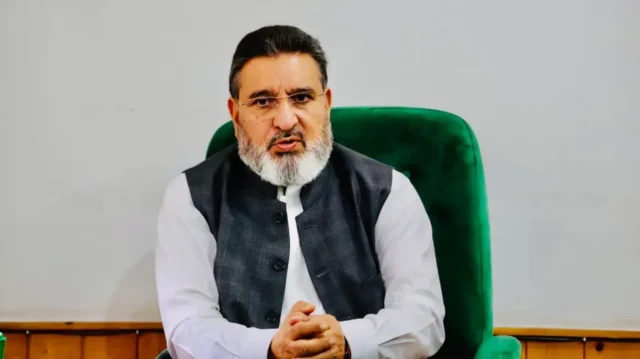
I accept the challenging role: Kavinder Gupta

0
J&K ex-deputy CM Kavinder Gupta appointed new Lt Governor Ladakh

Jammu, Jul 14: Senior J&K Bharatiya Janata Party (BJP) leader and former Deputy Chief Minister, Kavinder Gupta, on Monday described his appointment as the new Lieutenant Governor of Union Territory of Ladakh as “a role involving greater challenges” yet asserted to “accept it in earnest, with humility and unflinching commitment.”

He stated that given the crucial nature of his new role, he would make all-out efforts to take everyone along.

Former Deputy Chief Minister, who also served as the Speaker of J&K Legislative Assembly and Jammu Mayor, informed that the Prime Minister Narendra Modi himself apprised him (Kavinder) about the “big decision” two days ago.

He was appointed as LG Ladakh after the President accepted the resignation of the incumbent Lieutenant Governor of the UT (Ladakh), Brigadier (Rtd) B D Mishra.

“There are many layers to every aspect. It was known to all that some Governors (and Lieutenant Governors) had to be changed. I extend my heartfelt gratitude to the honourable President and my leadership – the Prime Minister Narendra Modiji; Union Home Minister Amit Shahji that they have found me worthy for the prestigious and responsible post,” beaming Kavinder Gupta stated, in his first reaction to media persons in Jammu, after the official announcement of his appointment.

“They (party leadership) have placed their trust in me, and I have been chosen for this crucial task. There are and there will be challenges (associated with this responsibility). However, I accept them in earnest and hope I will be able to do full justice with the job entrusted to me and will live up to the expectations of my leadership,” he exuded confidence.

About questions about the nature of the new responsibility, Kavinder said, “This is a very big responsibility. It will be fulfilled with unflinching dedication. My effort will be to take everyone along. I’ve visited and explored Ladakh during my tenure as Deputy Chief Minister for a brief period. But now it will be the only focus area, so I will get the opportunity to better understand it and deliver.”

When asked if the new transition to a “neutral role” from “an aggressive politician” would be difficult for him, his reply was, “I’ve worked as the Speaker also – a role which again demanded neutrality. It is not difficult. Yes, I’ve been in active politics for over fifty years. In 1975, I was put in jail for the first time during the Emergency.”

Will he miss his active political role in J&K?

In reply to this question, he said, “I’m a political activist; a dedicated party worker – where the party leadership sends, I will go and fulfil the job entrusted to me with commitment. Ladakh is passing through a crucial phase with some challenges. I’ll go there, study and then perform accordingly. I’ll be directly accountable to people. Therefore, I’ll have to learn first and then deliver.”

Born on December 2, 1959, Kavinder remained associated with RSS since he was 13 years old. He spent 13 months in jail during the emergency.

He served as VHP secretary in Punjab in 1978; worked as BJYM J&K president from 1993 to 1998. From 2005 to 2010, he acted as Mayor of Jammu for three consecutive terms. In 2014, he won from the Gandhinagar assembly segment in 2014 and was made Speaker J&K Legislative Assembly in 2015. In 2018, he was appointed as Deputy Chief Minister. He served as DyCM for two months till the BJP pulled out of its coalition with the PDP.

 

Greater Kashmir

CM’s scuffle with Police unfortunate: Leader of Opposition

0
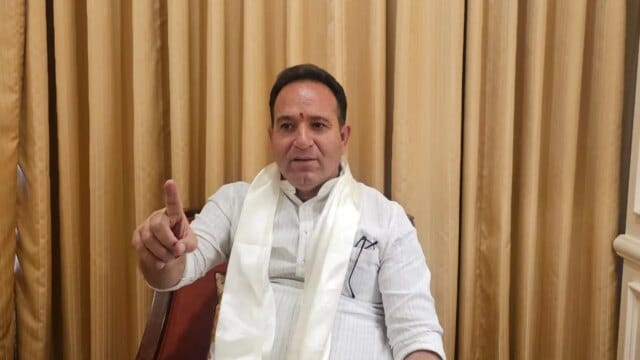
CM's scuffle with Police unfortunate: Leader of Opposition

Srinagar, Jul 14: Leader of Opposition (LoP) and senior J&K Bharatiya Janata Party (BJP) leader Sunil Sharma on Monday said that it was unfortunate that the chief minister engaged in a scuffle with the Police and jumped over the boundary wall of Martyrs’ Graveyard.

Talking to news agency ANI, Sharma said, “It is unfortunate that an elected Chief Minister jumps over the boundary wall of Mazar-e-Shuhada and engages in a scuffle with the Police.

We are the ones who form laws; we should not take them into our hands. The youth can also come onto the streets by holding stones, getting provoked as the chief minister is fighting with the Police.”


Greater Kashmir

EPFO Jammu holds seminar on ELI scheme

0
EPFO Jammu holds seminar on ELI scheme

Jammu, Jul 14: The Employees’ Provident Fund Organisation (EPFO), Regional Office Jammu, conducted an awareness seminar on the Employment Linked Incentive (ELI) Scheme at Hotel Radisson Blu to inform establishments about the scheme’s benefits, features, and implementation process.

As per the official statement issued, the ELI Scheme aims to boost employment generation, enhance employability, and extend social security, especially in the manufacturing sector.

First-time formal sector employees earning up to Rs 1 lakh per month are eligible for a one-time wage subsidy of up to Rs 15,000, disbursed in two installments. A part of the incentive is to be deposited in a savings instrument to encourage financial literacy. EPFO registration ensures access to pension, insurance, and retirement benefits.

Employers will receive monthly incentives between Rs 1,000 and Rs 3,000 per new employee. The incentive period extends up to four years for the manufacturing sector and two years for others, with direct payments to PAN-linked business accounts.

The seminar featured presentations by Account Officers Balkrishan and Aman Dandhi, outlining the scheme’s objectives and operational details. The event witnessed participation from 40–50 representatives from various establishments.

According to EPFO, the scheme is expected to benefit 1.92 crore first-time workers and generate over 3.5 crore jobs in two years. Participants appreciated the initiative and expressed interest in its implementation.


Greater Kashmir

India’s bullet train project hits key milestones with undersea tunnel breakthrough and E10 Shinkansen Rollout

0
India’s bullet train project hits key milestones with undersea tunnel breakthrough and E10 Shinkansen Rollout

New Delhi, Jul 14: The Mumbai-Ahmedabad High-Speed Rail (MAHSR) project has crossed a major milestone with the opening of the first segment of a 21-kilometre undersea tunnel between Bandra-Kurla Complex (BKC) and Thane. The achievement marks a major step forward in India’s first bullet train project, which is rapidly taking shape across Maharashtra and Gujarat.

Press release from Railway ministry said that construction is advancing swiftly along the 508-km corridor. So far, 310 km of viaducts have been completed, with civil works progressing at pace. Fifteen river bridges are fully built and four more are nearing completion. Out of the planned 12 stations, five are already finished and three more are approaching the final stages. The underground station at BKC, designed as a structural and architectural feat, will be located 32.5 metres below ground and engineered to support a future 95-metre high-rise above it.

Parallel to civil infrastructure, critical systems for train operation, including track laying, overhead electrical wiring, and signalling, are also being developed at speed. Procurement and installation of control systems are proceeding in tandem.

In a major boost to the India-Japan strategic partnership, the Japanese government has agreed to introduce the next-generation E10 series of Shinkansen trains for the project. These state-of-the-art trains will be deployed simultaneously in Japan and India, marking a historic collaboration. Currently, Japan runs the E5 series, with the E10 expected to bring enhanced speed, safety, and passenger comfort. The entire corridor is being developed using Japanese Shinkansen technology, widely regarded as a global benchmark in high-speed rail for its unmatched standards of reliability and safety.

Greater Kashmir

Nations and Professionals Urged to Strengthen Digital Defences

0
Nations and Professionals Urged to Strengthen Digital Defences

Cybersecurity is no longer just an IT issue confined to corporate boardrooms. In today’s digital age, the stability of global infrastructure, economic systems, and national security hinges on robust cyber defence. With the continued expansion of digital networks and remote systems, threats are multiplying, both in scale and sophistication.

Recent global decisions and statistics highlight the urgency further. NATO recognises cyber security risks and has pledged to increase overall defence and security spending to 5% of GDP by 2035, dedicating a significant portion to cyber defence. This is not just a symbolic gesture; it is a clear signal that cyber threats are now considered as serious as conventional warfare.

The data supports this shift in focus. According to Gartner, global cybersecurity spending is projected to grow by over 15% in 2025, reaching $212 billion. These numbers are more than just forecasts; they reflect a global acknowledgement that digital threats demand immediate, structured responses.

One of the most concerning developments is the rise in state-sponsored attacks. These are not isolated incidents carried out by lone hackers. Instead, they are coordinated campaigns backed by governments, targeting essential infrastructure, financial institutions, and even electoral systems. The aim is often to destabilise, steal sensitive data, or assert geopolitical dominance in a digital landscape.

For nations, the implications are vast. But for individuals, especially professionals looking to play a role in defending these systems, the need for advanced education is also growing. Enrolling in a graduate certificate in cyber security online provides a focused, flexible path to develop the skills needed to respond to these complex threats. As more organisations prioritise digital resilience, the demand for trained cybersecurity experts has never been higher.

But it’s not just about national defence or enterprise protection. Local infrastructures, healthcare systems, and educational institutions are equally at risk. With so many vital services connected to the internet, even a small breach can lead to major disruptions. This is why cyber defence is no longer a specialist concern. It is everyone’s responsibility.

In the context of these rising risks, countries are not only increasing their spending but also broadening their scope of protection. From data encryption and firewall management to artificial intelligence-driven threat detection, the approach is becoming more integrated and proactive. Importantly, strategies are also being developed to safeguard democratic institutions and public trust.

As the BBC recently highlighted, NATO recognises cyber security risks as part of its new defence commitments. This reflects a global understanding that the digital frontier is now a primary battleground. For emerging economies, the message is clear: ignoring cybersecurity is no longer an option. Planning, investment, and skilled manpower are critical to staying ahead of threats.

For those considering their next move professionally, the cybersecurity sector represents a rare intersection of job stability, meaningful work, and global relevance. And with qualifications now available online, the opportunity to upskill has never been more accessible.

As the world becomes more interconnected, so too does the potential for harm. But with that risk comes opportunity for nations to bolster their defences, and for individuals to become part of a new generation of digital guardians. The time to act is now.

Greater Kashmir

Understanding the Role of a Payment Gateway in Online Shopping

0
Understanding the Role of a Payment Gateway in Online Shopping

Shopping online has become part of daily life. We buy clothes, groceries, electronics – everything from the comfort of our homes. But ever wondered how the payment actually works once you place an order? That’s where a payment gateway steps in. Read on to understand the role of payment gateway in online shopping.

What Does a Payment Gateway Do?

Think of it like a digital cashier. When you choose a product and decide to pay, the payment gateway transfers your payment details to the bank, requests approval, and returns confirmation, all within a few seconds. It checks whether your account has enough balance and whether the card or UPI info is valid. If everything matches, the payment is processed.

You don’t see this happening. But without it, your online order wouldn’t be successful.

Why Is It Necessary?

Online payments can be risky if not handled properly. Sensitive information like your card number, UPI ID, or passwords could be exposed. A payment gateway keeps all that safe. It hides (encrypts) the data so that no one else can read or misuse it. That way, the payment is not just fast, it’s also secure.

For businesses, it helps collect payments from buyers in different cities. For buyers, it ensures money goes to the right place and the product gets delivered without payment issues.

How It Works in India

With digital shopping growing everywhere, especially in smaller cities and towns, the role of payment gateway India services has become even more important. People use different methods to pay; some prefer credit cards, others use UPI or net banking. A good gateway supports all these methods smoothly.

It also helps regional sellers go national. They don’t need to worry about how to take payment; the gateway handles it. For the customer, this means no confusion at checkout.

Step-by-Step: What Happens When You Pay

Let’s say you’re buying a mobile online. Here’s what happens when you tap on ‘Pay’:

  • Your payment info is sent to the gateway.
  • The gateway verifies with your bank to confirm the information is correct.
  • If yes, the amount is deducted from your account.
  • The seller is informed that the payment was successful.

This happens within moments. If anything fails, the payment is stopped right there, keeping your money safe.

Final Note

A payment gateway isn’t something we think about often, but it’s one of the most essential parts of online shopping. It allows transactions to happen securely and keeps both buyers and sellers worry-free. If you’re starting an online store and need a trusted option to collect payments, consider trying the PayU app. It’s simple, widely used, and designed for Indian users.

Greater Kashmir

‘Is this how an elected CM should be treated?’ Stalin on restrictions imposed on Omar Abdullah on martyrs’ day

0
CM Omar scales graveyard gates to offer tributes to martyrs

Srinagar, July 14: DMK President and Tamil Nadu chief minister, M K Stalin on Monday said the events unfolding in Jammu and Kashmir are a grim reminder of how far things have deteriorated in the region.

He expressed these remarks over police barriers aimed to prevent Jammu and Kashmir chief minister Omar Abdullah from visiting the martyr’s graveyard in Srinagar to pay respects to martyrs of July 13, 1931.

Condemning the action, he said that from Tamil Nadu to Kashmir the Union BJP government is systematically stripping away the rights of elected state governments.

In a post on X (formerly Twitter), Tamil Nadu chief minister M K Stalin said: “At a time when there is a growing demand for the restoration of Jammu and Kashmir’s statehood, the current events unfolding there are a grim reminder of how far things have deteriorated”.

“The elected CM Hon’ble @OmarAbdullah is being placed under house arrest simply for wanting to pay homage to the 1931 martyrs and is forced to climb walls to do so. Is this how an elected Chief Minister should be treated?”.

He said, “This is not just about one state or one leader. From Tamil Nadu to Kashmir, the Union BJP Government is systematically stripping away the rights of elected State Governments”.

“If this can happen in Kashmir, it can happen anywhere, to any elected representative of the people. Every democratic voice must unequivocally condemn this,” he added on X.


Greater Kashmir

Altaf Bukhari calls on LG Manoj Sinha at Raj Bhavan in Srinagar

0
Altaf Bukhari expresses concern over recurrence of mysterious illness in Rajouri

Srinagar, July 14: Jammu and Kashmir Apni Party (JKAP) President Syed Mohammad Altaf Bukhari called on Lieutenant Governor (LG) Manoj Sinha on Monday at Raj Bhawan in Srinagar.

According to a press release issued here, the Apni Party leader met the Lieutenant Governor to discuss a range of issues. They also deliberated on the prevailing political and security situation in Jammu and Kashmir.

“Bukhari held deliberations with the LG SInha on the current political and security situation in Jammu and Kashmir. He also brought several pressing public issues to the notice of the LG, urging his intervention in addressing these matters,” the press release reads.

It further said, “Apni Party leader also raised the problems and challenges faced by people affiliated with the horticulture industry, particularly in the wake of recent and recurrent weather-related adversities that have severely damaged crops. He reiterated his demand for adequate compensation for fruit growers and the farming community, who have suffered substantial losses due to hailstorms, strong winds, and other extreme weather events in recent months. He further emphasized the urgent need to provide hail nets to safeguard future crops and called for the implementation of a comprehensive crop insurance scheme to ensure the long-term security and stability of orchardists and farmers.”

“During the meeting, Bukhari applauded LG Sinha for his efforts to reach out to terror-affected families and for ensuring jobs for the kin of the victims. He said that this initiative was much needed and should be further expanded to ensure that no terror-affected family is left without the support and assistance of the government,” press release further said.

Greater Kashmir

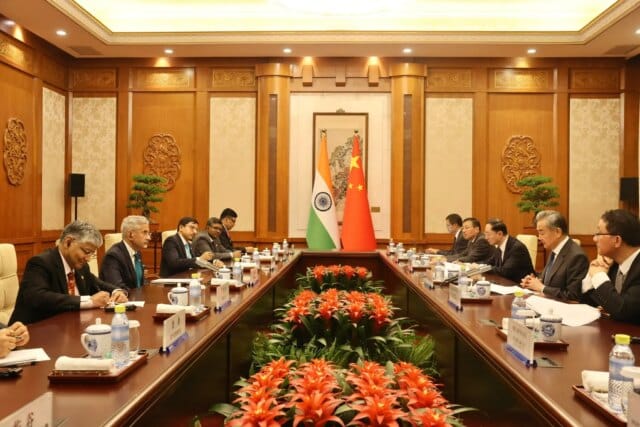
Need to address de-escalation; competition should not turn into conflict: EAM Jaishankar in Beijing

0
Need to address de-escalation; competition should not turn into conflict: EAM Jaishankar in Beijing

Beijing, July 14: India and China should build on “good progress” in normalising the bilateral ties to address border-related issues including de-escalation, and it is essential to avoid “restrictive trade measures and roadblocks”, External Affairs Minister S Jaishankar said on Monday during talks with his Chinese counterpart Wang Yi.

In his opening remarks at the meeting, Jaishankar said the bilateral relations can develop in a “positive trajectory” on the foundation that differences should not become disputes and nor should competition become conflict, adding the ties can be built only on the basis of mutual respect, mutual interest and mutual sensitivity.

The external affairs minister said India hopes “zero tolerance for terrorism” will be upheld at the upcoming meeting of the SCO, saying its primary mandate is to combat terrorism, separatism and extremism, comments seen as a reference to Pakistan’s support to cross-border terrorism.

Jaishankar met Wang hours after he landed in China on a two-day visit to attend a conclave of the Shanghai Cooperation Organisation (SCO). It is his first visit to the neighbouring country since bilateral ties witnessed a severe downturn following the Galwan Valley clashes in June 2020.

The external affairs minister also held talks with Chinese Vice President Han Zheng and conveyed to him that continued normalisation of bilateral ties can lead to mutually beneficial outcomes.

In the last nine months, India and China have been engaged in normalising their relations after ending the military face-off along the Line of Actual Control (LAC) in October last year.

Though the two sides disengaged troops from the friction points, they are yet to de-escalate the situation by pulling back the frontline forces from the border. Each side currently has around 50,000 to 60,000 troops along the LAC in the eastern Ladakh region.

In his remarks at the meeting with Wang, Jaishankar also underlined the need to avoid “restrictive” trade measures and “roadblocks”, in an apparent reference to Beijing’s approach on export of critical minerals as well as issues relating to the supply of fertilisers.

“We have made good progress in the past nine months for the normalisation of our bilateral relations. It is a result of the resolution of friction along the border and our ability to maintain peace and tranquillity there,” he said.

“This is the fundamental basis for mutual strategic trust and for smooth development of bilateral relations. It is now incumbent on us to address other aspects related to the border, including de-escalation,” the external affairs minister said.

Jaishankar also repeated New Delhi’s consistent position that India-China ties should be based on “mutual respect, mutual interest and mutual sensitivity”.

“As neighbouring nations and major economies in the world today, there are various facets and dimensions of our ties. Measures towards normalising our people-to-people exchanges can certainly foster mutually beneficial cooperation,” he said.

“It is also essential in this context that restrictive trade measures and roadblocks are avoided. I hope to discuss these issues in further detail.”

The external affairs minister noted that “stable and constructive” ties between India and China are not only to each other’s benefit, but that of the world as well.

“This is best done by handling relations on the basis of mutual respect, mutual interest and mutual sensitivity.”

“We have also earlier agreed that differences should not become disputes, nor should competition ever become conflict. On this foundation, we can now continue to develop our ties along a positive trajectory,” he said.

Jaishankar said the bilateral relationship requires both sides taking a “far-seeing approach” even as he referred to a meeting between Prime Minister Narendra Modi and Chinese President Xi Jinping in Kazan in October last year.

Since our leaders’ meeting, the India-China relationship has been gradually moving in a positive direction, he said, adding “our responsibility is to maintain that momentum.”

“In recent times, the two of us have had several opportunities to meet at international events and carry out strategic communication. It is our expectation that this will now be regular and take place in each other’s countries,” Jaishankar added.

The external affairs minister noted that the two sides have marked the 75th anniversary of diplomatic relations and appreciated the resumption of the Kailash Manasarovar Yatra after a gap of five years.

The external affairs minister also wished the Chinese side a successful SCO presidency and that India is committed to ensuring “good outcomes and decisions”.

In his meeting with Zheng, Jaishankar said an open exchange of views between the two sides is “very important” considering the “complex” global scenario.

Jaishankar travelled to China less than three weeks after Defence Minister Rajnath Singh visited the Chinese port city of Qingdao to participate in the SCO defence ministers’ conference.

The military standoff in eastern Ladakh began in May 2020, and a deadly clash at the Galwan Valley in June that year resulted in a severe strain in ties between the two neighbours.

The face-off effectively ended following completion of the disengagement process from the last two friction points of Demchok and Depsang under an agreement finalised on October 21 last year.

The decision to revive various dialogue mechanisms was taken at the meeting between Prime Minister Modi and Chinese President Xi in Kazan.

The Modi-Xi meeting came two days after India and China firmed up a disengagement pact for Depsang and Demchok.

Greater Kashmir

3rd body recovered from canal, toll 3

0
Social media handler detained for spreading false narrative regarding Bandipora encounter: Police

Srinagar, July 14: The body of third victim in the LJHP canal tragedy was recovered on Monday afternoon, taking the death toll in the incident to 3.

The officials said the body of Haji Mehnaz Rashid Shah, a 40-year-old resident of Khanyar, Srinagar, was retrieved this afternoon after an intense multi-agency search operation.

Shah was among the three family members swept away by strong river currents while attempting to rescue two children who had slipped into the water during a picnic. One person was rescued on the same day, while the bodies of two minors, including Ahmad Bin Khalid of Hyderpora and another child from Narkara Budgam were recovered earlier.

The rescue operation, now concluded, involved teams from SDRF Baramulla, Civil Defence Uri, J&K Police, and local volunteers, who continued efforts for over 36 hours to locate all victims.

The officials confirmed the retrieval of the last missing body and said medico-legal formalities were being completed before handing it over to the family.

Greater Kashmir

- Advertisement -
Google search engine

Recent Posts