Home Blog Page 680

Tarun Chugh slams Congress, AAP over Emergency legacy, governance in Punjab

0
Tarun Chugh slams Congress, AAP over Emergency legacy, governance in Punjab

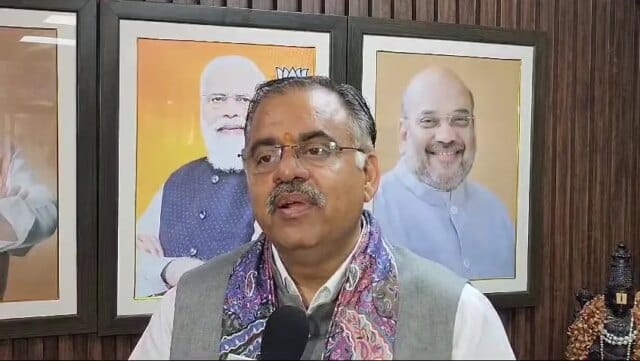
Chugh described the Emergency declared in 1975 by then Prime Minister Indira Gandhi as an act driven by political insecurity rather than national interest. He accused her of misusing Article 352 to subvert constitutional norms, turning India’s democracy into a personal dictatorship.

Chugh highlighted the clampdown on press freedom, suspension of civil liberties, and the arrest of opposition leaders without trial as hallmarks of that period. He alleged that Sanjay Gandhi, despite holding no constitutional office, wielded significant power during the Emergency, and that over one lakh people were imprisoned under the Maintenance of Internal Security Act (MISA), with jailed leaders denied even basic human rights.

Chugh argued that the Congress party has not reformed since then, accusing it of continuing to suppress dissent, target journalists, and brand criticism as anti-national. He also criticised the party for inserting ideological terms like “secular” and “socialist” into the Constitution for political motives and accused it of promoting dynastic politics. The continued centrality of the Nehru-Gandhi family in opposition politics, he said, reflects the party’s unchanged mindset.

Drawing a parallel with the AAP government in Punjab, Chugh claimed that the state is effectively being run not from Chandigarh but from Delhi, with real control resting with AAP leader Arvind Kejriwal and his inner circle. Chugh described AAP and Congress as fundamentally alike, both allegedly guilty of misgovernance, corruption, and betrayal of democratic principles. He asserted that the people of Punjab are growing disillusioned with both parties and will soon reject their brand of politics in favour of a more accountable leadership.

Greater Kashmir

Special court grants NIA 10-day remand of two Pahalgam terror accused

0
Special court grants NIA 10-day remand of two Pahalgam terror accused

Jammu, June 27: A special court of the National Investigation Agency (NIA) on Friday granted a 10-day remand of the two accused who were arrested for harbouring Pakistani terrorists behind the deadly Pahalgam terror attack in April, officials said.

A local court had earlier granted the NIA a five-day remand of the two accused on Monday, which expired on Friday.

The NIA produced the duo before the special NIA court, which granted a further 10-day remand, they said.

The two men — Parvaiz Ahmad Jothar of Batkote, Pahalgam; and Bashir Ahmad Jothar of Hill Park, Pahalgam — were arrested by the NIA on Sunday in the first major breakthrough in the investigation into the April 22 attack that left 26 people, mostly tourists, dead and 16 others injured.

According to the NIA, the arrested accused disclosed the identities of the three armed terrorists involved in the attack and confirmed that they were Pakistani nationals affiliated with the banned terrorist outfit Lashkar-e-Taiba (LeT).

Parvaiz and Bashir had knowingly harboured the terrorists at a seasonal ‘dhok’ (hut) in Hill Park before the attack, according to the NIA’s findings.

The two provided food, shelter and logistical support to the terrorists, who, on the fateful afternoon, selectively targeted and killed tourists based on their religious identity, making it one of the most gruesome terrorist attacks in recent memory, the agency said.

The NIA continues its probe into the terror network that enabled the brutal killings in Kashmir’s tourism hub.

Greater Kashmir

Kashmiri doctor forced to quit super-specialty seat at Tami Nadu hospital over beard, JKSA writes to CM Stalin for intervention

0
Kashmiri doctor forced to quit super-specialty set at Tami Nadu hospital over beard, JKSA writes to CM Stalin for intervention

Srinagar, June 27: The Jammu and Kashmir Students Association on Friday has written to Tamil Nadu Chief Minister Thiru M.K. Stalin, seeking his immediate intervention in a disturbing case of alleged religious discrimination against a young Muslim doctor from the Kashmir Valley. The doctor, Dr. Zubair Ahmad, was allotted a DrNB (Nephrology) seat at Kovai Medical Centre and Hospital (KMCH), Coimbatore, through the NEET-SS second counselling round conducted by the National Board of Examinations in Medical Sciences (NBEMS). He was allegedly asked to Shave his beard.

In its letter, the Association said that upon reporting to the hospital to complete admission formalities, Dr. Zubair was reportedly asked to sign a policy document that prohibited sporting a beard, a condition he said contradicted his religious obligations as a practicing Muslim. Despite offering to cover his beard with a surgical mask and agreeing to comply with all hygiene protocols and institutional dress codes, the hospital administration allegedly refused to accommodate him.

National Convenor of the Jammu and Kashmir Students Association Nasir Khuehami said that the hospital was unequivocal in its demand that Dr. Zubair shave or trim his beard in order to enroll. “He was categorically asked to shave his beard to be permitted to study at the super-speciality hospital,” the Association’s letter stated.

Dr. Zubair was informed that KMCH has a dress code prohibiting beards. Even after he assured the administration of his willingness to adhere to all professional norms and conceal his beard if required, the policy remained non-negotiable. Notably, Dr. Zubair has completed his MBBS, MD, and senior residency at Sher-i-Kashmir Institute of Medical Sciences (SKIMS), Srinagar, without encountering any such restriction.

The letter further pointed out that had this beard policy been transparently disclosed during the counselling process, Dr. Zubair would not have opted for the institute. With no alternative left, Dr. Zubair was compelled to withdraw from the programme, despite having secured the seat on an all-India merit basis. He has since requested NBEMS to allow his participation in the third round of counselling and to refund his ₹2 lakh security deposit submitted during the admission process.

The Association condemned the incident as a clear violation of Article 25 of the Constitution of India, which guarantees the right to religious freedom. “The hospital’s insistence on a so-called ‘clean-shaven, corporate appearance’ is neither essential to medical education nor aligned with patient care, ethics, or hygiene, the core pillars of the medical profession,” the Association argued.

Khuehami added, “Such appearance- based restrictions are not only unnecessary but are also discriminatory and exclusionary. The lack of prior disclosure and the imposition of this requirement after seat allotment is unjust and violates both the spirit and the letter of the Constitution.”

The Association expressed particular disappointment that such an incident occurred in Tamil Nadu, a state known for its progressive values and inclusive governance. “Tamil Nadu has long welcomed students and professionals from across India, including the Kashmir Valley. This incident threatens to tarnish that proud legacy and sends a disturbing message to students from marginalized and minority backgrounds.”

“Forcing a Kashmiri doctor to shave his beard, a core part of his religious identity not only violates his fundamental rights but also fosters fear, exclusion, and alienation in academic spaces, which should instead promote acceptance, equity, and dignity,” he added.

The Association urged Chief Minister M.K. Stalin to take urgent steps to ensure that religious freedoms are protected across educational and healthcare institutions in Tamil Nadu. “We request your intervention to discourage discriminatory institutional policies that infringe upon constitutional rights and to help restore the confidence of students and professionals who look up to Tamil Nadu as a beacon of progress, tolerance, and justice,” the letter stated.

The Association expressed hope in the Chief Minister’s leadership and commitment to justice, pluralism, and equality. “We urge him to uphold Tamil Nadu’s cherished tradition of tolerance, inclusion, and cultural respect, and to ensure that no student is ever made to feel unsafe or unwelcome due to their faith or identity.”

Greater Kashmir

Kashmiri doctor forced to quit super-specialty set at Tami Nadu hospital over beard, JKSA writes to CM Stalin for intervention

0
Kashmiri doctor forced to quit super-specialty set at Tami Nadu hospital over beard, JKSA writes to CM Stalin for intervention

Srinagar, June 27: The Jammu and Kashmir Students Association on Friday has written to Tamil Nadu Chief Minister Thiru M.K. Stalin, seeking his immediate intervention in a disturbing case of alleged religious discrimination against a young Muslim doctor from the Kashmir Valley. The doctor, Dr. Zubair Ahmad, was allotted a DrNB (Nephrology) seat at Kovai Medical Centre and Hospital (KMCH), Coimbatore, through the NEET-SS second counselling round conducted by the National Board of Examinations in Medical Sciences (NBEMS). He was allegedly asked to Shave his beard.

In its letter, the Association said that upon reporting to the hospital to complete admission formalities, Dr. Zubair was reportedly asked to sign a policy document that prohibited sporting a beard, a condition he said contradicted his religious obligations as a practicing Muslim. Despite offering to cover his beard with a surgical mask and agreeing to comply with all hygiene protocols and institutional dress codes, the hospital administration allegedly refused to accommodate him.

National Convenor of the Jammu and Kashmir Students Association Nasir Khuehami said that the hospital was unequivocal in its demand that Dr. Zubair shave or trim his beard in order to enroll. “He was categorically asked to shave his beard to be permitted to study at the super-speciality hospital,” the Association’s letter stated.

Dr. Zubair was informed that KMCH has a dress code prohibiting beards. Even after he assured the administration of his willingness to adhere to all professional norms and conceal his beard if required, the policy remained non-negotiable. Notably, Dr. Zubair has completed his MBBS, MD, and senior residency at Sher-i-Kashmir Institute of Medical Sciences (SKIMS), Srinagar, without encountering any such restriction.

The letter further pointed out that had this beard policy been transparently disclosed during the counselling process, Dr. Zubair would not have opted for the institute. With no alternative left, Dr. Zubair was compelled to withdraw from the programme, despite having secured the seat on an all-India merit basis. He has since requested NBEMS to allow his participation in the third round of counselling and to refund his ₹2 lakh security deposit submitted during the admission process.

The Association condemned the incident as a clear violation of Article 25 of the Constitution of India, which guarantees the right to religious freedom. “The hospital’s insistence on a so-called ‘clean-shaven, corporate appearance’ is neither essential to medical education nor aligned with patient care, ethics, or hygiene, the core pillars of the medical profession,” the Association argued.

Khuehami added, “Such appearance- based restrictions are not only unnecessary but are also discriminatory and exclusionary. The lack of prior disclosure and the imposition of this requirement after seat allotment is unjust and violates both the spirit and the letter of the Constitution.”

The Association expressed particular disappointment that such an incident occurred in Tamil Nadu, a state known for its progressive values and inclusive governance. “Tamil Nadu has long welcomed students and professionals from across India, including the Kashmir Valley. This incident threatens to tarnish that proud legacy and sends a disturbing message to students from marginalized and minority backgrounds.”

“Forcing a Kashmiri doctor to shave his beard, a core part of his religious identity not only violates his fundamental rights but also fosters fear, exclusion, and alienation in academic spaces, which should instead promote acceptance, equity, and dignity,” he added.

The Association urged Chief Minister M.K. Stalin to take urgent steps to ensure that religious freedoms are protected across educational and healthcare institutions in Tamil Nadu. “We request your intervention to discourage discriminatory institutional policies that infringe upon constitutional rights and to help restore the confidence of students and professionals who look up to Tamil Nadu as a beacon of progress, tolerance, and justice,” the letter stated.

The Association expressed hope in the Chief Minister’s leadership and commitment to justice, pluralism, and equality. “We urge him to uphold Tamil Nadu’s cherished tradition of tolerance, inclusion, and cultural respect, and to ensure that no student is ever made to feel unsafe or unwelcome due to their faith or identity.”

Greater Kashmir

White Knight Corps GoC reviews security situation in J&K’s Rajouri, Poonch

0
White Knight Corps GoC reviews security situation in J&K's Rajouri, Poonch

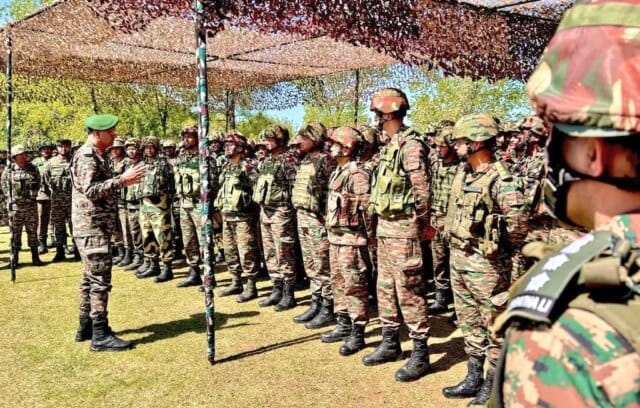
Jammu, June 27: White Knight Corps General Officer Commanding (GoC) Lieutenant General P K Mishra on Friday visited Jammu and Kashmir’s Rajouri district to review the operational preparedness and prevailing security situation in the sector.

He impressed upon the troops to maintain high readiness and dominate the operational environment in the twin border districts.

“GoC White Knight Corps visited the Headquarters of Romeo Force to review the operational preparedness and prevailing security dynamics in the sector,” White Knight Corps said in a post on X.

The GoC commended the sustained and aggressive counter-terrorism operations undertaken by the Romeo Force in the sensitive areas of Poonch and Rajouri.

“Focus remains on maintaining high readiness and dominating the operational environment,” he said.

The Romeo Force is a division of the Rashtriya Rifles engaged in anti-militancy operations in the twin border districts of Rajouri and Poonch in Jammu and Kashmir.

Greater Kashmir

Gold plunges Rs 930 to Rs 97,670 per 10 g amid easing off Israel-Iran tensions

0
Silver rallies to hit fresh peak, gold gains Rs 540 as Israel-Iran conflict intensifies

New Delhi, June 27: Gold prices plunged Rs 930 to Rs 97,670 per 10 grams in the national capital on Friday as traders rushed to selling amid easing off Middle East tensions and favourable reports about a trade deal between the US and China.

According to the All India Sarafa Association, the precious metal of 99.9 per cent purity had closed at Rs 98,600 per 10 grams on Thursday.

On Friday, gold of 99.5 per cent purity declined by Rs 850 to Rs 97,200 per 10 grams (inclusive of all taxes). It had settled at Rs 98,050 per 10 grams in the previous market session.

“Gold prices continue to correct as strong profit booking sets in, with safe-haven demand easing due to the lack of fresh geopolitical triggers.

“Crude oil prices also declined after Iran signalled restraint by avoiding strikes on key oil infrastructure and transport routes, particularly the Strait of Hormuz which is one of the most critical choke points for global oil shipments,” Abans Financial Services’ Chief Executive Officer Chintan Mehta said.

This de-escalation has reduced immediate risk premiums across markets, pressuring gold further, Mehta added.

In addition, silver prices slipped by Rs 100 to Rs 1,03,000 per kilogram (inclusive of all taxes) on Friday. The white metal had ended at Rs 1,03,100 per kg on Thursday.

In the overseas market, spot gold dropped by USD 43.45 or 1.31 per cent to USD 3,284.40 per ounce.

“Investors now await the release of the US Personal Consumption Expenditure (PCE) price index data later in the day for further cues about the Fed’s interest rate-cut path,” Maneesh Sharma, AVP – Commodities & Currencies, Anand Rathi Shares and Stock Brokers, said.

According to Jateen Trivedi, VP Research Analyst – Commodity and Currency, LKP Securities, the US Federal Reserve Chair Jerome Powell’s recent comments indicating that interest rate cuts are not imminent further weighed on bullion prices.

The weaker dollar index confirmed easing global risk, prompting investors to rotate funds into riskier assets like equities and cryptocurrencies, Trivedi said.

Greater Kashmir

North Kashmir united against ‘unauthorised’ diversion of nallah Ferozpora: JKCSF

0
North Kashmir united against ‘unauthorised’ diversion of nallah Ferozpora: JKCSF

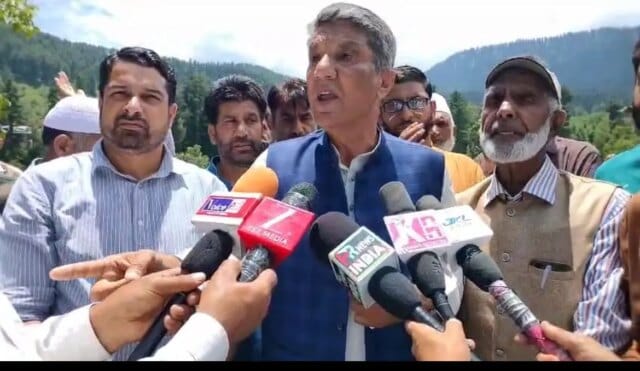
Tangmarg, June 27: In a remarkable show of unity and defiance, the people of north Kashmir, led by Jammu and Kashmir Civil Society Forum (JKCSF) Chairman Abdul Qayoom Wani, rose up today against what they termed a “designed disaster”—the unauthorized diversion of Nallah Ferozpora, the lone perennial water body in the region.

As per the statement issued, the protest joined by Gulmarg Citizens Forum led by Advocate Ashiq Magray and supported by the Kisan Association Tangmarg, saw the dislocation of large illegal water pipelines allegedly meant for a Budgam-based water supply scheme. Hundreds participated in this action-cum-peaceful protest, reclaiming the ecological and agricultural rights of North Kashmir residents.

“This is neither about politics nor pensioners or employees. This is about the lifeline of north Kashmir, particularly of subdivision Tangmarg,” said Abdul Qayoom Wani. “We cannot remain silent while Executive Engineers of PHE, Irrigation and other planners continue the vandalization of our only water source.”

Wani strongly condemned the activity as a blatant violation of the Environmental Protection Act of 1986, forest and agricultural rights, and said it endangers the environmental and economic fabric of the region. He appealed across party lines to respected leaders including MLA Peerzada Farooq Ahmad Shah, Former Minister Ghulam Hassan Mir, Ex MLA Sheikh Mustafa Kamal, former MLA Mohammad Abbas Wani, senior PDP leader Shabir Ahmad Mir, AIP leader Adil Nazir, Prominent Socio Political activist Tejinder Singh, Bar Association Tangmarg, as well as traders bodies, NGOs, and welfare organisations from Tangmarg, Gulmarg, Kunzer, Magam, Dhobiwan, and Chandilora, to stand up for the people regardless of ideology.

Speaking on the occasion, Advocate Ashiq Magray, President Gulmarg Citizens Forum, said: “We have raised this issue many times with the authorities, but our pleas fell on deaf ears. Now the people have spoken. We won’t let our resources be looted.”

JKCSF sub-divisional president Ghulam Muhammad Magray, secretary Retired Engineer Muhammad Anwar Rather, socio political activists Mohd Shafi Parray, Socio political activist Ishfaq Raja, and Gh. Nabi Wani, Spokesman JKCSF Molvi Jahengir, senior leaders Farooq Ahmad Rather and Peer Ab Hamid besides other leaders and activists  of JKCSF joined in demanding permanent solutions, and showed there support and unity in the fight against this exploitation of Nallah Ferozpora.

Wani also appealed to writers, media persons, and intellectuals, especially former College Principal Prof. Dr. Abdul Jabbar, to use their influence in raising awareness and mobilizing public opinion around this critical issue.

He also emphasized that the government has a moral and legal responsibility to ensure judicious use of natural resources. “Before thinking of supplying this water elsewhere, the administration must first fulfil the needs of Tangmarg residents. The people here are the primary stakeholders and must be taken on board before any decision is made about Ferozpora Nalla,” he added.

Wani also called on the Lieutenant Governor, the Chief Minister, and the Chief Secretary to intervene immediately and stop this loot of water.

If this planned vandalism is not stopped, we’ll be compelled to take this struggle to the streets,” Wani added.

Wani urged the public to rise in unity, and appealed to the people of Tangmarg to wake up and stand for their rights. “Ferozpora Nalla is the jugular vein of our irrigation, agriculture, horticulture, and drinking water supply. We must protect it before it is too late,” Wani concluded.

Greater Kashmir

No loss of life in Doda due to rising water level in Chenab: Officials

0
Casualties reported in J&K's Doda as Chenab River overflows amid heavy rainfall

Srinagar, June 27: District administration Doda on Friday denied any casualty due to rising water levels in river Chenab amidst heavy rainfall.

“It is for the information of all that fake news has surfaced on WhatsApp and some media websites that some people have lost lives due to rise in water level in Chenab. This news is completely fake and thus it is advised not to circulate such fake news or become a part of misinformation campaign,” officials said.

The officials put on it on record that, “However, it is important to inform that three separate drowning incidents have taken place in the last 2 weeks with following details: (1) June 14, 2025: 02 children (brothers), identified as Abrar Ahmed (12 years) and Asrar Ahmed (9 years), sons of Farooq Ahmed from Nepli village, Pul Doda lost their lives due to drowning in the Chenab River near Pul Doda while playing; (2) ⁠June 19, 2025: 01 female individual namely Payal Kumari D/O Harbans Kumar R/O Jakyas, Tehsil Chilli Pingal got drowned in Chenab after she jumped from Thathri bridge and died due to suicide; and (3) June 23, 2025 : 01 fisherman named Basharat Hussain S/O Zahoor Din R/O Nagni, Tehsil Kahara got drowned while fishing in the Kalnai nallah of Kahara. The dead body was subsequently recovered by rescue teams of SDRF and volunteers.

Subsequently, District Administration Doda has issued an order vide 2213-21/DM/Doda dated 25.06.2025 to impose restrictions on swimming, bathing, fishing, and unnecessary recreation activities in vicinity of river Chenab and other nallahs in order to avoid such mishaps, officials said.

The officials enjoined upon all that the said order/advisory be followed in letter and spirit for the safety and security of the general public and avoid spreading such fake news.

Greater Kashmir

95% cybercrime cases involve bank fraud, 12% linked to child exploitation, sextortion in J&K: SSP CICE

0
95% cybercrime cases involve bank fraud, 12% linked to child exploitation, sextortion in J&K: SSP CICE

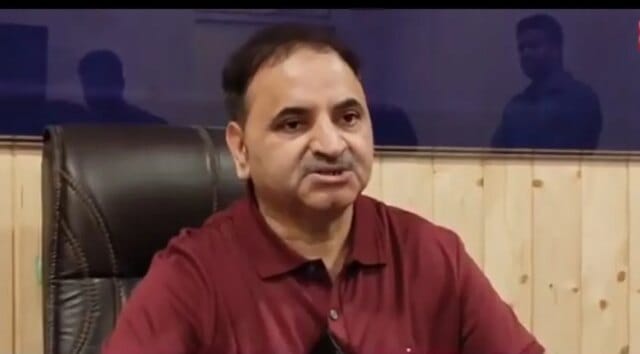
Addressing a press conference, Kichloo said that most cyber fraud cases involve either financial theft or personal exploitation. “In 95% of the cases, bank accounts are drained. In 12%, we see instances of child exploitation, sexual harassment, or sextortion.”

He also said that cybercrime is becoming a serious threat, with evolving techniques targeting people through social engineering, malware, and even fake job offers. He urged the public to remain alert, avoid sharing sensitive information, and report suspicious activity to cyber police.

Kichloo said cybercrime is a growing concern, and while the Crime Department is actively investigating and responding, more public awareness is crucial. “The common people may not be fully aware of the risks they face in the digital world. That is why I’ve come here from Jammu to raise awareness,” he said.

“Cybercrime has become a science in itself, and the Government of Jammu and Kashmir has taken a great initiative by sanctioning cyber police stations in every district. These stations are also supported by the Ministry of Home Affairs (MHA),” he added.

He said there is rise in “digital arrest” frauds where people receive fake calls impersonating police officers or government officials, telling them they are under investigation or their family members are in trouble. “Recently, a few teachers in Kashmir were targeted through such digital arrest calls on WhatsApp. Thankfully, they contacted us, and we saved them from being trapped,” he said.

“Such fraudsters use uniforms and official language to scare the victims. They pose as CBI officers, police, judges, or even bank officials. People should not fall for these tactics or share any personal details,” the SSP said.

Kichloo said that the cybercrime unit has developed a mechanism to recover stolen money if reported within the “golden hour” immediately after the fraud occurs. “If someone contacts us within that golden hour, we can freeze the fraudulent transaction. Last year, we recovered nearly Rs 7 crore and returned it to people’s accounts,” he said.

Emphasizing digital hygiene, he said people often neglect basic safety settings. “You can enable two-factor authentication on WhatsApp for extra protection. Many people don’t know this and later report their WhatsApp being hacked,” he said.

He added that even with all passwords and OTP protection, it’s the human brain that gets compromised when someone unknowingly shares their OTP or PIN with a fraudster. “Never share your OTP or PIN, even if someone claims your Amazon parcel has arrived and asks for it. These are social engineering tricks,” he said.

He also warned about Facebook cloning, where fraudsters copy someone’s profile picture and details, then send friend requests to contacts and trick them into sending money.

“People use high-pixel profile pictures and accept random friend requests. This allows fraudsters to easily clone accounts,” he said.

Spraking on newer threats, the SSP said that cybercriminals are now embedding malware into photos and PDF files. “You might receive a photo asking if you recognize a missing person. That image might contain malware or a virus that gets downloaded to your phone and compromises your data,” he said.

This technique is called steganography, where malicious code is hidden in a file that appears innocent. “Once you click on it, your phone’s gallery, apps, and bank details can be compromised,” he added.

He also warned against clicking on suspicious PDFs, even if they appear to come from trusted sources like offices or colleagues. “Cyber fraudsters are now using such tactics to infect your device,” he said.

Speaking on two alarming cybercrime trends namely Pig Butchering and Cyber Slavery, SSP said that these are becoming very common in Kashmir. “In cyber slavery, children and youth are lured through fake placement agencies promising jobs abroad. They are taken to borders of countries like Cambodia or Myanmar, where they are locked in rooms and forced to run cyber scams,” he said.

He appealed to parents and children to verify all job and placement agencies before trusting them. “Otherwise, your child may become a victim of cyber slavery. These are real threats, and cases are being reported in J&K,” he said.

He warned people against charging their phones at public charging stations such as airports or restaurants. “Hackers can compromise your phone even through a charger. Always carry a power bank and be cautious when giving your phone for scanning or photocopying,” he said.

He further cautioned against sharing personal mobile numbers and email IDs at restaurants or during online transactions. “These details are often used by cybercriminals to launch targeted attacks,” he said.

Speaking about the increasing number of sextortion cases, where victims receive unexpected WhatsApp or Messenger video calls. “If answered, the fraudster on the other side posing as a semi-nude or nude girl or boy records the call and later blackmails the victim, threatening to post it online or send it to family members,” the SSP said.

“This is not the fault of the victim. But out of fear, people often end up paying money to the blackmailers. In such cases, don’t panic. Immediately call 1930 or inform the nearest cyber police station,” he said.

Concluding with a message of reassurance, SSP said. “You are not alone. The cyber police are with you 24/7. If you face any problem, reach out to us through helpline 1930 or visit your
nearest cyber police station.”

He added that cybercrime awareness is a top priority of the department, and under the guidance of the DGP, police are committed to being people-friendly and responsive.

“Through this awareness, we want to protect every citizen from cyber fraud. Your safety is our responsibility,” the SSP said.(KNS)

Greater Kashmir

New AI tool to revolutionise personalised cancer treatment

0
Parasitic infection may trigger cancer in cervix after treatment: Study

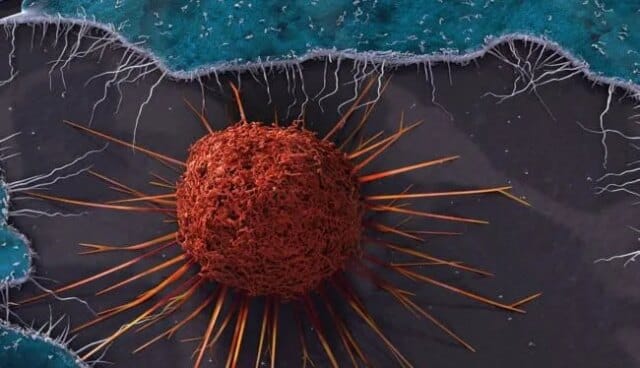
New Delhi, June 27: An international team of scientists has developed an artificial intelligence (AI) tool that could revolutionise cancer treatment by mapping cellular diversity within tumours.

The innovation tackles tumour heterogeneity in oncology, where varied cell populations cause treatment resistance and recurrence, Xinhua news agency reported.

The AAnet AI tool, developed by the Sydney-based Garvan Institute of Medical Research in collaboration with the Yale School of Medicine in the US, uses deep learning to study gene activity in single cancer cells.

It finds five different cell types within tumours, each with its own behaviour and risk of spreading. This helps doctors understand cancer better than older methods, which treated all tumour cells the same, said the multinational research team.

“Heterogeneity is a problem because currently, we treat tumors as if they are made up of the same cell. This means we give one therapy that kills most cells in the tumor by targeting a particular mechanism. But not all cancer cells may share that mechanism,” said the study’s co-senior author, Associate Professor Christine Chaffer from the Garvan Institute.

As a result, some cancer cells survive, and the disease can return, Chaffer said. She added that AAnet provides a way to biologically characterise tumour diversity, enabling the design of combination therapies that target all cell groups at once.

Associate Professor Smita Krishnaswamy of Yale University, a co-developer of the AI, indicated that this is the first method to distill cellular complexity into practical archetypes, potentially transforming precision oncology.

The technology is ready for clinical use, with plans to combine AI analysis and traditional diagnostics to create treatments tailored to each tumour’s cell type.

Validated in breast cancer, it also shows promise for other cancers and autoimmune diseases, marking a shift toward personalised medicine, revealed the study published in the journal Cancer Discovery.

Greater Kashmir

- Advertisement -
Google search engine

Recent Posts