Home Blog Page 1281

Who are Iran’s allies? And would any help if US joins Israel in its war?

0
Who are Iran’s allies? And would any help if US joins Israel in its war?

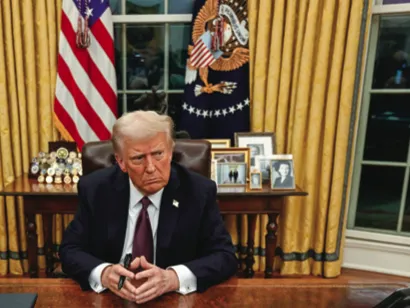
Melbourne, June 20: As Israel continues its attacks on Iran, US President Donald Trump and other global leaders are hardening their stance against the Islamic Republic.

While considering a US attack on Iran’s nuclear sites, Trump has threatened Iran’s supreme leader, claiming to know his location and calling him “an easy target”.

He has demanded “unconditional surrender” from Iran. Meanwhile, countries such as Germany, Canada, the UK and Australia have toughened their rhetoric, demanding Iran fully abandon its nuclear programme.

So, as the pressure mounts on Iran, has it been left to fight alone? Or does it have allies that could come to its aid?

Has Iran’s ‘axis of resistance’ fully collapsed?

Iran has long relied on a network of allied paramilitary groups across the Middle East as part of its deterrence strategy. This approach has largely shielded it from direct military strikes by the US or Israel, despite constant threats and pressure.

This so-called “axis of resistance” includes groups such as Hezbollah in Lebanon, the Popular Mobilisation Forces (PMF) in Iraq, the Houthi militants in Yemen, as well as Hamas in Gaza, which has long been under Iran’s influence to varying degrees. Iran also supported Bashar al-Assad’s regime in Syria before it was toppled last year.

These groups have served both as a regional buffer and as a means for Iran to project power without direct engagement.

However, over the past two years, Israel has dealt significant blows to the network.

Hezbollah — once Iran’s most powerful non-state ally — has been effectively neutralised after months of attacks by Israel. Its weapons stocks were systematically targeted and destroyed across Lebanon. And the group suffered a major psychological and strategic loss with the assassination of its most influential leader, Hassan Nasrallah.

In Syria, Iranian-backed militias have been largely expelled following the fall of Assad’s regime, stripping Iran of another key foothold in the region.

That said, Iran maintains strong influence in Iraq and Yemen.

The PMF in Iraq, with an estimated 200,000 fighters, remains formidable. The Houthis have similarly sized contingent of fighters in Yemen.

Should the situation escalate into an existential threat to Iran — as the region’s only Shiite-led state — religious solidarity could drive these groups to become actively involved. This would rapidly expand the war across the region.

The PMF, for instance, could launch attacks on the 2,500 US troops stationed in Iraq. Indeed, the head of Kata’ib Hezbollah, one of the PMF’s more hardline factions, promised to do so:

If America dares to intervene in the war, we will directly target its interests and military bases spread across the region without hesitation.

Iran itself could also target US bases in the Persian Gulf countries with ballistic missiles, as well as close the Strait of Hormuz, through which about 20 per cent of the world’s oil supply flows.

Will Iran’s regional and global allies step in?

Several regional powers maintain close ties with Iran. The most notable among them is Pakistan — the only Islamic country with a nuclear arsenal.

For weeks, Iranian Supreme Leader Ali Khamenei has tried to align Iran more closely with Pakistan in countering Israel’s actions in Gaza.

In a sign of Pakistan’s importance in the Israel-Iran war, Trump has met with the country’s army chief in Washington as he weighs a possible strike on its neighbour.

Pakistan’s leaders have also made their allegiances very clear. Prime Minister Shehbaz Sharif has offered Iran’s president “unwavering solidarity” in the “face of Israel’s unprovoked aggression”. And Pakistani Defence Minister Khawaja Asif recently said in an interview Israel will “think many times before taking on Pakistan”.

These statements signal a firm stance without explicitly committing to intervention.

Yet, Pakistan has also been working to de-escalate tensions. It has urged other Muslim-majority nations and its strategic partner, China, to intervene diplomatically before the violence spirals into a broader regional war.

In recent years, Iran has also made diplomatic overtures to former regional rivals, such as Saudi Arabia and Egypt, in order to improve relations.

These shifts have helped rally broader regional support for Iran. Nearly two dozen Muslim-majority countries — including some that maintain diplomatic relations with Israel — have jointly condemned Israel’s actions and urged de-escalation.

It’s unlikely, though, that regional powers such as Saudi Arabia, Egypt, the United Arab Emirates and Turkey would support Iran materially, given their strong alliances with the US.

Iran’s key global allies, Russia and China, have also condemned Israel’s strikes. They have previously shielded Tehran from punitive resolutions at the UN Security Council.

However, neither power appears willing — at least for now — to escalate the confrontation by providing direct military support to Iran or engaging in a standoff with Israel and the US.

Theoretically, this could change if the conflict widens and Washington openly pursues a regime change strategy in Tehran. Both nations have major geopolitical and security interests in Iran’s stability. This is due to Iran’s long-standing “Look East” policy and the impact its instability could have on the region and the global economy.

However, at the current stage, many analysts believe both are unlikely to get involved directly.

Moscow stayed on the sidelines when Assad’s regime collapsed in Syria, one of Russia’s closest allies in the region. Not only is it focused on its war in Ukraine, Russia also wouldn’t want to endanger improving ties with the Trump administration.

China has offered Iran strong rhetorical support, but history suggests it has little interest in getting directly involved in Middle Eastern conflicts.

Greater Kashmir

Madurai-bound flight returns after mid-air ‘snag,’ say officials

0
Madurai-bound flight returns after mid-air 'snag,' say officials

Chennai, June 20: A Madurai-bound private carrier suffered a technical snag mid-air on Friday and returned here, airport officials said.

After flying for about half an hour, the pilot detected the snag and sought permission to fly back to Chennai and land, they said.

The plane, carrying about 68 passengers, later landed safely here and all the passengers were deplaned, they added.

Greater Kashmir

Zelenskyy calls for more pressure on Russia after deadly missile strike in Ukrainian capital Kyiv

0
Zelenskyy calls for more pressure on Russia after deadly missile strike in Ukrainian capital Kyiv

Kyiv, June 20: A Russian missile strike on a nine-story Kyiv apartment building was a sign that more pressure must be applied on Moscow to agree to a ceasefire, Ukrainian President Volodymyr Zelenskyy said Thursday, as Moscow intensifies attacks in the war.

The drone and missile attack on Kyiv early Tuesday, the deadliest assault on the capital this year, killed 28 people across the city and wounded 142 others, Kyiv Military Administration head Tymur Tkachenko said.

Zelenskyy, along with the head of the presidential office, Andrii Yermak, and Interior Minister Ihor Klymenko, visited the site of the apartment building in Kyiv’s Solomianskyi district on Thursday morning, laying flowers and paying tribute to the 23 people who died there after a direct hit by a missile brought down the structure.

“This attack is a reminder to the world that Russia rejects a ceasefire and chooses killing,” Zelenskyy wrote on Telegram, and thanked Ukraine’s partners who he said are ready to pressure Russia to “feel the real cost of the war.”

Intensifying attacks

Tuesday’s attack on Kyiv was part of a sweeping barrage as Russia once again sought to overwhelm Ukrainian air defenses. Russia fired more than 440 drones and 32 missiles in what Zelenskyy called one of the biggest bombardments of the war, which began on Feb. 24, 2022.

As Russia proceeds with a summer offensive on parts of the roughly 1,000-kilometer (620-mile) front line, US-led peace efforts have failed to gain traction. Russian President Vladimir Putin has effectively rejected an offer from US President Donald Trump for an immediate 30-day ceasefire, making it conditional on a halt on Ukraine’s mobilization effort and a freeze on Western arms supplies.

Meanwhile, Middle East tensions and US trade tariffs have drawn away world attention from Ukraine’s pleas for more diplomatic and economic pressure to be placed on Moscow.

In recent weeks, Russia has intensified long-range attacks that have struck urban residential areas. Yet on Wednesday, Putin denied that his military had struck such targets, saying that attacks were “against military industries, not residential quarters.”

Putin told senior news leaders of international news agencies in St. Petersburg, Russia, that he was open to talks with Zelenskyy, but repeated his accusation that the Ukrainian leader had lost his legitimacy after his term expired last year — allegations rejected by Kyiv and its allies.

“We are ready for substantive talks on the principles of a settlement,” Putin said, noting that a previous round of talks in Istanbul had led to an exchange of prisoners and the bodies of fallen soldiers.

Prisoners exchanged

A new round of such exchanges took place in Ukraine’s Chernihiv region on Thursday, involving the repatriation of Ukrainian prisoners of war who, according to Ukraine’s Coordination Headquarters for the Treatment of Prisoners of War or KSHPPV, were suffering from severe health issues caused by injuries and prolonged detention.

The exchange was confirmed by Russia’s Defense Ministry, which released a video of Russian servicemen at an exchange area in Belarus after being released in the prisoner swap.

Commenting on the exchange, Zelenskyy wrote on Telegram: “We are working to get our people back. Thank you to everyone who helps make these exchanges possible. Our goal is to free each and every one.”

Many of the exchanged Ukrainian POWs had spent over three years in captivity, with a large number captured during the defense of the now Russian-occupied city of Mariupol in 2022, according to the KSHPPV, which added that preparations for another prisoner exchange are ongoing.

In St. Petersburg on Wednesday, Putin praised Trump’s push for peace in Ukraine. But Ukrainian Foreign Minister Andrii Sybiha wrote on X on Thursday that it was his country that had “unconditionally accepted” the U.S. proposal for a ceasefire, and said that Russian claims of willingness to end the war were “manipulations.”

“It has been exactly 100 days since Ukraine unconditionally accepted the U.S. peace proposal to completely cease fire, put an end to the killing, and move forward with a genuine peace process … 100 days of Russia escalating terror against Ukraine rather than ending it,” Sybiha wrote.

“Ukraine remains committed to peace. Unfortunately, Russia continues to choose war, disregarding US efforts to end the killing,” he added.

Overnight on Wednesday, Russia fired a barrage of 104 Shahed and decoy drones across Ukraine, according to the country’s air force. Of those, 88 were intercepted, jammed, or lost from radars mid-flight.

There were no immediate reports of casualties or damage caused by the attack.

Greater Kashmir

UN warns of looming famine in Yemen

0
UN warns of looming famine in Yemen

Aden, June 20: The United Nations Office for the Coordination of Humanitarian Affairs (OCHA) issued a warning about the emergence of famine hotspots in Yemen in the coming months.

“Food insecurity in Yemen remains at alarming levels. Millions are in acute hunger and pockets of famine could emerge in the coming months. We must act now to save lives,” OCHA said in a brief statement on social media platform X.

On Wednesday, Yemeni Foreign Minister Shaya Zindani held discussions with Julien Harneis, the United Nations resident coordinator in Yemen, focusing on mobilising international resources to address the country’s deteriorating humanitarian situation, according to a statement from the Yemeni Ministry of Foreign Affairs.

The humanitarian response to the Yemeni crisis has been severely hampered by funding shortfalls. In May, the United Nations reported that the 2025 Yemen Humanitarian Response Plan was less than 10 per cent funded, calling for urgent international support to prevent the country from sliding into a humanitarian catastrophe.

Yemen has been mired in a civil conflict since late 2014 when the Houthi group seized control of several northern provinces and forced the internationally recognised government out of the capital Sanaa.

The conflict escalated into a broader regional crisis in 2015 with the intervention of a Saudi-led coalition in support of the displaced government.

The war, now in its second decade, has triggered what the United Nations calls the world’s worst humanitarian crisis. Despite repeated mediation efforts, a lasting peace remains elusive.

Greater Kashmir

Protest erupts against vandalism of Tagore’s ancestral home in Bangladesh

0
Protest erupts against vandalism of Tagore’s ancestral home in Bangladesh

Agartala, June 19: Hundreds of poets, writers and intellectuals on Thursday wrote to Bangladesh interim government Chief Advisor Muhammad Yunus seeking his intervention into the “shameful and condemnable” incident and demanded “exemplary punishment” of the culprits who recently vandalised the ancestral home of Nobel laureate Rabindranath Tagore in the neighbouring country.

The protest letter was signed by hundreds of poets, writers, singers, artists, intellectuals, cultural activists and others, who also held a big protest rally here on Wednesday.

The protest letter, signed by eminent litterateurs Professor Mihir Kanti Deb, poet Ratul Debbarman, renowned theatre artist Bibhu Bhattacharya, painter, mime artist and Sangeet Natak Academy awardee Swapan Nandy, Professor Mujahid Rahman, was sent to the Bangladesh Chief Advisor via the Assistant High Commission of Bangladesh in Agartala and West Tripura District Magistrate’s office.

In the protest letter, the intellectuals said the protest was raised from Tripura, which has a long relationship with Tagore, and he has visited the state several times.

“People of Tripura are ‘deeply upset’ by the violent attack in Rabindranath Tagore’s ancestral ‘kacharibari’ (revenue office) at Shahzadpur of Sirajganj district of Bangladesh,” the letter said.

It said: “Tagore is the consciousness that encircles all our inspirations, awareness. He is a beacon holder of global thought, rising above the narrow barriers of language, identity, religion, and colour. We celebrate him every day through the national anthem. We believe with all our heart that everything which shares his memory is of pride for us.”

Insult or disrespect to Rabindranath Tagore – whether it is in India or elsewhere – is shameful and condemnable, unpardonable, the letter said.

Earlier, the ruling BJP organised a series of protest rallies across Tripura, condemning the vandalisation of Tagore’s ancestral home and attacks on the minority communities in the neighbouring country, Bangladesh.

On June 8, a mob vandalised the ancestral home of Rabindranath Tagore in Bangladesh, also known as Rabindra Kachharibari or Rabindra Memorial Museum in Sirajganj district.

Media reports said that the attackers also assaulted a director of the institution. Situated in Shahzadpur in Rajshahi division, Rabindra Kachharibari is the ancestral home and revenue office of the Tagore family.

Many of Tagore’s literary works were up while living in this mansion. India’s Ministry of External Affairs also on June 12 strongly condemned the vandalism of Tagore’s ancestral home in Bangladesh, describing it as part of a “systematic” pattern by extremists to undermine the country’s syncretic cultural heritage.

MEA spokesperson Randhir Jaiswal termed the June 8 attack on the Rabindra Kachharibari as a “despicable” act and “a disgrace to the memory and the inclusive philosophy” of the Nobel Laureate.

Greater Kashmir

Israeli scientists reel after Iranian missile strikes premier research institute

0
Israeli scientists reel after Iranian missile strikes premier research institute

Israel, June 19: For years, Israel has targeted Iranian nuclear scientists, hoping to choke progress on Iran’s nuclear program by striking at the brains behind it.

Now, with Iran and Israel in an open-ended direct conflict, scientists in Israel have found themselves in the crosshairs after an Iranian missile struck a premier research institute known for its work in life sciences and physics, among other fields.

While no one was killed in the strike on the Weizmann Institute of Science early Sunday, it caused heavy damage to multiple labs on campus, snuffing out years of scientific research and sending a chilling message to Israeli scientists that they and their expertise are now targets in the escalating conflict with Iran.

“It’s a moral victory” for Iran, said Oren Schuldiner, a professor in the department of molecular cell biology and the department of molecular neuroscience whose lab was obliterated in the strike. “They managed to harm the crown jewel of science in Israel.”

Iranian scientists were a prime target in a long shadow war

During years of a shadow war between Israel and Iran that preceded the current conflict, Israel repeatedly targeted Iranian nuclear scientists with the aim of setting back Iran’s nuclear program.

Israel continued that tactic with its initial blow against Iran days ago, killing multiple nuclear scientists, along with top generals, as well as striking nuclear facilities and ballistic missile infrastructure.

For its part, Iran has been accused of targeting at least one Weizmann scientist before. Last year, Israeli authorities said they busted an Iranian spy ring that devised a plot to follow and assassinate an Israeli nuclear scientist who worked and lived at the institute.

Citing an indictment, Israeli media said the suspects, Palestinians from east Jerusalem, gathered information about the scientist and photographed the exterior of the Weizmann Institute but were arrested before they could proceed.

With Iran’s intelligence penetration into Israel far less successful than Israel’s, those plots have not been seen through, making this week’s strike on Weizmann that much more jarring.

“The Weizmann Institute has been in Iran’s sights,” said Yoel Guzansky, an Iran expert and senior researcher at the Institute for National Security Studies, a Tel Aviv think tank. He stressed that he did not know for certain whether Iran intended to strike the institute but believed it did.

While it is a multidisciplinary research institute, Weizmann, like other Israeli universities, has ties to Israel’s defense establishment, including collaborations with industry leaders like Elbit Systems, which is why it may have been targeted.

But Guzansky said the institute primarily symbolizes “Israeli scientific progress” and the strike against it shows Iran’s thinking: “You harm our scientists, so we are also harming (your) scientific cadre.”

Damage to the institute and labs literally decimated

Weizmann, founded in 1934 and later renamed after Israel’s first president, ranks among the world’s top research institutes. Its scientists and researchers publish hundreds of studies each year. One Nobel laureate in chemistry and three Turing Award laureates have been associated with the institute, which built the first computer in Israel in 1954.

Two buildings were hit in the strike, including one housing life sciences labs and a second that was empty and under construction but meant for chemistry study, according to the institute. Dozens of other buildings were damaged.

The campus has been closed since the strike, although media were allowed to visit Thursday. Large piles of rock, twisted metal and other debris were strewn on campus. There were shattered windows, collapsed ceiling panels and charred walls.

A photo shared on X by one professor showed flames rising near a heavily damaged structure with debris scattered on the ground nearby.

“Several buildings were hit quite hard, meaning that some labs were literally decimated, really leaving nothing,” said Sarel Fleishman, a professor of biochemics who said he has visited the site since the strike.

Greater Kashmir

Trump Delays Iran Strike Decision, Signals Diplomatic Opening Amid Escalating Conflict

0
Hopefully Russia, Ukraine will make a deal this week: US President Trump

New Delhi, Jun 20: US President Donald Trump has indicated he will decide on whether to launch a military strike on Iran “within the next two weeks,” suggesting a potential diplomatic pause even as regional violence intensifies.

Speaking through White House Press Secretary Karoline Leavitt on Thursday, Trump said the United States was weighing its options in light of possible diplomatic engagements with Tehran. “I have a message directly from the president, and I quote,” Leavitt told reporters: “Based on the fact that there’s a substantial chance of negotiations that may or may not take place with Iran in the near future, I will make my decision whether or not to go within the next two weeks.”

The announcement, described a signal that “opened a window of diplomacy and lowered the temperature in the region,” offers a rare moment of potential de-escalation after nearly a week of heightened hostilities between Iran and Israel.

For days, speculation had mounted that President Trump would act swiftly, with many media and analysts anticipating decision within 48 hours. But the two-week timeline, while not ruling out military action, offers breathing room for a flurry of diplomatic activity now unfolding across Europe.
Europe Pushes Diplomatic Track

On Friday, British Foreign Secretary David Lammy is expected to meet his French and German counterparts, as well as Iranian Foreign Minister Abbas Araghchi, in Geneva. The high-stakes talks, also to be attended by EU foreign policy chief Kaja Kallas as reported by BBC mark the first direct contact between Iranian and Western officials since the latest conflict between Iran and Israel erupted.

French Foreign Minister Jean-Noël Barrot said, as reported by the BBC, the meetings aimed to secure “a lasting rollback of Iran’s nuclear and ballistic missile programs.” In a post on X (formerly Twitter), Lammy added: “Now is the time to put a stop to the grave scenes in the Middle East and prevent a regional escalation that would benefit no one.”

While the outcome remains uncertain, the effort reflects growing urgency among European powers to curb a conflict that threatens to spill far beyond its current borders. Meanwhile, violence on the ground shows no signs of abating. Thursday marked the seventh consecutive day of cross-border strikes between Israel and Iran. Israeli authorities say an Iranian missile struck a hospital in Beersheba, injuring dozens. In response, Israeli warplanes have intensified their targeting of suspected Iranian nuclear facilities and command centres.

Trump’s decision to delay potential US military action is being interpreted by some as a calculated pause. What happens next may depend as much on the restraint of regional players as on backchannel diplomacy in Geneva and Washington.

Greater Kashmir

Secretary HME nominated as Nodal Officer for Muharram arrangements

0
Secretary HME nominated as Nodal Officer for Muharram arrangements

Jammu, Jun 19: The J&K Government has nominated Secretary Health and Medical Education (HME) Syed Abid Rasheed Shah as the Nodal Officer for the Muharram 2025.

Overseeing inter-departmental coordination, Shah will liaise with all concerned agencies involved in the arrangements across Jammu and Kashmir.

ìIt is hereby ordered that Shah, Secretary to the Government, Health and Medical Education shall be the Nodal Officer for overseeing inter-departmental coordination during Muharram 2025,î read an order issued by GAD.

ìThe officer shall closely monitor and liaise with all concerned agencies involved in the arrangements of Muharram 2025 across J&K,î the order said.

Greater Kashmir

90 Kashmiri students evacuated from war-hit Iran begin journey home

0
"Situation in Iran bad": Students arriving in Delhi say Indian Govt picked them up from their doorsteps

Srinagar, Jun 19: The first batch of students evacuated from Iran left for Srinagar on Thursday afternoon, while hundreds more are still in Iran, awaiting their turns to be evacuated.

A group of 700 students reached Mashhad city while more were being brought from nearby cities.

After travelling through multiple Iranian cities, through Armenia and now to Delhi, 110 students, 90 of them from Kashmir, recounted their experiences of getting evacuated.

Videos widely circulated over social media showed students thanking the Ministry of External Affairs and officials of Indian embassies in Tehran and Armenia for ensuring smooth transit and travel for them. ìEverything had been planned and arranged and we did not face any problem at all,î a female student told reporters outside Indira Gandhi International Airport, New Delhi.

She was part of the group enrolled at Urmia University in Iran and the first to be taken out of the war-hit country.

Many other students spoke on the same lines while expressing their desire to reach their homes soon.

However, the journey home did not seem to align with the arrangements students had seen earlier.

Students expressed dissatisfaction over the arrangements made by the J&K government for their travel from New Delhi to Srinagar.

ìWe have travelled for three straight days, in tension-filled situations. And now we are supposed to travel on these rickety buses?î a student said.

Many students demanded that instead of buses, they be air-lifted to Srinagar.

ìJ&K government could at least care this much for us,î a student said.

Soon after the Chief Ministerís office resorted to course correction and announced that ëDeluxe Busesí would be deputed for transporting students.

ìThe CM has taken note of the request of the students evacuated from Iran regarding the quality of buses arranged for transportation from Delhi to J&K.

ìThe Resident Commissioner has been tasked to coordinate with JKRTC to ensure that proper deluxe buses are arranged,î the Office of the Chief Minister said.

As per the reports, the students boarded buses in the afternoon. However, in Iran, 700 more students are still in a risky situation, awaiting evacuation.

A student told Greater Kashmir that around 700 students had gathered in Mashhad city, and officials from the Indian Embassy had told them that they would be taken to Turkmenistan on Friday.

ìMany students are still arriving here,î he said.

From Turkmenistan, the Indian students will be brought to New Delhi.

As per reports, many others will travel through Qatar.

A student told Greater Kashmir that their travel is slated over the next couple of days, after fulfilling the documentation required at the border.

ìA group had left in the morning but had to return as the documentation was incomplete,î he said.

The internet communication links with students have broken during travel and in transit to various cities.

This has put families back home through distress and worries. Parents in Kashmir have appealed for expedited evacuation as tensions escalate in Iran.


Greater Kashmir

‘We saw missiles, heard bombs’

0
'We saw missiles, heard bombs'

New Delhi, Jun 19: We saw missiles in the sky and heard bombs in our neighbourhood… We were petrified, said MBBS student Mir Khalif, his voice still trembling with fear, as he stepped out of the Delhi airport after being evacuated from war-hit Iran under Operation Sindhu.

Khalif arrived in the national capital early Thursday in the first evacuation flight carrying 110 Indian students from the Urmia University of Medical Sciences in Iran’s Urmia city as part of the special operation launched by the Indian government in response to the escalating Iran-Israel conflict.

The students, including 90 from Jammu and Kashmir, were moved from Tehran to Armenia earlier this week as explosions and aerial attacks rocked Iranian cities. The rescue was coordinated by the Indian Embassy.

Khalif described the experience in Iran as a nightmare and thanked the Indian government for evacuating them first to Armenia and then bringing them back home.

ìWe saw missiles and heard bombings. It was a war zone. Our building shook during the attacks. I hope no student has to face what we did,î he said. ìThere are students still stuck in Iran. They are being relocated to safer places. We hope they will also be airlifted to India soon.î

Varta, a resident of Kashmir, recalled the fear she lived through.

ìWe were the first ones to be evacuated from Iran. The situation was quite critical. We were terrified. We thank the Indian government and the Indian Embassy, which worked swiftly to bring us here. Our neighbourhood was attacked. When the Indian government came to our doorstep, it felt like home,î she told PTI Videos.

Huzaif Malik, another student from Kashmir, told PTI, ìThere are 90 of us from Kashmir. We landed this morning, and now we are heading to Kashmir in sleeper buses. Some students also left for their homes by flight.î

Ali Akbar, who hails from Delhi, said the destruction was visible everywhere.

ìWe saw a missile and a drone fall from the sky while travelling in a bus. Tehran is in ruins. The images on the news are real, the situation is very bad,î he said.

Minister of State (MoS) for External Affairs Kirti Vardhan Singh reached the Delhi airport to receive the students.

Later, in a post on X, he said, ìWarmly welcomed home the first group of 110 Indian nationals evacuated from Iran as part of Operation Sindhu, reaffirming India’s steadfast commitment to the safety and well-being of its citizens abroad.î

Singh also shared some photos of the arrival of Indian nationals at the airport. Singh confirmed that evacuation efforts under Operation Sindhu are ongoing, with more flights scheduled.

ìWe have planes ready. We will be sending another plane today. We are evacuating some more people from Turkmenistan. Our missions have opened 24-hour helplines for any request for evacuation. As the situation evolves, we will be sending more planes to evacuate Indian nationals,î he said.

The union minister thanked the governments of Turkmenistan and Armenia for their support.

Officials on Wednesday had said that the first evacuation flight of Indian nationals being moved out of Iran was to arrive in India from the Armenian capital of Yerevan in the early hours of June 19.

Meanwhile, at the Delhi airport, several parents waited anxiously to reunite with their children.

Haider Ali, the father of MBBS student Maaz Haider, said, ìWe are happy and grateful, but our hearts are still heavy knowing that many students are still stuck in Tehran. We urge the government to bring them back too.î

Parvez Alam from Bulandshahr in Uttar Pradesh, whose son studied in Urmia, said, ìWe were under constant stress. The students were shifted to Armenia and looked after well. We thank the government for this.î

The Jammu and Kashmir Studentsí Association also thanked Prime Minister Narendra Modi and External Affairs Minister S Jaishankar for the evacuation.

ìWe remain hopeful that all remaining students will be evacuated soon,î the association said in a statement.

In a post on X, the association shared photos of a Kashmiri student’s reunion with her family.

ìSaba Rasool, the first Kashmiri MBBS student from Srinagar, reaches home after being evacuated from Iran by the Ministry of External Affairs under Operation Sindhu. Grateful to the Prime Minister and External Affairs Minister for ensuring her safe return,î read the post.

While relieved to be back in India, some students complained about the condition of the buses arranged for them to travel back to Kashmir.

Taking note, Chief Minister Omar Abdullah directed officials to ensure that the students are ferried in deluxe buses.

ìCM has taken note of the request of the students evacuated from Iran regarding the quality of buses arranged to transport them from Delhi to J&K. The Resident Commissioner has been tasked with coordinating with the JKRTC to ensure proper deluxe buses are arranged,î the CMís Office said on X.

Greater Kashmir

- Advertisement -
Google search engine

Recent Posts