Home Blog Page 863

UPSC aspirant murdered in Delhi; woman among 3 held as police unravel chilling plot

0
Set to be deported, Pak national dies of cardiac arrest in Amritsar

New Delhi, Oct 26: In a chilling case, Delhi Police have cracked the brutal murder of a 32-year-old UPSC aspirant whose charred body was found in a Gandhi Vihar flat earlier this month, an official said, adding that three persons — including a 21-year-old forensic science student — have been arrested for allegedly strangling the victim, setting his body on fire and staging the scene as an accidental blaze to destroy evidence.

The police have identified the arrested accused as Amrita Chauhan (21), Sumit Kashyap (27) and Sandeep Kumar (29), all residents of Moradabad, Uttar Pradesh. Investigators said they allegedly killed the victim, Ram Kesh Meena, and later poured oil, ghee and alcohol on the body before opening an LPG cylinder regulator to trigger a fire and mislead investigators.

“This was a cold, calculated and sensational murder. The accused attempted to make it look like a fire accident, but our team uncovered the conspiracy through technical surveillance, CCTV footage and field work,” a senior police officer said.

The case came to light earlier this month, on October 6, when the police received a fire call from a house in Gandhi Vihar.

Fire tenders doused the flames, and a police team, along with FSL experts, found a deeply charred body inside the flat. The deceased was soon identified as Meena, a UPSC aspirant residing in the room.

Initially, an FIR under the fire-related provisions of the BNS was registered. But suspicion grew after CCTV footage revealed two masked men entering the building, followed by a woman and another man leaving around 2:57 a.m. — shortly before the fire broke out.

Investigators analysed technical data and found Amrita Chauhan’s mobile location near the crime scene at the time of the incident. “Her presence at that hour, combined with the CCTV movement, made her a prime suspect. We intensified technical surveillance and tracked her to Moradabad,” an official said.

Police teams conducted multiple raids before apprehending Amrita on October 18. During sustained questioning, she allegedly confessed, naming ex-boyfriend Sumit Kashyap and his associate Sandeep Kumar as co-conspirators.

At her instance, the police recovered a hard disk, a trolley bag and the victim’s shirt. Eventually, Sumit was arrested on October 21, followed by Sandeep on October 23. Two mobile phones were also seized.

Police said Amrita and the victim had been in a relationship and were living together. She later learned that Meena had allegedly recorded obscene videos and stored them on a hard disk, refusing to delete them despite her repeated requests.

“She claimed she felt trapped and humiliated. She then involved her ex-boyfriend, who was enraged and decided to take revenge,” an investigating official said.

Police added that Amrita — being a forensic science student and an avid viewer of crime-based web series — allegedly planned the method of execution to resemble an accidental gas-cylinder fire.

Sumit, who works as an LPG cylinder distributor, allegedly opened the cylinder regulator and used a lighter to ignite the blaze. After staging the scene, the accused allegedly fled with the hard disk, laptops and belongings of the deceased, locking the iron gate from outside after removing its netting to make it appear tamper-proof.

“The manner in which they attempted to mislead the investigation was disturbing. But the sequence fell apart once we matched the timeline, technical data and local intelligence. It was only a matter of time before the conspiracy was nailed,” a senior police officer said.

Police said further investigation is underway and more digital evidence is being analysed.

“All three accused are in custody. We have recovered the hard disk, destroyed-scene material and digital devices. The case is now moving forward with strong technical and forensic backing,” North District DCP Raja Banthia said.
Greater Kashmir

EAM Jaishankar meets Marco Rubio in Malaysia; appreciates discussion on US-India ties

0
EAM Jaishankar meets Marco Rubio in Malaysia; appreciates discussion on US-India ties

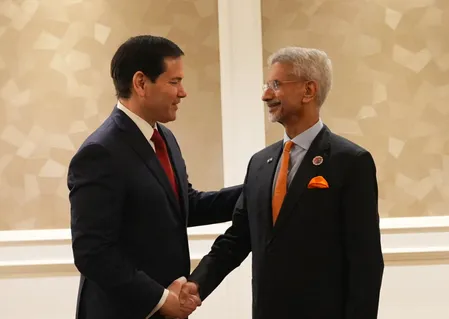
Kuala Lumpur, Oct 27:  India’s External Affairs Minister (EAM) S. Jaishankar, on Monday, met the US Secretary of State Marco Rubio in Kuala Lumpur, Malaysia, and appreciated the discussion on bilateral ties as well as regional and global issues.

The meeting comes amid the ongoing trade talks between the two countries.

In a post on his official X account, EAM Jaishankar wrote: “Glad to meet @SecRubio this morning in Kuala Lumpur. Appreciated the discussion on our bilateral ties as well as regional and global issues.”

“We are in dialogue with the United States of America. Our teams are engaged. We recently had the commerce secretary visit the US, and he met with his counterparts. We continue to engage with them, and talks are progressing. We hope to work towards a fair and equitable agreement in the near future,” Union Minister Piyush Goyal said last week.

Earlier, Rubio dismissed growing concerns that Washington’s growing strategic ties with Pakistan are meant to sideline India. He noted that the relationship with Islamabad would not undermine the US’ “deep, historic, and important” partnership with New Delhi.

The US State Secretary, while addressing the press en route to Doha, Qatar, on Saturday, asserted that New Delhi understands the necessity of engaging multiple nations in a mature diplomatic framework.

“I don’t think anything we’re doing with Pakistan comes at the expense of our relationship or friendship with India, which is deep, historic, and important,” Rubio told reporters when asked about India’s apprehensions over the recent surge in the US-Pakistan relationship.

India and ASEAN nations strengthened their bond at the 22nd ASEAN-India Summit on Sunday in Kuala Lumpur, Malaysia. Prime Minister Narendra Modi highlighted key areas for collaboration, counter-terrorism, early review of the ASEAN-India FTA, and maritime security, among others.

Prime Minister Modi participated virtually in the Summit. This was the Prime Minister’s 12th participation in the India-ASEAN Summit.

PM Modi and ASEAN leaders jointly reviewed progress in ASEAN-India relations and discussed initiatives to strengthen the Comprehensive Strategic Partnership.

According to a Ministry of External Affairs (MEA) press release, PM Modi said that terrorism poses a serious challenge to global peace and security and stressed the importance of unity in the fight against it.

Greater Kashmir

Narcotics smuggling bid foiled along IB in Jammu, two packets seized

0
Narcotics smuggling bid foiled along IB in Jammu, two packets seized

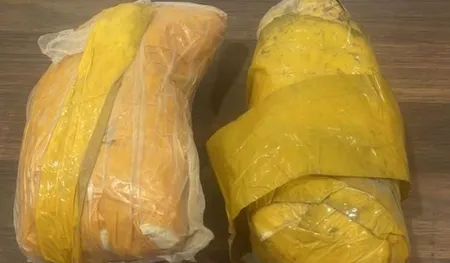
Jammu, Oct 27: Border Security Force (BSF) on Monday recovered two packets of narcotics along the International Border here, officials said.

The recovery of the narcotics, believed to be more than 2 kg, scuttled an attempt by cross-border smugglers to carry it into this side, they said.

They said the recovery was made from a forward village in R S Pura sector.

The operation in the area is continuing and further details are awaited.

Greater Kashmir

Seven Private Members’ Resolutions selected for discussion in J&K Assembly

0
Seven Private Members’ Resolutions selected for discussion in J&K Assembly

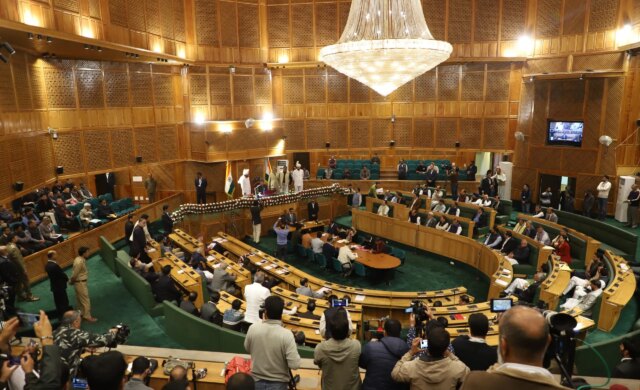
Jammu, Oct 27: The Jammu and Kashmir Legislative Assembly Secretariat has admitted seven Private Members’ Resolutions for discussion on October 29, focusing on key issues such as flood rehabilitation, daily wager regularization, employment generation, and the establishment of a National Law University in Srinagar.

As per news agency Kashmir News Corner — KNC that a total of 55 resolutions were submitted by MLAs, out of which seven were shortlisted through balloting. Three belong to BJP legislators, two to the National Conference (NC), and one each to Congress and an Independent member.

BJP MLA Pawan Kumar Gupta from Udhampur West moved a resolution seeking immediate relief and rehabilitation measures for families affected by the recent floods and landslides across Jammu and Kashmir. He urged the Government to seek special assistance from the Centre under the National Disaster Relief Fund (NDRF) and ensure compensation and livelihood restoration for victims.

Another BJP resolution by Balwant Singh Mankotia from Chenani called for the allotment of 10 marla plots for flood-hit families who lost their land in the August 2025 flash floods.

From the NC, Ajaz Jan, MLA from Poonch, proposed the regularization of daily wagers working in various departments, with clear eligibility criteria and due consideration to their years of service and performance.

NC’s Dr. Syed Bashir Ahmad Shah (Veeri) moved a resolution urging the Government to create more employment opportunities in both public and private sectors, emphasizing agro-based industries and youth entrepreneurship.

The Congress resolution, moved by MLA Nizam-ud-Din Bhat, demanded the immediate establishment of the Jammu and Kashmir National Law University in Srinagar, noting that funds for the first phase have already been sanctioned.

BJP MLA Rajeev Kumar Bhagat from Bishnah called for revitalizing irrigation infrastructure by restoring canal networks and ensuring water availability to agricultural lands, particularly at tail ends.

Meanwhile, an Independent MLA from Thannamandi (Rajouri) moved a resolution seeking full implementation of Rule 49 of the J&K Panchayati Raj Rules, 1996, to empower Halqa Panchayats in executing rural works worth up to ₹3 lakh.

The Assembly, which began its autumn session on October 23, will resume on Monday after a three-day break. The seven resolutions will be taken up for debate on Wednesday, October 29, while Friday marks the final sitting of the session.

Notably, none of the resolutions submitted by PDP legislators were selected in the draw for discussion.

Greater Kashmir

4 killed in Israeli airstrikes on Lebanon

0
Israeli airstrikes targeting Iran-backed Houthis rock Yemen's capital

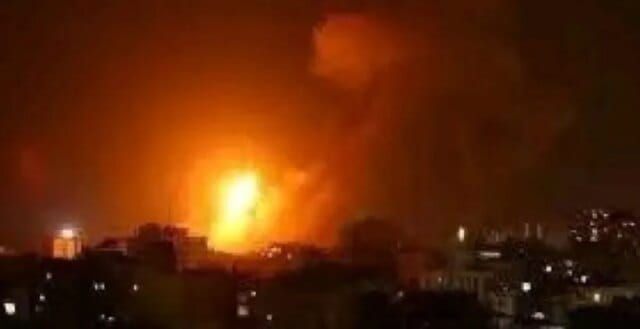
Beirut/Jerusalem, Oct 27: Four people were killed and two others wounded in separate Israeli airstrikes in southern Lebanon, media reported.

The country’s state-run National News Agency said on Sunday that Israeli drones and warplanes targeted several vehicles in Lebanon’s southern and eastern regions.

Meanwhile, security sources told Xinhua news agency that three of the dead were Hezbollah members and the fourth was a Syrian national.

In a statement, the Israeli military said it carried out two rounds of strikes on Sunday, killing a Hezbollah official and a suspected weapons smuggler for the group, Xinhua news agency reported.

The strikes hit the towns of Zawtar, Qlaileh, Naqoura, and Nabi Sheet, marking one of the deadliest weeks since the cross-border escalation intensified.

Lebanese officials said at least 10 people have been killed in daily Israeli attacks this week.

Israeli army spokesperson Avichay Adraee confirmed that Israeli forces killed a member of Hezbollah’s elite Radwan Force in a strike on Qlaileh.

The operation was part of what Israeli officials described as an ongoing effort to prevent the group from reestablishing its military infrastructure in the south.

Although a ceasefire between Israel and Hezbollah has been in place since November 2024, Israel continues near-daily strikes in Lebanon, saying they target ongoing Hezbollah threats along the border.

Lebanon and several international organisations have condemned the attacks as violations of the truce.

Israeli media later reported that over the past 24 hours, a series of precision strikes killed several senior Hezbollah commanders across Lebanon.

Among them was Zain al-Abidin Hussein Fatouni, a commander in the Radwan Force’s anti-tank unit, killed in southern Lebanon; Mohammad Akram Arabia, a senior Radwan officer, killed in Qlaileh; Abd Mahmoud al-Sayyed, targeted in Naqoura; and Ali Hussein al-Moussawi, whom Israel described as a weapons trafficker for Hezbollah operating between Syria and Lebanon.

Meanwhile, Israeli Defence Minister Israel Katz visited the Israel-Lebanon border alongside US Deputy Special Envoy for the Middle East Morgan Ortagus, according to the Israeli Defence Ministry.

Israel has continued to carry out airstrikes in southern and eastern Lebanon and on Beirut’s southern suburbs despite a ceasefire agreement implemented on November 27, 2024. Its forces remain stationed at eight positions along the southern border.

The UN Human Rights Office has recorded at least 103 civilian deaths since the truce took effect, mostly in residential areas or near UN peacekeeping posts, while Lebanon’s Health Ministry reports more than 285 fatalities and 630 wounded.

Greater Kashmir

Traders allege e-commerce, quick commerce firms are violating norms

0
Indian traders hopeful for good business on Akshaya Tritiya: CAIT

New Delhi, Oct 26: The Confederation of All India Traders (CAIT) has in a letter to Union Minister of Commerce & Industry Piyush Goyal alleged that “alarming and unchecked violations” are being committed by several e-commerce and quick commerce companies in the country.

Member of Parliament and CAIT Secretary General Praveen Khandelwal has expressed deep concern in the letter that many of these companies are continuously flouting existing legal and policy frameworks with complete impunity, undermining fair trade practices and harming the interests of small and medium traders.

He has alleged that, despite the government’s clear FDI guidelines and the Consumer Protection (E-Commerce) Rules, 2020, several platforms continue to operate as inventory-based models under the guise of marketplaces, indulge in predatory pricing and deep discounting, and offer preferential treatment to select sellers—actions that are in direct violation of the law, according to a CAIT statement issued on Sunday. Khandelwal further stated that “These companies are also violating local trade norms, ignoring licensing and delivery safety protocols, and disrupting the traditional retail ecosystem. Such practices are not only non-transparent but also threaten the livelihoods of lakhs of small traders and neighbourhood shops, who form the backbone of India’s retail economy.”

Calling for immediate government intervention, Khandelwal urged the Ministry to formulate specific regulatory guidelines for the e-commerce and quick commerce sectors under the Consumer Protection Act and FDI Policy and ensure strict enforcement of existing laws with penal provisions for violations.

He also urged the government to mandate full disclosure of algorithms, data usage practices, and seller relationships to promote transparency and to establish a dedicated monitoring authority for continuous oversight of online trade activities. “The absence of a strong regulatory mechanism has emboldened these companies to act as if they are above the law. It is essential that the Government acts swiftly to restore accountability and protect lawful trade,” Khandelwal said.

Greater Kashmir

Mawal revival brings natural colour back to Wazwan

0
Mawal revival brings natural colour back to Wazwan

Srinagar, Oct 26: Amid growing concern over the use of synthetic and carcinogenic colouring agents in Kashmir’s traditional cuisine, a crimson flower once forgotten is reclaiming its place on the platter and in the fields.

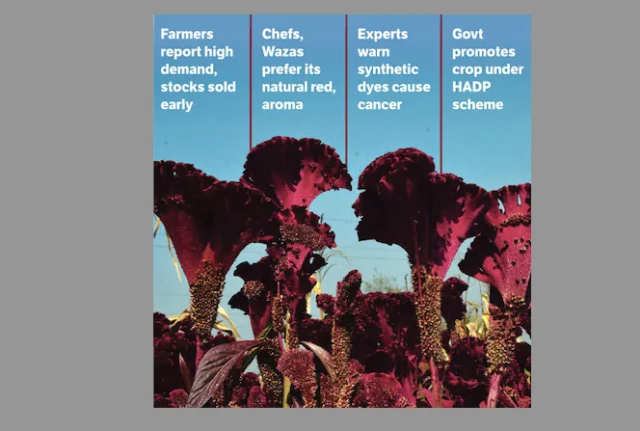
The Kashmiri cockscomb, locally known as Mawal, has staged a remarkable comeback as people turn to natural food colourants, reviving an ingredient and an entire cultural legacy.

The revival comes at a time when the Valley’s food safety debate has intensified following the recent “rotten mutton” scandal, which exposed loopholes in meat hygiene and the rampant use of artificial colours to enhance the appearance of dishes served at weddings and restaurants.

As public awareness grows, many chefs and consumers are rediscovering Mawal – the deep red, velvety flower of Celosia cristata – as a safe, traditional alternative that has been part of Kashmiri culinary heritage for centuries.

Noor Muhammad, a farmer from Srinagar’s Rathpora area, points to rows of crimson blooms drying in the autumn sun.

“I have 3 kanal of land under Mawal cultivation,” he says proudly. “I’ve been growing it for 15 years, but there was a time when people had completely forgotten it. Chefs and restaurants were using synthetic colouring powders instead because they were cheaper and easily available. Now, with awareness about the diseases caused by these harmful chemicals, people have started demanding the real thing again. This year, my entire stock was booked before harvest.”

Another farmer, Muhammad Jabar from Chadoora, explains that Mawal requires careful timing during harvest.

“We pluck the flowers in October,” he says, gently rubbing the dried petals between his fingers. “If we delay till November, the colour loses its intensity. After drying, the petals are ground into fine flakes. When soaked or boiled, they release a rich red pigment that gives the Wazwan its authentic colour. Apart from its natural hue, ‘Mawal’ helps digestion and is light on the stomach – something no chemical can offer.”

Cooks and traditional Wazas (master chefs) across the Valley echo this sentiment.

In Srinagar’s old city, master chef Ghulam Hassan Waza recalls how his father and grandfather never cooked Rogan Josh or Rista without Mawal water.

“Those days, we didn’t have these chemical colour powders. The Mawal infusion gave a natural glow and depth to the dish,” he says, stirring a pot in his small kitchen. “Later, everyone started using artificial colour to make dishes look redder. It was quick and cheap, but now people are realising it wasn’t good for their health. Today, customers themselves ask for Mawal-based dishes. They say the food tastes better and feels lighter.”

At a popular catering unit in Hyderpora, chef Bilal Ahmad agrees.

“When we prepare wedding wazwans, the difference is obvious. Mawal gives an earthy aroma, a deep red shade, and a gentle flavour. The synthetic colours just stain the oil and meat – there’s no soul in it,” he says. “Now, people want traditional taste and safety. Even guests notice the difference.”

Food technologists and health experts see this shift as a positive outcome of growing awareness. Dr Showkat Ahmad says many of the artificial colourants used in local food are industrial-grade chemicals unfit for human consumption.

“Synthetic dyes like Sudan Red are known carcinogens and can damage the liver and kidneys when consumed over time,” he said. “Mawal is a completely natural product. It contains antioxidants, has mild anti-inflammatory properties, and acts as a digestive aid. It’s not just about colour. It’s about bringing health back to the plate.”

The rising demand has also caught the attention of policymakers.

Under the Holistic Agriculture Development Plan (HADP), the Department of Agriculture, Kashmir, is encouraging farmers to take up Mawal cultivation by distributing saplings and providing technical support.

Officials describe it as a low-maintenance, high-value crop that thrives in Kashmir’s summer climate.

In late 2023, Kashmir exported its first 120 kg of dried Mawal to the United States, a milestone that opened the door for further international trade in natural colourants and herbal ingredients.

“This flower has the potential to become a part of Kashmir’s niche export basket, along with saffron and lavender,” says an agriculture department official. “There’s growing demand from organic and eco-friendly markets abroad. It also supports rural livelihoods, especially for small farmers and women growers.”

Beyond economics, Mawal carries deep cultural and medicinal significance.

The flower, which resembles a rooster’s comb, has been used in Kashmiri households for generations.

Traditionally, families would dry the blossoms in sunlight and store them in jars for year-round use.

Elders often brewed Mawal tea or added it to gravies not only for its colour but for its believed healing properties. Folk healers used it to cool the body, improve blood circulation, and ease digestive discomfort.

For many Kashmiris, returning to Mawal is about reconnecting with their roots and rejecting artificial additives that crept into their kitchens over time.

Fatima Begum, a homemaker from Srinagar’s Nowshera area, recalls how her grandmother always used Mawal for festive cooking.

“She used to say that nature has everything we need,” she says. “For years, we ignored that wisdom and ran after shortcuts. Now, we are going back to what is pure and healthy.”

Greater Kashmir

J&K witnessing transformation from separatism to self-reliance under PM Modi: Tarun Chugh

0
J&K witnessing transformation from separatism to self-reliance under PM Modi: Tarun Chugh

Jammu, Oct 26: Jammu & Kashmir Bharatiya Janata Party (BJP), under the leadership of its senior functionaries, listened to Prime Minister Narendra Modi’s 127th episode of “Mann Ki Baat”, broadcast on Sunday across more than 5,000 booths throughout the Union Territory.

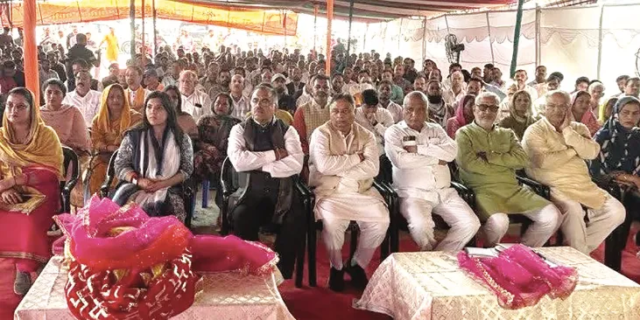
BJP National General Secretary & Prabhari J&K Tarun Chugh, along with BJP J&K President & MP (Rajya Sabha) Sat Sharma (CA), General Secretary (Organization) Ashok Koul, Incharge of Nagrota Assembly Bi-election & MLA Sham Lal Sharma, Bi-election Co-Incharge Bharat Bhushan (Vice-President & DDC Chairperson), District Prabhari Ayodhya Gupta, BJP Candidate for Nagrota Assembly Constituency Devyani Rana, along with other senior leaders, party cadre, and common people, listened to the Mann Ki Baat at Booth No. 77 in Upper Panjgrain under the Nagrota Assembly Constituency.

Tarun Chugh, while addressing the gathering on the occasion, urged everyone to follow Prime Minister Narendra Modi’s call to promote indigenous products to boost the local economy. He asked people to evoke and honour our culture, nature, and national heritage.

He said that “Mann Ki Baat” is a bridge connecting every citizen to the nation’s soul. “It inspires self-reliance, cultural pride, and collective responsibility,” he said.

Tarun Chugh added that the PM Modi led government has ensured the emergence of Jammu & Kashmir from the shadows of terrorism and separatism, and the region is now steadily progressing toward an era of peace and prosperity. He emphasized that the Modi government’s inclusive governance is driven by courage, conviction, and a people-first approach. He further said that the youth of Jammu & Kashmir are optimistic and confident about their future, believing that development under the Modi government will reach every doorstep and uplift every deserving individual.

Sat Sharma emphasised that Mann Ki Baat has become a historic people’s movement, strengthening the bond between citizens and leadership. He said that the Prime Minister’s message reflects his vision of participatory governance and inclusive growth. Ashok Koul called upon party workers to take the message of Mann Ki Baat to every household. He said that the party’s strength lies in its booth-level organization. He asked the cadre to ensure that PM Modi’s message of development, unity, and self-reliance reaches every voter in Nagrota.

Devyani Rana, BJP’s candidate for the Nagrota Bi-election, expressed her gratitude to the leadership and reaffirmed her commitment to serve the people with honesty and dedication. She said that the welfare policies and schemes of the PM Modi government have transformed the lives of the needy. She expressed her commitment to carry the vision of PM Modi to every corner of the Nagrota Constituency, ensuring the development and welfare of the needy.


Greater Kashmir

Awathkul Meelyal residents demand better health care

0
Awathkul Meelyal residents demand better health care

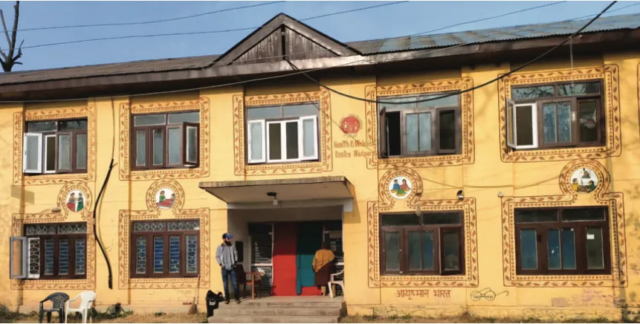
Kupwara, Oct 26: Residents of Awathkul Meelyal in north Kashmir’s Kupwara district are facing enduring hardships due to the lack of adequate health care facilities.

Locals said that despite the passage of several decades, successive governments have failed to address their basic medical needs.

“Since we belong to a heavy snow-bound area, winters take a heavy toll on us whenever a medical emergency arises,” a local resident told Greater Kashmir.

“Due to limited public transport, most of the time we have to carry patients on makeshift stretchers to reach the nearest health centre at Kralpora, which is eight kilometers away from Awathkul,” another resident said.

He added that most residents belong to the labour class, and hiring private cabs during medical emergencies is a significant financial burden.

Residents demanded that a health centre be sanctioned at the earliest to provide relief to people who have been suffering for years. They appealed to Chief Minister Omar Abdullah to personally look into the matter and address this long-pending demand.


Greater Kashmir

A journey through time: remembering the ‘Gaanewalis’

0
A journey through time: remembering the ‘Gaanewalis’

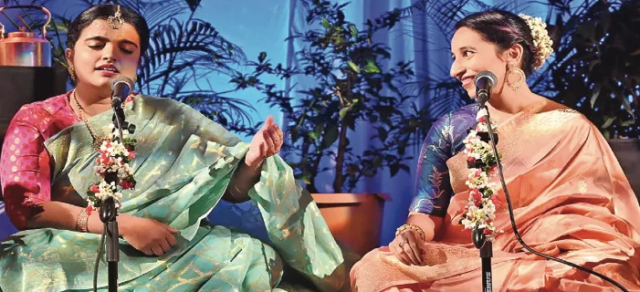
New Delhi, Oct 26: Yesterday, I had a chance to witness a live programme at the India Habitat Centre titled “O Gaanewali”. A journey through history, storytelling, and unforgettable music. At first, the name “Gaanewali, looked as if someone in the neighbourhood was calling someone or shouting at someone, but a nearly two-hour running programme fixed me in the past, where I had read in some books about how Tawaifs or Kothawalis would attract royalty, the decision makers in the early 1900s and were even considered sometimes celebrities like today’s movie stars.  Recently, in the Netflix series of Heeramandi, where glamour, curated dresses and sets mesmerised everyone and took us back into history, including the roles of a few in the independence struggle. This live “O Ganewali” programme was no less well-crafted, well-researched, a unique musical celebration of the forgotten women who defined, popularised, and immortalised genres like Thumri, Dadra, Ghazal, Chaiti, Hori, and more. The programme, curated and written by Avanti Patel, a resident of Mumbai, with co-vocalist Rutija Lad, and directed by Mallika Singh and Meghana AT, these two well-educated modern looking young Avanti and Rutija, the lead vocal, taking us into a journey of the past, the unparalleled legacy of artistry and emotion, shaping Hindustani semi-classical music history.

Avanti took us to the memory lane past through their melodious singing and equally explaining the happening, the love, in absence of love, the created love, the pain in it and made us to walk through with their excellent performance of singing in a sombre melody voice, through well-known classical famous singers like legendary performers such as Gauhar Jaan, Begum Akhtar, Iqbal Bano, Shobha Gurtu and several women artists after them and the songs they sung of famous Ghalib, Iqbal and Faiz Ahmed Faiz poetry.

Looking back through history, the term ‘gaanewali’ has never just meant ‘a woman who sings’. The label has always been taken away from its literal moorings and loaded with a certain moral suspicion for women performers who have been given other names, such as tawaifs, baijis and nautch girls, among others. Said Avanti. This was despite them being master artistes, whose contribution to the subcontinent’s cultural landscape remains invaluable. “They are forgotten legends, history doesn’t remember them, even their role in the independence struggle against British rule is forgotten,” says Mumbai-based Hindustani classical vocalist Avanti Patel, who has won several awards in the past and whose parents are both famous Doctors by profession.  The two women vocalists, along with three professional musicians on instruments like Harmonium, Sarangi and Tabla, took us down memory lane through celebrating the voices that shaped Hindustani semi-classical music. O Gaanewali honours the legendary women, Gauhar Jaan, Begum Akhtar, Iqbal Bano, Shobha Gurtu, and more, who turned emotion into timeless art.


Greater Kashmir

- Advertisement -
Google search engine

Recent Posts